Steel pipes are widely used in water transmission, industrial infrastructure, municipal distribution, and large-scale pipeline projects. However, exposure to moisture, chemicals, soil conditions, and flowing liquids can affect their long-term performance. This is why Cement Coated Pipe Manufacturers focus on protective solutions that improve pipe durability and resistance to corrosion. Among the commonly used options, internal and external cement coating play important but different roles in protecting steel pipelines. Understanding their differences helps engineers, contractors, and project buyers select the right solution for their requirements.
What Is Cement Coating for Steel Pipes?
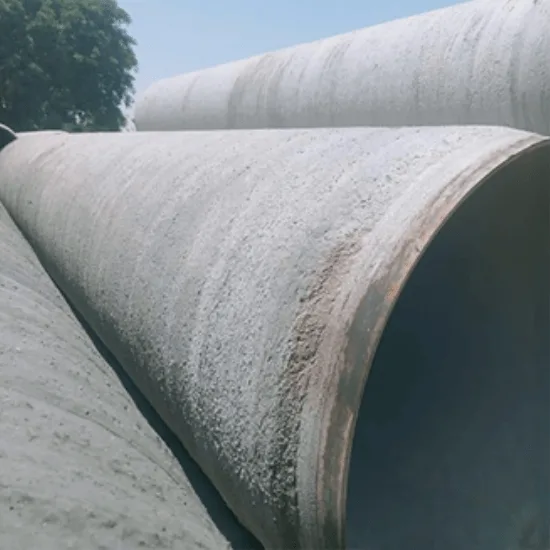
Cement coating is a protective layer made using cement mortar, generally consisting of Portland cement, fine aggregate, and water. It is applied to steel pipe surfaces to provide protection against specific environmental and service-related conditions.
Depending on the intended application, cement mortar can be applied to the inner surface, outer surface, or both sides of a steel pipe. Internal cement lining primarily protects the steel from the liquid flowing through it, whereas external cement coating helps protect the outside surface against surrounding environmental and mechanical influences.
These protective systems are particularly relevant to water transmission infrastructure, municipal pipelines, and industrial applications where long-term pipeline reliability is important.
What Is Internal Cement Coating?
Internal cement coating, commonly known as cement mortar lining, is applied to the inner surface of steel pipes. Its primary purpose is to protect the steel from direct contact with the transported liquid while providing a relatively smooth internal surface.
The lining is commonly applied through a centrifugal spinning process. During this process, cement mortar is distributed along the internal pipe wall and compacted to achieve a dense, uniform finish.
Key Benefits of Internal Cement Lining
- Internal corrosion protection: The alkaline environment of cement mortar helps passivate the underlying steel under suitable service conditions.
- Improved flow characteristics: A properly finished lining provides a relatively smooth surface that helps maintain efficient liquid transportation.
- Reduced tuberculation: Cement mortar lining helps minimize the formation of corrosion-related deposits that can restrict water flow.
- Long-term performance: When correctly designed, applied, and maintained, cement lining can support dependable pipeline operation.
Internal cement lining is commonly considered for potable water transmission, raw water transportation, and certain industrial water distribution systems. However, compatibility with the transported liquid, operating conditions, and applicable standards must always be evaluated.
What Is External Cement Coating?
External cement coating is applied to the outside surface of steel pipes to provide an additional protective barrier between the steel and its surrounding environment.
Unlike internal lining, external cement mortar coating is generally reinforced to improve its mechanical performance. Depending on the project specifications, reinforcement may include wire mesh, spiral wire, or other suitable materials.
External coating is typically applied through mechanical or pneumatic placement methods, followed by appropriate finishing and curing.
Key Benefits of External Cement Coating
- Environmental protection: It creates a protective barrier against direct exposure to surrounding soil and moisture.
- Mechanical shielding: Reinforced cement mortar can help protect the underlying pipe against certain external impacts and handling-related damage.
- Pipeline durability: A properly designed coating contributes to the overall protection of buried steel pipelines.
- Additional surface protection: It helps shield the steel pipe from direct contact with external environmental conditions.
External cement coating is particularly useful in selected underground pipeline installations where additional mechanical protection is required.
Internal vs External Cement Coating: Major Differences
Although both systems use cement mortar, their purposes, application methods, and performance requirements differ. Understanding the following distinctions can help project planners select an appropriate coating solution.
1. Application Area
- Internal cement lining: Applied to the inner surface of the steel pipe to protect it from direct contact with transported liquids.
- External cement coating: Applied to the outer surface to provide a protective barrier against surrounding soil, moisture, and external conditions.
2. Primary Purpose
- Internal cement lining: Mainly supports internal corrosion protection and helps maintain suitable flow characteristics.
- External cement coating: Primarily provides additional environmental and mechanical protection to the pipe exterior.
3. Application Method
- Internal cement lining: Commonly applied through centrifugal spinning or other suitable lining techniques to achieve a dense and relatively uniform finish.
- External cement coating: Generally applied using mechanical or pneumatic methods, with reinforcement incorporated where required by project specifications.
4. Surface Finish
- Internal cement lining: Designed to provide a smooth, dense internal surface that supports efficient liquid transportation.
- External cement coating: Designed to create a durable protective layer, which may include reinforcement to improve mechanical performance.
5. Operating Environment
- Internal cement lining: Comes into contact with the liquid transported through the pipeline, making liquid compatibility an important consideration.
- External cement coating: Faces external conditions such as soil contact, moisture, and potential mechanical stresses during installation and service.
6. Common Applications
- Internal cement lining: Frequently considered for potable water transmission, raw water transportation, and municipal water distribution networks.
- External cement coating: Used in selected underground pipeline installations where additional exterior protection is required.
The key distinction is that internal lining protects the pipe from conditions inside the pipeline, while external coating addresses exposure outside the pipe. Both systems can complement each other when a project requires comprehensive pipeline protection.
Which Cement Coating Is Better for Your Pipeline Project?
The right coating depends on the pipeline's operating environment, transportation medium, installation conditions, and engineering specifications.
For pipelines transporting water, internal cement lining may be beneficial because it helps protect the steel surface and maintain suitable internal flow characteristics.
For underground installations exposed to soil pressure, moisture, and potential mechanical damage, external cement mortar coating may provide an additional protective layer.
In certain water infrastructure projects, engineers may specify both internal cement lining and external cement coating to address internal and external protection requirements simultaneously.
Before selecting a coating system, buyers should evaluate pipe diameter, wall thickness, mortar composition, coating thickness, reinforcement requirements, installation conditions, and applicable quality standards.
Importance of Choosing Experienced Pipe Manufacturers
Selecting the right manufacturer is an important part of achieving consistent pipe quality. Reliable Cement Coated Pipe Manufacturers should understand project specifications, material requirements, application techniques, and curing procedures.
Buyers should consider the following factors before placing an order:
- Manufacturing capabilities and available pipe dimensions.
- Experience with cement mortar lining and coating applications.
- Surface preparation and coating application procedures.
- Inspection and quality control practices.
- Compliance with relevant technical standards and project specifications.
- Ability to meet project-specific supply and delivery requirements.
For water transmission projects, ANSI/AWWA C205 provides guidance on shop-applied cement mortar protective lining and coating for steel water pipes. Buyers should confirm the applicable edition and project requirements before finalizing their specifications.
Why Choose Karoli Pipes for Cement Coated MS Pipes?
Karoli Pipes caters to industrial and infrastructure requirements involving cement coated mild steel pipes. When evaluating a suitable pipe solution, customers should consider manufacturing capabilities, available dimensions, coating requirements, and application-specific specifications.
Working with knowledgeable Cement Coated Pipe Manufacturers can help project planners identify appropriate pipe configurations for water transportation and other relevant infrastructure applications.
If you are planning an industrial or municipal pipeline project, explore the cement coated pipe manufacturing solutions offered by Karoli Pipes to learn more about available product options and discuss your project requirements.
Conclusion
Internal and external cement coating serve different yet complementary purposes in steel pipeline protection. Internal cement lining helps protect the pipe from the transported liquid and supports suitable internal flow conditions, while external cement coating provides an additional protective barrier against environmental exposure and mechanical influences.
Understanding these differences makes it easier for engineers, contractors, and procurement professionals to specify suitable pipeline solutions. By considering operating conditions, technical requirements, coating quality, and manufacturing capabilities, businesses can make informed decisions and improve the long-term reliability of their pipeline infrastructure.
Other Recommendations: Jindal Mild Steel Round Pipe Supplier