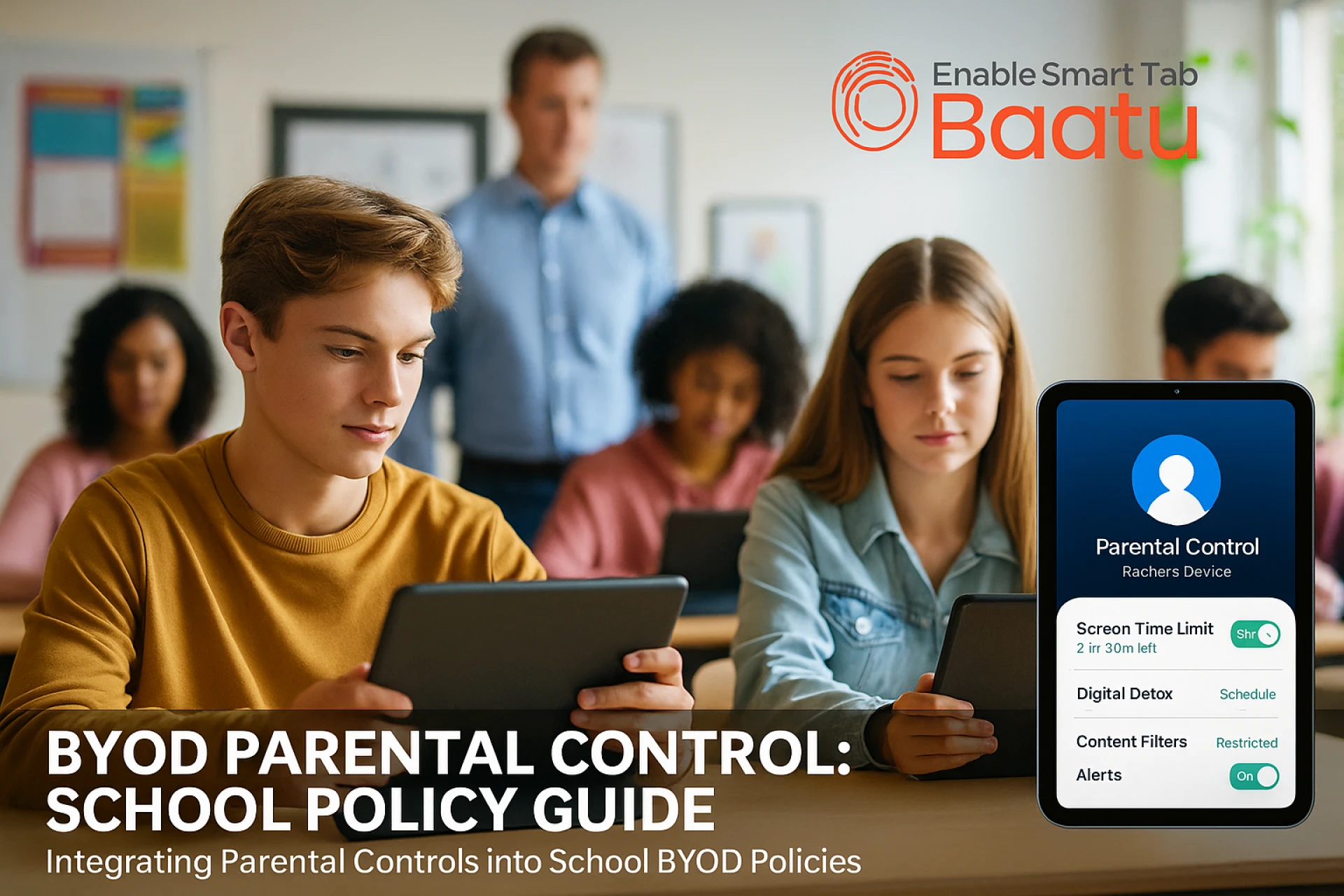
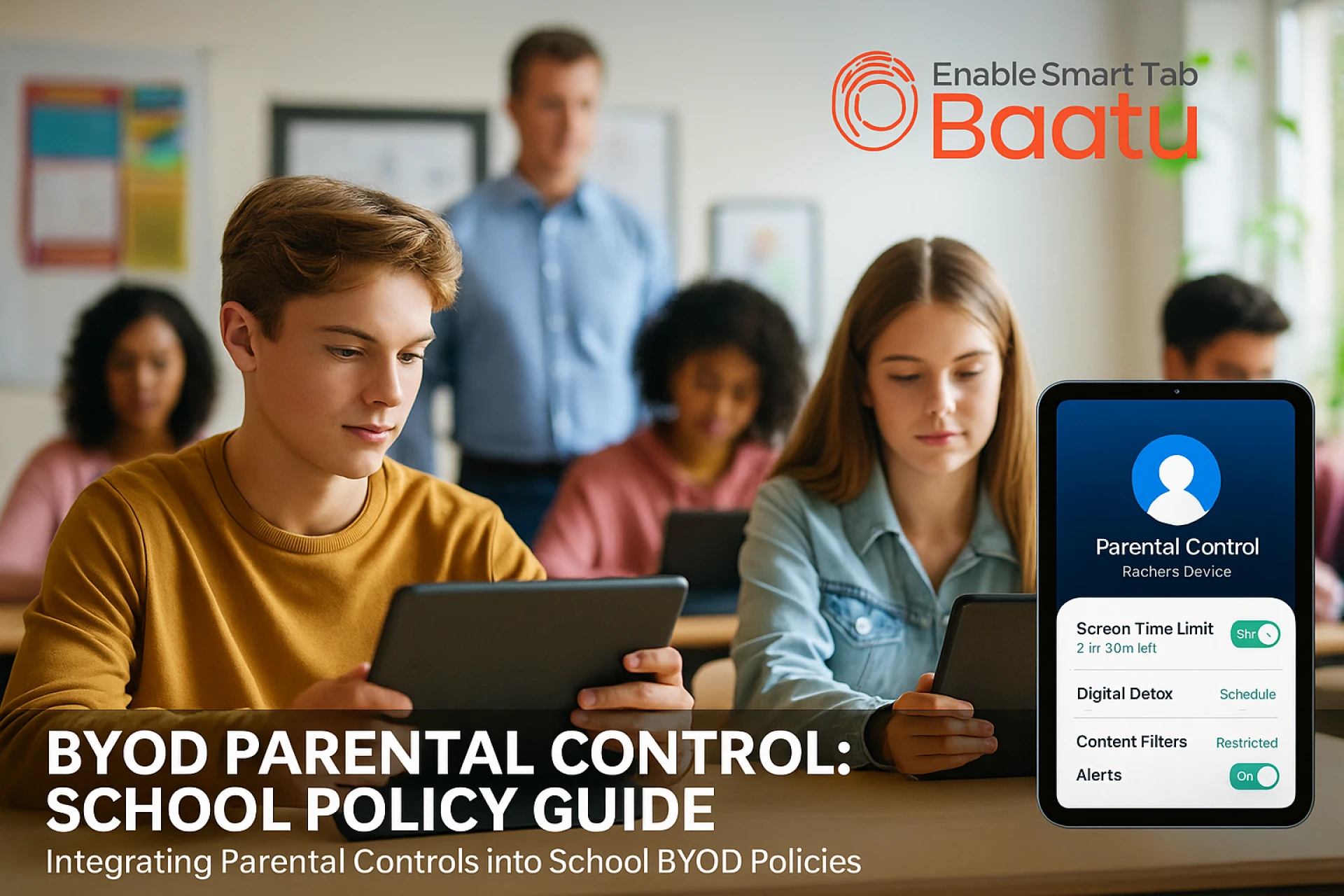
We know that schools are at risk when students come with devices. BYOD parental control must be part of a clear school parental control policy from day one. We provide real-life, practical steps and a tested solution in this guide that suits classrooms.
The problem: unmanaged devices in classrooms
Students come with learning devices. That is useful. But uncontrolled access is distracting. It also exposes one to indecent materials. Schools need to find the balance between trust and safety. In the absence of an explicit parental control policy in schools, there is no consistency among staff or parents. We see three main issues:
- Too much screen time in the lessons.
- Exposure to inappropriate material.
- Impairment in locating the tracking devices or the battery to be safe.
These issues make BYOD parental control not optional. It becomes a duty. A policy offers a common blueprint to teachers, parents, and students.
The solution we recommend
We propose to have a stratified strategy. Begin with policy, and add tools. The policy must specify permissible use, surveillance policies, and ramifications. Then deploy device controls. We emphasize the solutions that will not intrude on privacy and safeguard children.
In case of the implementation of the tools, we suggest a child-first tablet, which is combined with a parent app. Enable Smart Tab is one example. It packages content filters, location tracking, alerts, and screen-time controls. These features help schools enforce a consistent school parental control policy with less overhead.
How to implement BYOD parental control in practice
- Draft a simple policy. Produce hours, applications, and monitoring regulations. Call it the school parental control policy.
- Be clear to parents and students.
- Have low standards of devices students need or suggest safe devices.
- Employ solutions that concentrate control and reporting.
To enable schools that prefer a vendor-supported device, Enable Smart Tab includes embedded safe-surfing AI, app blocking, screen-time controls, and location notifications. It has 4GB RAM, 64GB storage, and a battery of 6000 mAh and runs on Android 12 with a 10.1-inch HD screen.
On the official site, it is displayed at a sale price of Rs. 7,799 (reduced by Rs. 15,999). There are also such accessories as screen guards and flip covers. The product page is where these specs and prices are written.
Features that make a difference
When integrating parental controls in school BYOD policy, look for:
- Monitoring and limits of screen time. There are ways of limiting off-task use by teachers.
- Content filters with alerts. Risky searches are reported to parents and staff.
- App management. Block/authorize apps in use in a classroom.
- Location and battery alerts.
- Emergencies can be responded to by schools quickly.
The parent app and safe-surfing capabilities built into Enable Smart Tab make these tasks simple. That saves manual work on the part of teachers and admins. The gadget is also capable of 4G voice messages and clear video calls to conduct online classes.
Case example
We implemented a pilot at a mid-size school. Steps we followed:
- Create a short school parental control policy and consent form.
- Run a two-week trial with a class using monitored devices.
- Train teachers on basic controls and reporting.
- Collect feedback from parents.
Outcome: fewer off-task incidents and faster response to content alerts. The app’s reports helped teachers focus on teaching, not policing.
Why choose a dedicated solution
We choose children-oriented products. They are combining the durability of hardware with the software safety. Enable Smart Tab by is designed around children. It presents long-life design, a kid-friendly interface, and parent and school-specific alerts. The warranty, delivery, and support information are mentioned in the product page, and schools enquire about them.
FAQ
Q1: What is the first step for BYOD parental control?
We begin with a policy and create awareness of consent with parents.
Q2: Can parental controls for school devices respect privacy?
Yes. Only the necessary safety- and learning-related controls can be made.
Q3: What is the correct device to pick?
Find in-built parental controls, battery life, and a trustworthy parent application.
Q4: Is integrating parental controls in the school BYOD policy costly?
Costs vary. Pilots are used to evaluate the pre-scaling value.
Next Steps
We can help you draft a practical school parental control policy. We can also give advice on the choice of devices and the plans of pilots. Get to know more or to order, visit the Enable Smart Tab by product page or reach the team using their official site.