In today’s evolving healthcare ecosystem, nutrition is no longer a secondary consideration—it’s central to patient outcomes. With the rise of digital health tools, organizations are increasingly adopting smarter solutions like an integrated nutrition management system and a clinical nutrition workflow platform to streamline care, improve efficiency, and deliver personalized nutrition interventions.
But what do these systems actually do, and why are they becoming essential? Let’s break it down with real-world, question-based insights.
What is an Integrated Nutrition Management System?
An integrated nutrition management system is a digital platform that connects every aspect of nutrition care—assessment, planning, intervention, monitoring, and reporting—into a single ecosystem.
Unlike traditional fragmented systems, these platforms unify patient data, clinical workflows, and nutrition insights. They enable healthcare providers, dietitians, and care teams to collaborate efficiently while ensuring evidence-based decision-making.
For example, solutions like AssureCare integrate nutrition care directly into electronic health records (EHRs), allowing seamless documentation, meal planning, and patient engagement.
One such example is integrated nutrition management system, which combines patient management, meal planning, and reimbursement tools into a unified platform.
How Does a Clinical Nutrition Workflow Platform Work?
A clinical nutrition workflow platform is designed to optimize how nutrition care is delivered within clinical settings.
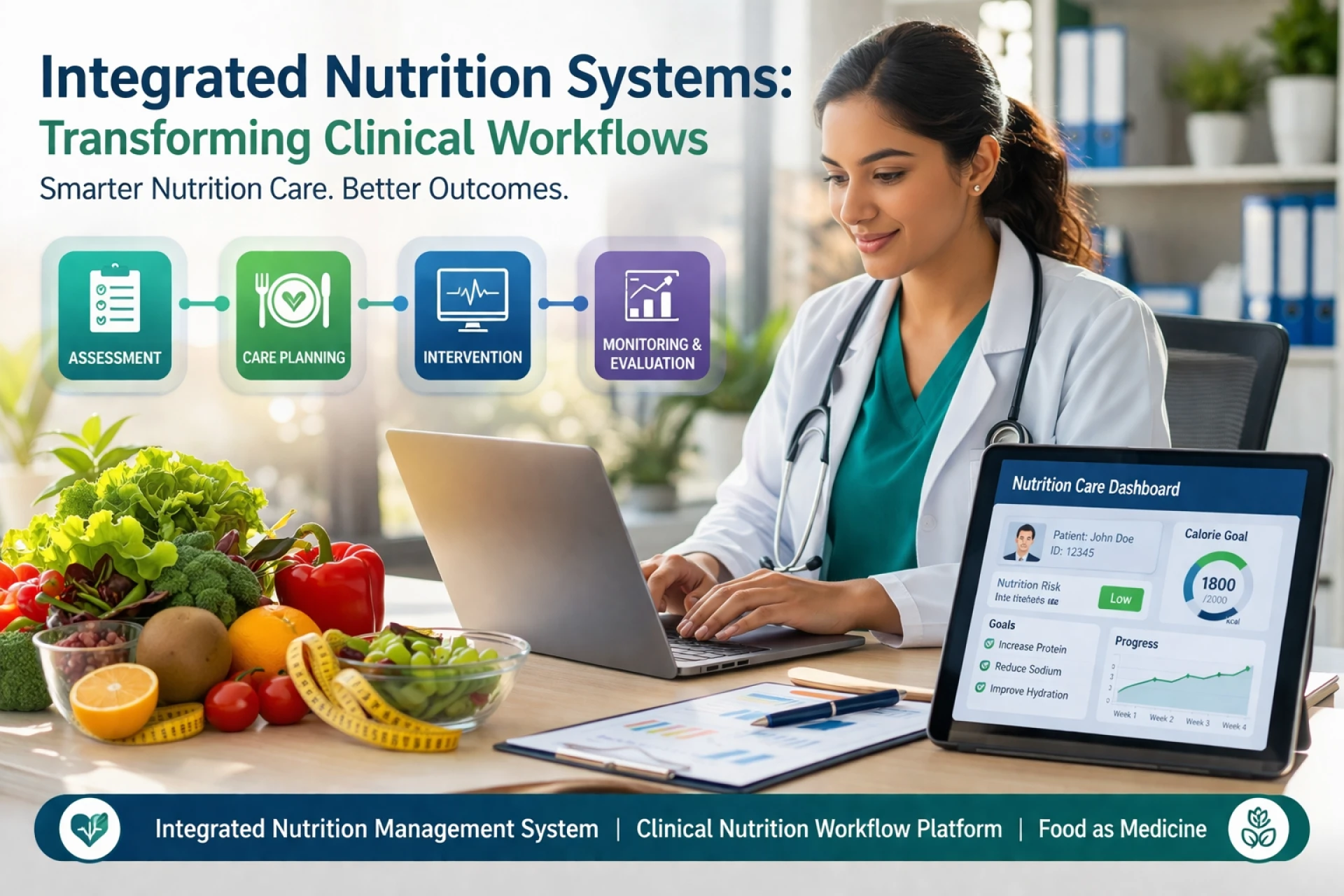
It typically follows a structured process aligned with the Nutrition Care Process (NCP):
- Screening and assessment
- Diagnosis and care planning
- Intervention and meal planning
- Monitoring and evaluation
These platforms automate repetitive tasks and guide clinicians through standardized workflows. Research shows that integrated systems can support the entire nutrition lifecycle—from risk screening to intervention—while improving collaboration across healthcare teams.
In practice, this means:
- Dietitians can create nutrition plans faster
- Clinicians can access real-time patient data
- Care teams can collaborate without silos
Why Does Healthcare Need Integrated Nutrition Platforms?
The healthcare system has long struggled with fragmented data and disconnected workflows. Nutrition care, in particular, often suffers from lack of coordination.
Here’s why integrated platforms matter:
1. Improved Patient Outcomes
When nutrition is embedded into care plans, patients receive more personalized and consistent support. Evidence-based interventions, such as medically tailored meals, can significantly improve adherence and disease control.
2. Better Collaboration
Modern platforms enable real-time collaboration between dietitians, physicians, pharmacists, and care managers—leading to holistic care delivery.
3. Reduced Errors and Inefficiencies
Automation minimizes manual data entry and reduces the risk of human error in nutrition therapy.
4. Data-Driven Decision Making
Advanced analytics provide insights into patient behavior, dietary adherence, and outcomes, helping providers refine care strategies.
What is the Best Way to Implement a Clinical Nutrition Workflow Platform?
Implementing a clinical nutrition workflow platform requires a strategic approach. Here’s what works best:
Start with Integration
Choose a platform that integrates with your existing EHR and health systems. This ensures smooth data flow and avoids duplication.
Focus on Customizable Workflows
Healthcare organizations have different needs. Look for solutions that allow configurable care pathways and workflows.
Prioritize User Experience
Adoption depends on usability. Platforms should be intuitive for dietitians, clinicians, and patients alike.
Enable Patient Engagement
Tools like meal tracking, education modules, and telehealth consultations improve adherence and long-term outcomes.
Ensure Compliance and Scalability
A good system should support regulatory requirements while scaling with your organization’s growth.
How Do These Platforms Enhance “Food as Medicine” Programs?
“Food as Medicine” is gaining traction as a powerful approach to managing chronic diseases. Integrated platforms play a key role in making these programs scalable and effective.
They enable:
- Food prescriptions and benefit tracking
- Integration with grocery retailers and meal providers
- Monitoring of patient adherence to nutrition plans
For instance, modern platforms can automate food prescription programs and track utilization, making nutrition interventions more actionable and measurable.
What Are the Key Features to Look For?
When evaluating an integrated nutrition management system or clinical nutrition workflow platform, consider these must-have features:
- EHR integration for seamless documentation
- Real-time collaboration tools
- Personalized meal planning and nutrient analysis
- Telehealth and virtual counseling capabilities
- Analytics and reporting dashboards
- Interoperability with wearable devices and health apps
These features ensure that nutrition care is not isolated but fully embedded within the broader healthcare journey.
Why Does the Future of Healthcare Depend on Nutrition Technology?
The shift toward value-based care means healthcare providers are increasingly accountable for patient outcomes—not just treatments. Nutrition plays a critical role in preventing and managing chronic conditions like diabetes, obesity, and cardiovascular disease.
Digital nutrition platforms bridge the gap between clinical care and lifestyle management. They bring together data, workflows, and patient engagement into a single system—making care more proactive, personalized, and effective.
As technology continues to evolve, the integration of nutrition into mainstream healthcare will only deepen. Organizations that adopt these platforms early will be better positioned to deliver high-quality, cost-effective care.
Final Thoughts
The adoption of an integrated nutrition management system and a clinical nutrition workflow platform is no longer optional—it’s a strategic necessity.
By connecting data, streamlining workflows, and empowering care teams, these platforms are transforming how nutrition is delivered in healthcare. More importantly, they are helping providers shift from reactive treatment to proactive, preventive care—where nutrition truly becomes medicine.