Table of Contents
- Introduction
- What are Injection Molding Defects?
- 7 common Injection Molding Defects
- How OPM Helps
- Conclusion
Injection moulding is one of the most widely used manufacturing processes for producing plastic components with consistent shapes, accurate dimensions, and smooth finishes. From automotive components and electrical enclosures to industrial equipment and consumer products, manufacturers depend on this process to create reliable plastic parts in large quantities.
However, even a small issue during production can lead to defects, material wastage, production delays, and increased manufacturing costs. Understanding common Injection Moulding Defects and knowing how to prevent them can help manufacturers improve product quality and maintain efficient production.
For businesses looking for reliable Injection Moulding Companies in Pune, choosing the right manufacturing partner and maintaining proper process controls are important steps towards achieving consistent results.
What Are Injection Moulding Defects?
Injection moulding defects are imperfections that occur during the manufacturing of plastic components. They may affect the appearance, dimensions, strength, or overall performance of the finished product.
These defects can develop due to incorrect machine settings, unsuitable material conditions, mould design problems, inadequate cooling, or inconsistent production practices.
Identifying the root cause of a defect is essential. Instead of correcting the same problem repeatedly, manufacturers should focus on improving the process to prevent defects from occurring in the first place.
7 Common Injection Moulding Defects and How to Prevent Them
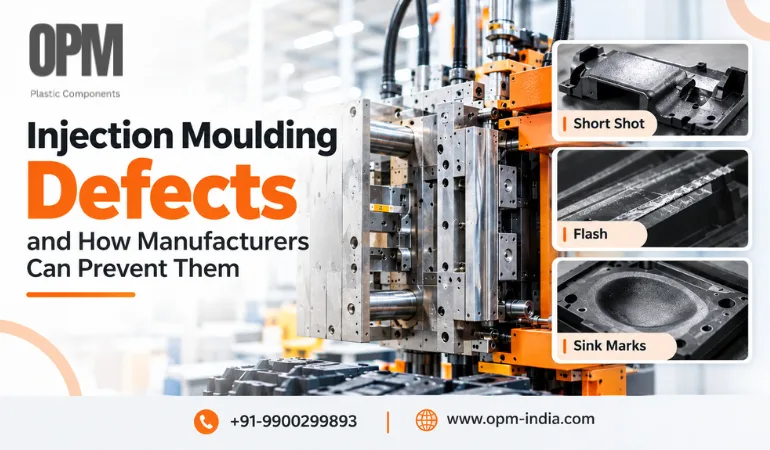
1. Short Shots
A short shot occurs when molten plastic does not completely fill the mould cavity. As a result, the finished component has missing sections or incomplete edges.
Common causes:
- Insufficient injection pressure or speed.
- Low melt or mould temperature.
- Blocked gates or narrow flow channels.
- Poor material flow.
How to prevent it: Manufacturers should maintain appropriate injection pressure, speed, and temperature settings. Regular inspection of gates and runners can also help ensure smooth material flow. Selecting a suitable plastic grade for the component is equally important.
2. Flashing
Flash occurs when excess plastic escapes through the parting line or small gaps in the mould, creating thin unwanted edges on the finished component.
Common causes:
- Excessive injection pressure.
- Damaged or worn mould surfaces.
- Incorrect clamping force.
- Improper mould alignment.
How to prevent it: Check mould alignment and ensure the clamping force is suitable for the application. Regular mould maintenance helps identify wear and damage before they affect production. Optimising injection pressure can also reduce the chances of flash formation.
3. Sink Marks
Sink marks appear as small depressions or uneven areas on the surface of a plastic component. They commonly occur in thicker sections where the material shrinks as it cools.
Common causes:
- Uneven wall thickness.
- Insufficient packing pressure.
- Inadequate holding time.
- Improper cooling.
How to prevent it: Design components with uniform wall thickness wherever possible. Manufacturers should optimise packing pressure and holding time to compensate for material shrinkage. Proper cooling and suitable rib design can also improve the final surface quality.
4. Warping
Warping occurs when a moulded plastic part bends, twists, or changes shape after cooling. This can create dimensional problems and make assembly difficult.
Common causes:
- Uneven cooling.
- Residual stresses within the part.
- Non-uniform wall thickness.
- Incorrect processing conditions.
How to prevent it: Maintain balanced cooling throughout the mould and review the cooling channel design when necessary. Consistent wall thickness and optimised processing parameters can help minimise internal stresses. Manufacturers should also verify component dimensions before approving full-scale production.
5. Weld Lines
Weld lines form when two or more streams of molten plastic meet but do not bond properly. These lines may be visible on the surface and can weaken the component in certain applications.
Common causes:
- Low melt temperature.
- Inadequate injection speed.
- Poor gate positioning.
- Contamination or unsuitable material conditions.
How to prevent it: Optimise melt temperature and injection speed within the material manufacturer’s recommended processing range. Reviewing gate locations can improve the way plastic flows through the mould. For components that require high strength, weld-line locations should be considered during the design stage.
6. Burn Marks
Burn marks appear as dark or discoloured areas on a moulded component. They can occur when trapped air becomes excessively hot or when the material degrades during processing.
Common causes:
- Poor mould venting.
- Excessive injection speed.
- High melt temperature.
- Excessive material residence time.
How to prevent it: Clean and maintain mould vents to allow trapped air to escape. Review injection speed and temperature settings, and avoid keeping plastic in the barrel longer than necessary. Proper venting and process control can significantly reduce burn marks.
7. Silver Streaks and Splay Marks
Silver streaks are thin, shiny lines that appear on the surface of plastic parts. They are often associated with moisture in hygroscopic materials, although overheating, contamination, and material degradation can also contribute.
Common causes:
- Improper drying of plastic resin.
- Excessive moisture in the material.
- Contaminated raw materials.
- Incorrect processing temperatures.
How to prevent it: Follow the resin supplier’s recommended drying temperature and drying time. Store materials in suitable conditions and prevent contamination during handling. Manufacturers should also inspect material quality and check processing temperatures when these defects appear.
Why Quality Control Matters in Injection Moulding
Preventing defects is not only about adjusting machine settings. It requires a consistent quality management approach throughout the manufacturing process.
Manufacturers should establish standard operating procedures, monitor critical machine parameters, inspect moulds regularly, and conduct dimensional and visual checks on finished components.
First-piece inspection, in-process sampling, and final quality checks can help identify problems before they affect large production batches. Maintaining records of defects and corrective actions also helps teams recognise recurring issues and improve production over time.
For businesses involved in Injection Moulding for plastic parts, these practices can help reduce rejection rates, improve consistency, and support timely delivery.
How to Choose the Right Injection Moulding Partner in Pune
Selecting a manufacturing partner is an important decision, especially when plastic components must meet specific quality, dimensional, and performance requirements.
When evaluating Injection Moulding Companies in Pune, consider the following factors:
- Manufacturing capabilities: Check whether the company can meet your component design, material, and production-volume requirements.
- Quality control processes: Ask about inspection methods, process monitoring, and defect prevention practices.
- Technical expertise: An experienced team can help identify moulding challenges and recommend practical improvements.
- Machine and mould maintenance: Well-maintained equipment supports consistent production and reduces avoidable downtime.
- Communication and delivery: Clear coordination helps manage production schedules, design changes, and quality concerns.
Comparing these factors can help you select an Injection Moulding company in Pune that understands your requirements and can support your manufacturing goals.
How OPM Helps Manufacturers
OPM supports manufacturers looking for practical and dependable solutions for their production requirements. In injection moulding, achieving consistent quality depends on understanding component specifications, maintaining suitable processing conditions, and following systematic quality checks.
By focusing on manufacturing requirements and quality expectations, OPM can help businesses work towards reliable production outcomes and reduce avoidable quality issues.
For manufacturers seeking Injection Moulding for plastic parts, working with a suitable manufacturing partner can support better coordination between component requirements, production planning, and quality expectations.
Before beginning a project, businesses should discuss their component drawings, material specifications, expected quantities, dimensional tolerances, and inspection requirements with OPM. This helps establish clear expectations and identify potential production challenges early.
Conclusion:
Injection moulding defects can affect product quality, production efficiency, and overall manufacturing costs. Problems such as short shots, flash, sink marks, warping, weld lines, burn marks, and silver streaks can often be reduced through correct machine settings, suitable material handling, effective mould design, and regular quality inspections.
Manufacturers should focus on identifying the root cause of each defect rather than relying only on rework or corrective measures. Consistent process monitoring and collaboration with an experienced manufacturing partner can help improve production reliability.
If you are looking for an Injection Moulding company in Pune for your plastic component requirements, connect with OPM to discuss your project, production needs, and quality expectations.
Contact OPM today to discuss your manufacturing requirements and explore the right solution for your plastic parts.