Industrial Sweepers and Scrubbers: Keeping Warehouses Safe, Clean, and Productive
A clean warehouse is about much more than appearance. Every day, dust, packaging materials, dirt, spilled liquids, metal shavings, tire residue, and other debris accumulate across warehouse floors, loading docks, production areas, and distribution centers. Left unchecked, these materials can create safety hazards, damage equipment, reduce productivity, and shorten the lifespan of warehouse flooring. Industrial sweepers and scrubbers help facilities maintain cleaner environments while supporting safer and more efficient operations.
Unlike household cleaning equipment, industrial floor cleaning machines are designed for demanding commercial environments where large areas must be cleaned quickly and consistently. Whether operating in manufacturing plants, logistics facilities, distribution centers, retail warehouses, food processing plants, or transportation terminals, these machines help organizations maintain high standards of cleanliness without requiring excessive manual labor.
Why Warehouse Floor Cleaning Matters
Warehouse floors experience constant traffic from forklifts, pallet jacks, carts, pedestrians, and heavy machinery. Every movement introduces dust, dirt, and debris that gradually build up throughout the day. Even facilities that appear relatively clean can accumulate fine dust particles that affect indoor air quality and increase equipment wear over time.
Clean floors contribute directly to workplace safety. Loose debris increases the risk of slips, trips, and falls while also creating traction issues for forklifts and other material handling equipment. Dust can interfere with sensors, conveyors, automated systems, and electrical components, while liquid spills may create dangerous operating conditions if not addressed promptly.
Regular cleaning also protects warehouse investments. Dirt and abrasive particles gradually wear away concrete floor coatings and polished surfaces, leading to expensive repairs or resurfacing projects. By removing contaminants before they cause damage, industrial sweepers and scrubbers help extend the life of warehouse infrastructure.
Understanding Industrial Sweepers
Industrial sweepers are designed to collect loose debris before it becomes a larger maintenance problem. Rather than simply pushing dust from one area to another, these machines use rotating brushes combined with powerful vacuum systems to gather dirt into onboard collection hoppers.
Sweepers perform exceptionally well in facilities where dry debris is common. Dust, cardboard scraps, plastic wrapping, wood chips, metal shavings, sand, and loose packaging materials can all be removed efficiently without disrupting warehouse operations. Many models include dust control systems that prevent fine particles from becoming airborne during cleaning, helping improve overall air quality inside the facility.
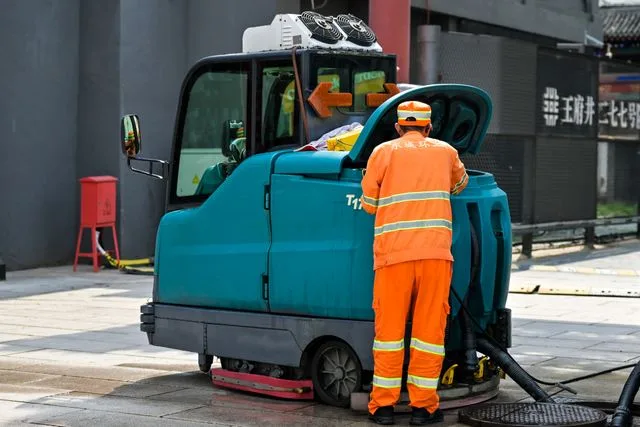
Industrial sweepers are available in walk-behind and ride-on configurations. Smaller facilities often benefit from compact walk-behind units that navigate narrow aisles and confined workspaces with ease. Larger warehouses, manufacturing plants, and distribution centers typically rely on ride-on sweepers capable of cleaning thousands of square feet in a relatively short period.
What Industrial Scrubbers Do
While sweepers remove dry debris, industrial scrubbers are designed to wash and sanitize hard floor surfaces. These machines combine water, cleaning solution, rotating brushes or pads, and powerful vacuum recovery systems to scrub floors while immediately removing dirty water from the surface.
The result is a cleaner, safer floor that dries quickly enough to minimize disruption to daily operations. Because dirty water is collected rather than left behind, scrubbers significantly reduce slip hazards compared to traditional mopping methods.
Industrial scrubbers are particularly valuable in facilities where oils, grease, chemical residue, tire marks, or other stubborn contaminants accumulate. Manufacturing plants, food processing facilities, pharmaceutical warehouses, and distribution centers often depend on routine floor scrubbing to maintain cleanliness standards and regulatory compliance.
Like sweepers, scrubbers are available in multiple sizes. Walk-behind units work well in smaller commercial facilities, while ride-on scrubbers efficiently clean expansive warehouse floors, loading docks, and production areas.
Choosing Between Walk-Behind and Ride-On Equipment
Selecting the appropriate cleaning equipment depends largely on facility size, cleaning frequency, and operational demands.
Walk-behind machines offer excellent maneuverability for compact warehouses, retail storage areas, workshops, and facilities with narrow aisles or numerous obstacles. Their smaller footprint allows operators to clean around shelving, machinery, and workstations while requiring less storage space when not in use.
Ride-on sweepers and scrubbers become increasingly valuable as facility size grows. Large warehouses often contain hundreds of thousands of square feet of floor space, making manual cleaning both time-consuming and labor-intensive. Ride-on equipment enables operators to clean significantly larger areas while reducing fatigue and increasing overall productivity.
Facilities operating multiple shifts frequently find that ride-on machines allow routine cleaning to occur without disrupting warehouse activities or requiring extended downtime.
Electric and Propane Power Options
Industrial cleaning equipment is available with different power sources to match varying operating environments.
Battery-powered sweepers and scrubbers are widely used indoors because they produce no exhaust emissions and operate quietly. Advances in battery technology have extended run times while reducing charging requirements, making electric machines suitable for many full-shift applications.
Propane-powered equipment remains a practical option for larger facilities or applications requiring extended operating hours. These machines typically offer longer continuous operation before refueling and are commonly used in warehouses with adequate ventilation or outdoor cleaning applications.
Selecting the appropriate power source should consider facility ventilation, operating schedules, maintenance requirements, and overall cleaning demands.
Benefits Beyond Clean Floors
Investing in industrial cleaning equipment delivers benefits that extend well beyond appearance. Cleaner facilities generally experience fewer workplace accidents because spills, debris, and slippery surfaces are addressed more consistently. Employees also tend to work more efficiently in organized environments where aisles remain free of obstructions and workspaces are properly maintained.
Routine cleaning protects warehouse equipment as well. Forklifts, conveyors, automated storage systems, and robotic equipment all perform more reliably when excessive dust and debris are minimized. Electronic sensors remain cleaner, moving components experience less abrasive wear, and maintenance intervals may be extended.
Many businesses also find that maintaining a clean warehouse creates a stronger impression on customers, inspectors, suppliers, and potential business partners who visit the facility.
Building an Effective Cleaning Program
Even the best cleaning equipment cannot deliver long-term results without a consistent maintenance strategy. Successful warehouse cleaning programs establish scheduled cleaning intervals based on operational activity rather than waiting until floors visibly appear dirty.
High-traffic areas near receiving docks, shipping departments, production lines, and forklift charging stations often require daily cleaning. Medium-traffic storage areas may only need attention several times each week, while less frequently used warehouse sections can often be incorporated into weekly or monthly schedules.
Documented cleaning procedures help ensure that responsibilities remain consistent regardless of staffing changes or shift schedules. Regular inspections also allow facility managers to identify developing issues before they become larger maintenance problems.
Supporting Workplace Safety
Industrial sweepers and scrubbers play an important role in overall warehouse safety programs. Clean floors improve traction for both pedestrians and material handling equipment while reducing the likelihood of accidents caused by loose debris or liquid contamination.
Facilities should also support cleaning efforts through additional safety practices, including clearly marked pedestrian walkways, designated forklift travel lanes, adequate lighting, prompt spill response procedures, and regular employee training. Cleaning equipment works best as part of a broader commitment to workplace safety rather than as a standalone solution.
Operators should receive proper instruction before using industrial cleaning machines to ensure equipment is operated safely and maintained correctly. Daily inspections, proper battery charging or fuel handling, brush maintenance, and solution management all contribute to consistent cleaning performance and longer equipment life.
Choosing the Right Industrial Cleaning Equipment
Every facility has unique cleaning requirements based on its size, industry, inventory, and operational workflow. Warehouses handling dry consumer goods may prioritize powerful sweeping capabilities, while food production or manufacturing environments often require both sweeping and scrubbing to maintain cleanliness standards.
Factors such as floor type, aisle width, traffic volume, cleaning frequency, available storage space, and budget should all influence equipment selection. Some organizations benefit from maintaining multiple machines designed for different cleaning tasks, while others may find that combination sweeper-scrubber units provide the versatility needed for daily operations.
By selecting equipment that matches operational needs and implementing a consistent cleaning schedule, businesses can create safer workplaces, improve operational efficiency, extend the life of warehouse assets, and maintain facilities that support long-term productivity.