Weather conditions can significantly affect riding schedules, footing quality, and the usability of an outdoor horse arena. Rain, snow, strong winds, and extreme temperatures can make riding uncomfortable or unsafe, while repeated exposure to moisture can contribute to footing displacement and surface deterioration. An indoor arena provides a sheltered environment for year-round riding, while regular maintenance with suitable arena grooming equipment helps facility owners maintain consistent footing. Selecting the right horse arena groomer can also make routine surface care more manageable.
Although building an indoor arena requires careful planning and investment, its benefits extend beyond weather protection. From supporting consistent training schedules to reducing weather-related maintenance, an indoor facility can provide practical advantages for horses, riders, and equestrian businesses.
Ride More Consistently Throughout the Year
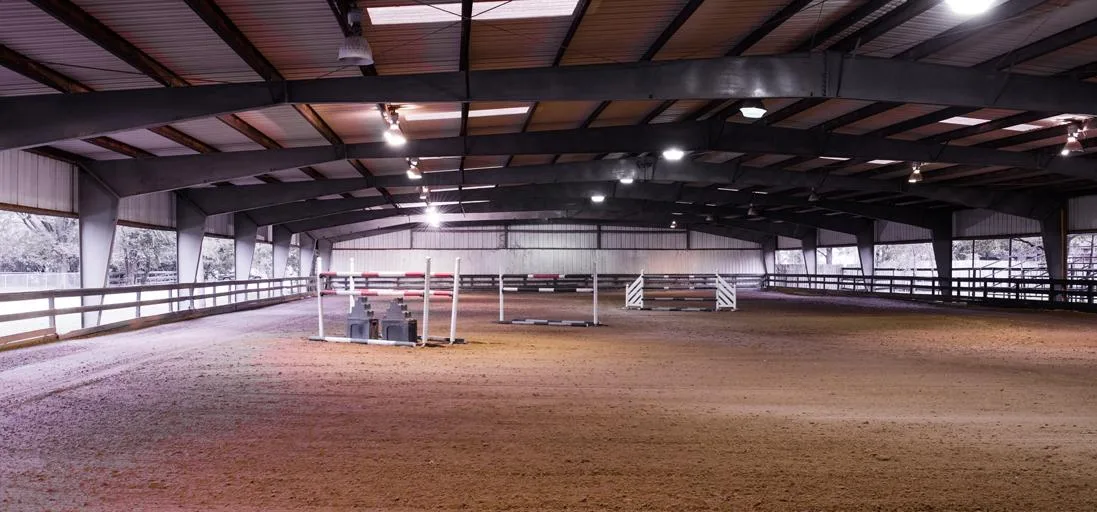
One of the main benefits of an indoor arena is the ability to maintain a regular riding schedule regardless of outdoor weather conditions. Heavy rain, snow, and extreme heat can disrupt training sessions and make outdoor arenas difficult to use. A covered riding space allows equestrians to continue lessons, practice sessions, and conditioning activities with fewer weather-related interruptions.
Consistent access to a riding area is particularly valuable for trainers, boarding facilities, and competitive riders who follow structured training programs. Instead of repeatedly rescheduling sessions because of poor weather, riders can plan their activities with greater confidence.
Facility owners considering an indoor arena should evaluate building design, ventilation, lighting, and access requirements to ensure the space supports its intended use. These considerations help create a practical environment for regular riding and training throughout the year.
Maintain More Consistent Footing Conditions
Footing is an essential part of arena safety and performance. The surface needs to provide suitable traction, cushioning, and stability for the activities taking place. Outdoor arenas can experience significant changes in footing after rainfall, prolonged dry periods, or fluctuations in temperature.
An indoor arena helps limit direct exposure to precipitation, making it easier to manage moisture levels and maintain a more consistent surface. However, an enclosed structure does not eliminate footing problems. Dust, compaction, uneven distribution, and excessive dryness can still develop without appropriate maintenance.
Regular grooming helps redistribute footing material, address uneven areas, and maintain a more uniform riding surface. Suitable arena grooming equipment can make this routine more manageable, depending on the arena's size, surface material, and usage. Owners should select a horse arena groomer for a tractor or a horse arena groomer for an ATV according to their available vehicle and maintenance requirements.
Guidance from Oregon State University Extension discusses horse facility management and related property considerations. Understanding the needs of an arena's surface can help owners establish a consistent maintenance routine.
Reduce Rain Damage and Weather-Related Repairs
Repeated exposure to rainfall can create ongoing maintenance challenges for outdoor riding arenas. Water may wash away loose footing, create low spots, and contribute to erosion when drainage is inadequate. These issues can require additional grading, replacement materials, and time away from regular arena use.
An indoor arena's roof reduces the amount of direct rainfall reaching the riding surface. This protection can help limit weather-related footing displacement and make routine maintenance more predictable. Nevertheless, proper drainage around the building remains important. Water must be directed away from the structure and managed appropriately to prevent pooling around entrances, foundations, and surrounding areas.
Indoor facilities also require attention to moisture control and airflow. Condensation, leaks, and poorly managed water sources can affect both the building and its riding surface. Planning for these factors during construction can help reduce avoidable maintenance problems over time.
For facilities that require frequent grooming, a professional arena groomer may be a useful part of a regular surface-care routine. The appropriate equipment depends on the arena's dimensions, footing material, and frequency of use. The University of Kentucky's guide to horse arena footing also provides information about footing management and maintaining suitable riding surfaces.
Improve Comfort With Proper Ventilation and Dust Control
Protection from outdoor weather is valuable, but indoor arenas must also provide an appropriate environment for horses and riders. Because the structure limits natural airflow compared with an open outdoor space, ventilation deserves particular attention.
Dust can develop when footing becomes too dry or when horses repeatedly disturb fine surface particles. Poor air circulation may allow airborne dust to accumulate, affecting comfort during riding and other activities. Arena managers should monitor footing moisture, maintain suitable airflow, and address dust according to the surface material and facility conditions.
The building design should account for its size, openings, airflow patterns, and expected occupancy. The University of Minnesota Extension's guide to ventilation systems for horse barns explains how ventilation can help manage moisture and air quality in equine buildings.
Owners should also establish a regular footing maintenance routine. Choosing a riding arena groomer suited to the arena and available equipment can support consistent surface care between riding sessions.
Make Better Use of Your Equestrian Facility
An indoor arena can improve how an equestrian property is used. Instructors may be able to schedule lessons more reliably, boarding facilities can offer riders greater access to a protected riding space, and owners can plan maintenance with fewer interruptions caused by rain or other weather conditions.
The long-term value of an indoor arena depends on more than the building itself. Construction quality, footing selection, drainage, ventilation, and routine grooming all contribute to its usability. Facility owners should establish a maintenance schedule suited to their arena's surface and level of activity.
Regular inspections can help identify developing problems before they require extensive repairs. Checking for uneven footing, compacted areas, moisture imbalances, and changes in surface depth allows managers to respond before these issues interfere with riding.
When choosing arena grooming equipment, owners should consider the arena's size, vehicle compatibility, and footing requirements. A tractor arena groomer may suit certain larger setups, while an arena groomer for ATV may be appropriate for facilities using an ATV or UTV. Matching equipment to the arena helps owners develop a practical, repeatable grooming routine.
Keep Your Arena Ready for the Next Ride
A reliable riding surface requires ongoing care, even when an arena is protected from outdoor weather. EZ Groomer LLC offers arena grooming equipment in Molalla, OR for tractor and ATV/UTV setups, helping equestrian facility owners maintain their footing as part of a regular care routine. They provide grooming solutions for arena owners seeking equipment suited to their surfaces, vehicles, and maintenance requirements. Interested owners can contact them to find a horse arena groomer appropriate for their arena.