
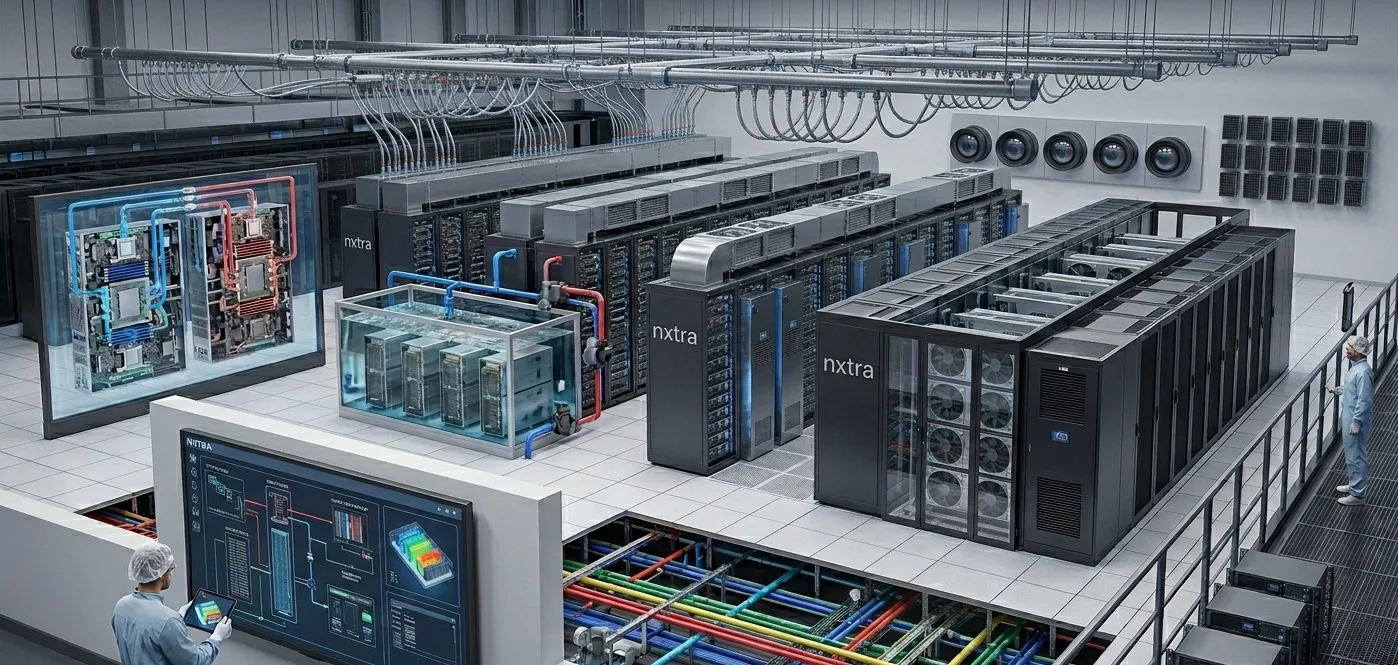
India Data Center Cooling Market Outlook
This research report by IMARC Group on the India Data Center Cooling Market provides a forecast of market size, share, and emerging trends for 2026–2034. The report covers segmentation by component, type of cooling, and region, with regional coverage across West and Central India, South India, North India, and East and Northeast India.
Market Snapshot
- Market Name: India Data Center Cooling Market
- Region: India
- Base Year and Market Size: 2025, USD 689.2 Million
- Forecast Year and Market Value: 2034, USD 2,233.8 Million
- CAGR: 13.54%
- Forecast Period: 2026–2034
- Segmentation Covered: Component, Type of Cooling, Region
Current Market Size of the India Data Center Cooling Industry
The India data center cooling market reached a value of USD 689.2 Million in 2025 and is projected to expand to USD 2,233.8 Million by 2034, registering a CAGR of 13.54% during the 2026–2034 period. Surging hyperscale infrastructure investments, rising artificial intelligence workloads, and strict government efficiency mandates primarily propel this steady capacity expansion.
Emerging Trends in the India Data Center Cooling Market
Localized Manufacturing of Liquid Chillers
Major equipment suppliers are rapidly establishing domestic production capabilities to support expanding artificial intelligence infrastructure. In February 2026, the Department for Promotion of Industry and Internal Trade highlighted increased localized manufacturing of liquid chillers. This strategy drastically reduces import delays, allowing regional operators to quickly deploy high-density hardware.
Transition Toward Prefabricated Modular Units
Developers increasingly prioritize pre-engineered thermal blocks to accelerate facility construction timelines. According to a January 2026 Ministry of Electronics and Information Technology infrastructure brief, prefabricated modules significantly cut on-site installation time. This allows colocation operators to rapidly commission new server halls across tier-two cities without massive operational delays.
Implementation of Water-Neutral Architectures
Facility engineers are actively prioritizing closed-loop systems to minimize environmental impact amid severe utility constraints. The Bureau of Energy Efficiency published updated industrial guidelines in early 2026, compelling administrators to deploy advanced adiabatic designs. These modern architectures significantly lower overall resource consumption without compromising critical heat extraction performance.
Expansion of Comprehensive Maintenance Contracts
Hyperscale operators are shifting away from internal maintenance toward long-term service agreements with specialized vendors. In June 2026, STULZ India expanded its Chennai service center to offer bundled thermal maintenance packages. This transition ensures maximum uptime and prevents catastrophic hardware failures during heavy, continuous computational processing spikes.
Request Sample Report with Datasheet: https://www.imarcgroup.com/india-data-center-cooling-market/requestsample
Growth Drivers of the India Data Center Cooling Market
Implementation of State-Level Energy Incentives
State governments are providing substantial financial benefits for facilities demonstrating high operational efficiency. The Karnataka Sustainable Data Center Policy, implemented in 2026, explicitly reimburses water charges for operators achieving an optimized usage ratio. This targeted regulatory support directly incentivizes immediate massive investments in advanced, resource-efficient chilling systems nationwide.
Rapid National Power Capacity Expansion
Surging national digitalization demands massive additions to underlying computational infrastructure. As of August 2026, the Press Information Bureau reported that India’s installed power capacity exceeded critical benchmarks. This immense electrical expansion creates a direct, unavoidable requirement for matching thermal extraction hardware to prevent severe processing performance throttling.
Targeted Regional Infrastructure Capital Subsidies
Targeted regional capital assistance significantly lowers the financial barrier for deploying capital-intensive temperature regulation equipment. The Uttar Pradesh Data Center Policy 2026 offers up to a sixty percent interest subsidy. This financial backing drastically accelerates new facility constructions, driving corresponding high-volume cooling equipment orders immediately across the state.
Enforcement of Mandatory Conservation Codes
Federal regulatory mandates compel developers to implement superior heat extraction technologies during initial facility design. The Ministry of Power notified the strict Energy Conservation Building Code in 2026. This directive prescribes rigorous efficiency norms that force operators to install high-performance chillers to maintain ongoing operational and legal compliance.
Opportunities in the India Data Center Cooling Market
Deployment of Renewable Power Integration
Tying thermal management systems to green energy sources presents a highly lucrative integration avenue. In September 2026, the Ministry of New and Renewable Energy encouraged utilizing fluctuating solar inputs for industrial cooling. This creates immediate demand for temperature control architectures designed specifically to operate efficiently on variable green power.
Development of Legacy Facility Retrofits
Upgrading outdated air-handling units in existing buildings offers immense revenue potential for specialized service contractors. As the Bureau of Energy Efficiency noted in 2026, older facilities face severe performance bottlenecks. Vendors have ample room to sell variable-speed drive upgrades that drastically cut localized electricity expenses for legacy operators.
Delivery of Specialized GPU Submersion
Submerging dense computing components inside dielectric fluids allows operators to shatter previous capacity limits. According to 2026 technical specifications from the Centre for Development of Advanced Computing, immersion methods enable massive processing densities. Vendors can target elite artificial intelligence hubs with these highly specialized, premium liquid thermal solutions.
Request Detailed Methodology: https://www.imarcgroup.com/india-data-center-cooling-market/methodology
Challenges in the India Data Center Cooling Market
High Initial Capital Expenditure Requirements
Deploying advanced liquid thermal solutions requires massive upfront capital, severely constraining budgets for smaller colocation operators. Strict Bureau of Indian Standards efficiency mandates force companies to abandon cheaper traditional air handlers. This requirement stretches financial reserves incredibly thin before newly built server halls can begin generating steady revenue.
Acute Shortage of Specialized Personnel
Maintaining highly sophisticated direct-to-chip extraction architectures demands mechanical engineering skills that remain incredibly scarce locally. According to a 2026 Ministry of Skill Development and Entrepreneurship report, operators struggle to hire maintenance staff adequately trained to handle complex dielectric fluid changes safely near highly sensitive, expensive processing hardware.
Severe Municipal Water Supply Scarcity
Traditional evaporative cooling mechanisms consume millions of liters annually, provoking strong resistance from local municipalities facing groundwater depletion. The Central Ground Water Board increasingly delays operational permits for facilities reliant on intense water consumption, forcing costly late-stage redesigns toward less efficient dry-cooling alternatives across arid geographical regions.
Key Market Segments in the India Data Center Cooling Market
The India data center cooling market is segmented based on component, type of cooling, and region.
Component Segmentation
- Solution
- Services
The solution segment commands the largest market share because massive greenfield facility construction strictly requires heavy initial capital expenditure on chillers and precision air conditioners. Simultaneously, the services segment experiences substantial growth as operators increasingly outsource complex preventive maintenance tasks directly to original equipment manufacturers for reliability.
Type of Cooling Segmentation
- Room-Based Cooling
- Row-Based Cooling
- Rack-Based Cooling
Room-based cooling maintains maximum market dominance, relying heavily on traditional precision air conditioners to adequately manage standard workloads within sprawling legacy enterprise facilities. Meanwhile, rack-based cooling ranks as the fastest-growing category, explicitly designed to extract concentrated heat from extreme-density graphics processing units powering modern artificial intelligence platforms.
Regional Breakdown
- West and Central India
- South India
- North India
- East and Northeast India
West and Central India dominates the domestic landscape due to Mumbai's dense colocation cluster, exceptional submarine cable connectivity, and an immense enterprise information technology base. South India operates as the fastest-growing secondary region, propelled rapidly by massive hyperscale artificial intelligence infrastructure developments currently expanding throughout Hyderabad and Chennai.
Who Are the Key Players in the India Data Center Cooling Market?
Competition within the sector centers heavily on delivering advanced energy-efficient architectures, securing long-term maintenance contracts, and localizing component manufacturing to lower procurement timelines. Key market participants include Schneider Electric, Vertiv Group Corp., STULZ GMBH, Rittal GmbH & Co. KG, Johnson Controls, and Blue Star.
Latest Recent Developments in the India Data Center Cooling Market
Implementation of Enhanced Sustainability Regulations
In September 2026, the Karnataka government officially approved the Sustainable Data Center Policy, establishing aggressive new efficiency benchmarks. According to the state's Department of Electronics and Information Technology, this directive strategically ties financial incentives directly to power and water usage effectiveness, compelling operators to integrate advanced chilling hardware.
Notification of State Capital Subsidies
In July 2026, the Uttar Pradesh government enacted a comprehensive framework targeting massive new computing capacity additions. According to Invest UP official guidelines, the state actively provides up to a sixty percent interest subsidy, triggering widespread immediate procurement of heavy temperature regulation equipment across emerging regional technology parks.
Customization Note
If you require any specific information not covered within this report's scope, we will provide it as part of the customization.
Request Report Customization: https://www.imarcgroup.com/request?type=report&id=21356&flag=E
Frequently Asked Questions (FAQs)
Q1. What is the expected market size and compound annual growth rate of the Indian thermal management sector?
The India data center cooling market reached a valuation of USD 689.2 Million in 2025 and is projected to achieve USD 2,233.8 Million by 2034. It is expected to expand at a 13.54% CAGR during the 2026–2034 period.
Q2. Which external factors are expanding the requirement for specialized heat extraction hardware?
Surging national digitalization efforts, targeted state-level capital subsidies like the Uttar Pradesh Data Center Policy, and strict government energy conservation mandates from the Bureau of Energy Efficiency primarily drive this escalating domestic equipment demand.
Q3. How is the industry categorized based on structural equipment delivery?
The market is segmented by component into solutions and services. The solution segment leads the market due to the heavy capital expenditure required for chillers and precision air conditioners during initial greenfield facility construction across technology hubs.
Q4. Where is the highest demand for commercial server thermal regulation concentrated?
West and Central India captures the maximum market share. This regional dominance stems directly from Mumbai's incredibly dense concentration of legacy enterprise server halls, extensive colocation parks, and superior international submarine cable landing point connectivity.
Q5. Why are prefabricated modular units and localized manufacturing gaining significant traction?
Operators are rapidly pivoting toward prefabricated modular blocks and localized manufacturing to effectively bypass severe supply chain bottlenecks. This strategic shift allows developers to drastically cut on-site installation timelines and commission new computational capacity faster.