QKS Group's In-App Protection market research provides a comprehensive analysis of the global In-App Protection market, covering emerging technology trends, evolving market dynamics, growth opportunities, and the future market outlook. The research offers strategic insights to technology vendors to understand the changing competitive landscape and strengthen their growth strategies. It also helps enterprises evaluate vendors based on their capabilities, technological differentiation, and market positioning.
Click here for more information : https://qksgroup.com/market-research/spark-matrix-in-app-protection-platform-q2-2026-10418
What Is In-App Protection?
In-App Protection refers to security technologies designed to protect mobile and application environments against threats such as reverse engineering, tampering, code injection, runtime attacks, unauthorized modification, and other forms of application exploitation. As mobile applications increasingly support financial transactions, identity verification, digital commerce, and other sensitive workflows, organizations are placing greater emphasis on protecting applications throughout their runtime lifecycle.
Modern In-App Protection Platforms increasingly combine application shielding, runtime application self-protection, anti-tampering mechanisms, threat detection, app integrity verification, and fraud prevention capabilities. These technologies enable organizations to strengthen application security while helping protect sensitive data and high-risk user journeys.
Key Trends Shaping the In-App Protection Market
The In-App Protection market is evolving beyond traditional code obfuscation and reverse-engineering prevention. Organizations are increasingly seeking solutions that can identify attacks during application runtime and provide actionable security signals to backend systems.
One important trend is the growing integration of runtime threat detection and app integrity verification. These capabilities help organizations determine whether an application is operating in a trusted environment and detect indicators of compromise before sensitive transactions are completed.
Another emerging trend is the convergence of application security and fraud prevention. Mobile applications are increasingly becoming critical points in financial and digital customer journeys. As a result, In-App Protection technologies are being used to identify malicious activity at moments where compromised applications can create significant business and financial risk.
The adoption of cloud-native applications, mobile banking, digital payments, e-commerce, and identity-driven services is also increasing the need for application-level security controls that can operate without significantly affecting user experience.
SPARK Matrix™ Analysis of In-App Protection Platforms
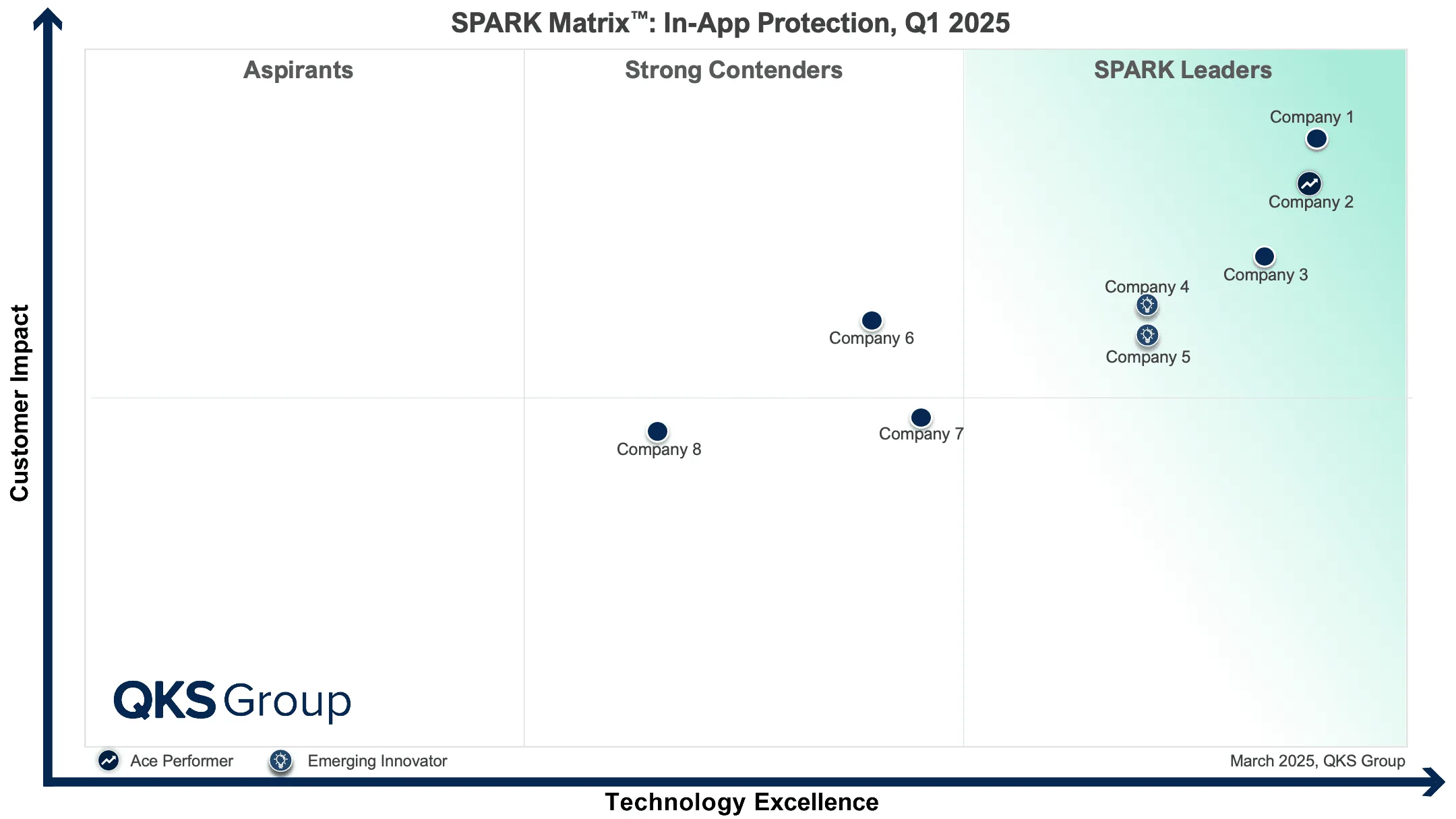
QKS Group's research includes a detailed competitive analysis and vendor evaluation using its proprietary SPARK Matrix™ methodology. The analysis evaluates leading In-App Protection Platform vendors based on their technological capabilities and market impact, providing stakeholders with a structured view of the competitive landscape.
Click here for Spark Plus : https://qksgroup.com/sparkplus?market-id=265&market-name=in-app-protection
The SPARK Matrix™: In-App Protection, QKS Group evaluates prominent vendors, including Zimperium, Guardsquare, Appdome, OneSpan, and Digital.ai.
The assessment helps technology buyers understand vendor capabilities across critical areas of In-App Protection, while enabling vendors to identify market trends, competitive differentiation, and opportunities for product innovation.
From Application Shielding to Trust Enforcement
According to Principal Analyst at QKS Group, “In-app protection has moved from being a ‘reverse engineering problem’ to being a ‘trust enforcement problem.’ Buyers are no longer paying just to hide code; they are paying to detect runtime attacks, prove app integrity to backend services, and reduce fraud in the exact moments where mobile journeys create financial risk.”
This shift highlights how the role of In-App Protection is expanding. Instead of focusing solely on making applications harder to analyze or modify, organizations are increasingly looking for solutions that establish application trust, detect runtime threats, validate integrity, and support secure digital transactions.
Future Outlook for the In-App Protection Market
The future of the In-App Protection market is expected to be shaped by the increasing sophistication of mobile threats and the growing dependence on applications for high-value digital interactions. Vendors that combine runtime security, application integrity, threat intelligence, fraud detection, and automated response capabilities can address a broader range of enterprise security requirements.
As organizations continue to prioritize secure mobile experiences, In-App Protection Platforms are likely to become an important component of modern application security strategies. QKS Group's SPARK Matrix™ provides technology providers and buyers with insights into the evolving vendor landscape, competitive differentiation, and technological capabilities shaping the market.