We’ve all done it.
You weren’t planning to order dessert. You were full. Completely satisfied. Ready for the check.
And then you saw it.
Maybe it was a glossy table tent showing molten chocolate cake. Maybe it was a cocktail feature card sitting right on the bar. Maybe your server dropped the check with a subtle, “We also have espresso martinis if you’re not ready to call it a night.”
Suddenly, you’re $14 deeper into the evening.
That moment — that small, seemingly spontaneous decision — is rarely accidental. It’s point-of-sale marketing working exactly as intended.
In bars and restaurants, the most powerful sales opportunities often happen at the last possible moment. And smart operators design their point-of-sale (POS) displays to capitalize on that window.
The Psychology Of The “Almost Done” Moment
There’s a fascinating psychological shift that happens when guests reach the end of their meal.
They’ve already committed. They’ve already spent. The hard decision — whether to dine out at all — is long behind them. At that point, adding one more item doesn’t feel like starting a new purchase. It feels like extending the experience.
Behavioral economists sometimes call this the “sunk cost effect.” Once we’ve invested in something, we’re more likely to continue investing. In a restaurant setting, that means an extra cocktail, a shared dessert, or a nightcap feels small compared to the total bill.
Point-of-sale marketing lives right in that space.
Bar Tops: Prime Real Estate For Impulse
If you want to see impulse marketing in action, sit at a bar and look around.
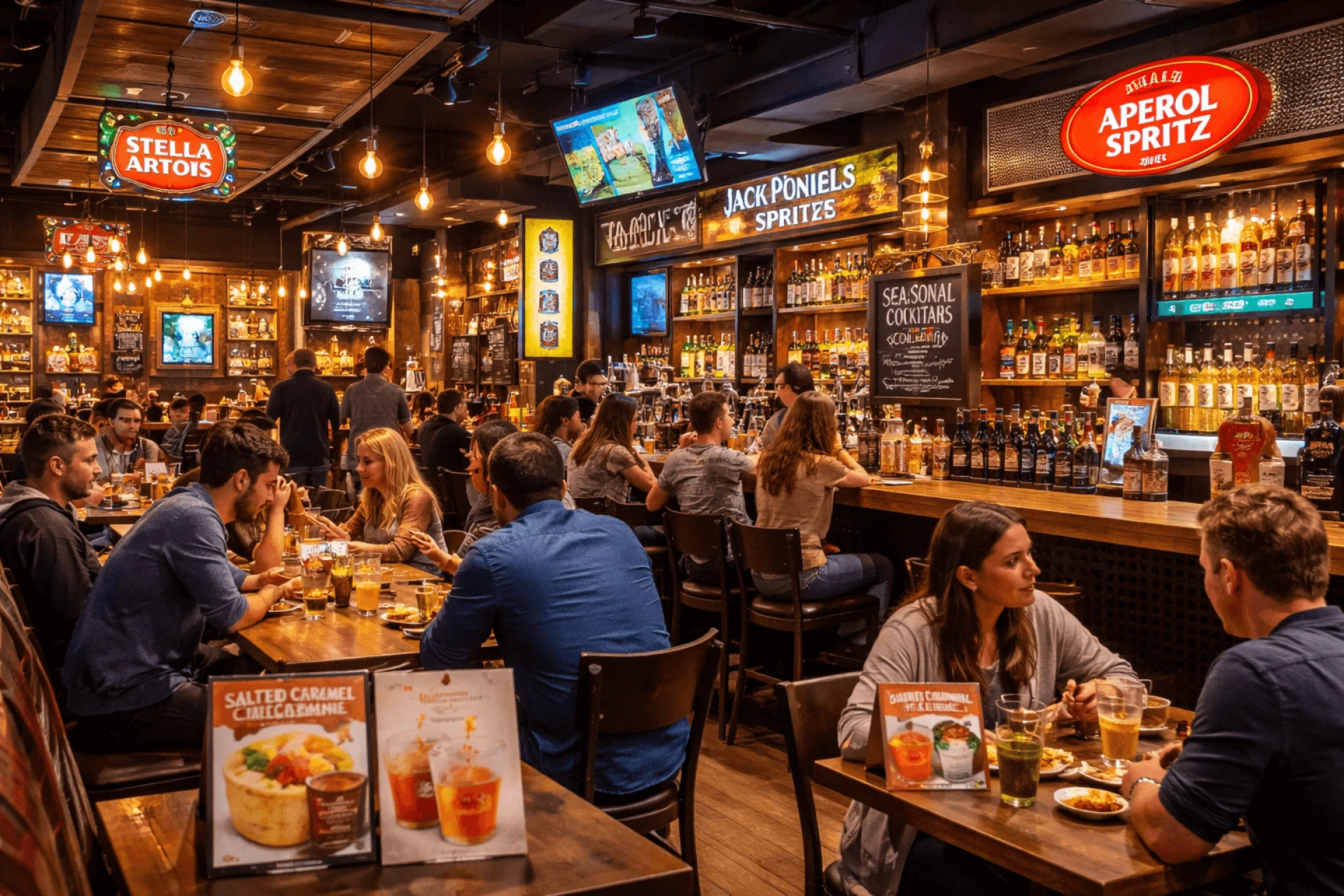
Branded napkin holders. Specialty drink inserts under the plexiglass. Limited-time cocktail cards perched next to the garnish tray. Illuminated liquor displays behind the bartender.
Alcohol brands, in particular, understand how powerful visibility is. Companies like Diageo and Anheuser-Busch invest heavily in branded tap handles, LED signage, and bar rail displays because decisions about drinks are often made in seconds — and at eye level.
If a seasonal IPA has a bold, custom tap handle while another beer has a plain label, guess which one feels more exciting?
Impulse thrives on prominence.
Table Tents And The Art Of Suggestion
Table tents have been around forever, but when used well, they’re incredibly effective.
The key is timing and focus.
A cluttered table tent with six promotions gets ignored. A clean, single-feature display — “Pumpkin Spice Old Fashioned, Limited Time Only” — feels urgent. Exclusive. Seasonal.
That sense of scarcity matters. When guests believe something won’t be available next time, they’re more likely to act now.
Large chains have mastered this kind of controlled suggestion. Walk into Applebee's or Chili's and you’ll almost always see a focused drink or appetizer promotion positioned directly in your line of sight.
It’s not random placement. It’s behavioral choreography.
The Check Presenter: The Most Underrated Sales Tool
If there’s one POS opportunity that operators consistently underestimate, it’s the check presenter.
By the time the bill arrives, guests are psychologically winding down. But they’re also in a moment of evaluation: Was this experience worth it? Do I want to extend it?
This is prime territory for subtle upsells.
Common examples include:
- Dessert inserts tucked into the check folder
- After-dinner drink callouts
- Branded mints or small packaged add-ons
- Bounce-back coupons for a future visit
Some restaurants even feature gift card promotions inside the check presenter — especially during the holidays. That final touchpoint can drive not just incremental sales that night, but future revenue.
Visual Cues Influence Perceived Popularity
There’s another powerful force at play in POS marketing: social proof.
When something is prominently displayed, highlighted, or given physical space, guests assume it’s popular.
That’s why phrases like “Most Ordered” or “Bartender’s Favorite” work so well. They reduce decision anxiety. Instead of scanning a 12-item cocktail list, the guest feels guided.
Quick-service brands like Starbucks have perfected this. The pastry case near the register isn’t just storage — it’s a visual upsell engine. Even if you walked in for coffee only, those neatly arranged baked goods subtly shift your perception of what “completes” the order.
Bars and restaurants apply the same logic with dessert trays, cocktail feature boards, and appetizer photos near host stands.
Visibility signals value.
Waiting Time = Selling Time
One overlooked opportunity for POS marketing is the wait.
Guests waiting for a table. Waiting for a drink. Waiting to pay.
Idle time increases suggestibility. When people are simply sitting and scanning their surroundings, well-placed marketing becomes part of the environment rather than an interruption.
This is why host stands often feature merchandise, seasonal promotions, or beverage features. It’s also why digital screens behind bars frequently rotate drink specials.
The key isn’t aggression — it’s integration. The promotion should feel like part of the atmosphere, not an advertisement shouting for attention.
Simplicity Wins
There’s a temptation to use every inch of space for promotion. But clutter kills impulse.
The most effective POS marketing in hospitality environments follows three principles:
- One clear message
- Strong visual appeal
- Easy decision pathway
“Add truffle fries for $3.”
“Try our limited bourbon release.”
“Share a warm brownie for the table.”
No essay. No complexity. Just a gentle nudge.
Impulse decisions are emotional, not analytical. The faster a guest can picture themselves enjoying the item, the more likely they are to say yes.
Training Still Matters
Even the best-designed POS materials need reinforcement from staff.
A cocktail card on the table becomes significantly more powerful when the server casually says, “That’s been really popular tonight.”
POS marketing works best when visual cues and human interaction align. The display plants the seed. The staff waters it.
Without that alignment, even beautifully designed materials can become background noise.
Small Increases, Big Impact
Here’s what makes POS marketing so compelling: small attachment increases compound quickly.
If a restaurant serving 200 covers per night increases dessert attachment by just 5%, that’s 10 additional desserts. Multiply that by an average $9 price point, and the incremental revenue adds up fast — especially when desserts carry strong margins.
The same logic applies to premium spirits, add-on sides, and specialty cocktails.
Impulse doesn’t need to double sales. It just needs to move the needle slightly — consistently.
Designed, Not Accidental
The next time you find yourself ordering something you didn’t plan on, pause for a second.
Was it prominently displayed? Highlighted as limited-time? Positioned right where you couldn’t ignore it?
Chances are, that decision was designed.
In bars and restaurants, point-of-sale marketing isn’t about flashy advertising. It’s about understanding human behavior at specific moments — when guests are relaxed, receptive, and already engaged.
Done well, it doesn’t feel pushy. It feels natural. Almost inevitable.
And that’s the magic of impulse by design.