The Problem That Happens 40 Feet in the Air
Picture this. An experienced forklift operator — someone with years of time on the machine — is retrieving a heavy pallet from the fourth level of a racking system. From the cab, the load is a distant shape. The fork tips are invisible behind the pallet face. The gap between the forks and the pallet entry points is pure guesswork, informed by experience and spatial memory built up over years of repetition.
Most of the time, it works. The forks find their mark, the load lifts cleanly, and nobody thinks twice about the precision involved.
But sometimes it doesn't. The fork tip catches the base of the pallet at the wrong angle. The load shifts. A corner of the racking upright takes a hit. A product on an adjacent shelf vibrates loose. Or worse — the load becomes unstable on the way down, and what started as a minor mis-entry becomes a serious incident.
This is the fork positioning problem. It's not dramatic when it happens incrementally, which is exactly why it gets underestimated — until the racking inspection report comes back, or the product damage figures land on someone's desk, or a near-miss triggers a full safety review.
The solution isn't more experienced operators. It's better visibility. And that's precisely the gap that a purpose-built wireless camera for forklift fork applications is designed to close.
Why Fork Positioning Is Fundamentally a Visibility Problem
To understand why camera technology addresses fork positioning so effectively, it helps to understand the physics of the problem.
At ground level, a trained operator can see the fork tips clearly, judge the gap between tines and pallet entry points, and make fine adjustments with confidence. The feedback loop between eye and hand is tight and reliable.
At height, that feedback loop breaks down almost entirely. The operator's eye line is at cab level — typically between 1.5 and 2 metres from the ground. The load engagement point might be 6, 8, or 12 metres up. The angle of vision to the fork tips becomes increasingly oblique as height increases, and the detail needed to make accurate positional corrections simply isn't visible from the cab without optical assistance.
The result is that high-lift operations rely heavily on operator estimation — a skill that degrades with fatigue, time pressure, reduced lighting, and the cumulative cognitive load of a full shift. Even excellent operators make positioning errors under these conditions. It's not a training failure. It's a physical limitation of unaided human vision operating at distance.
How Fork-Mounted Cameras Change the Equation
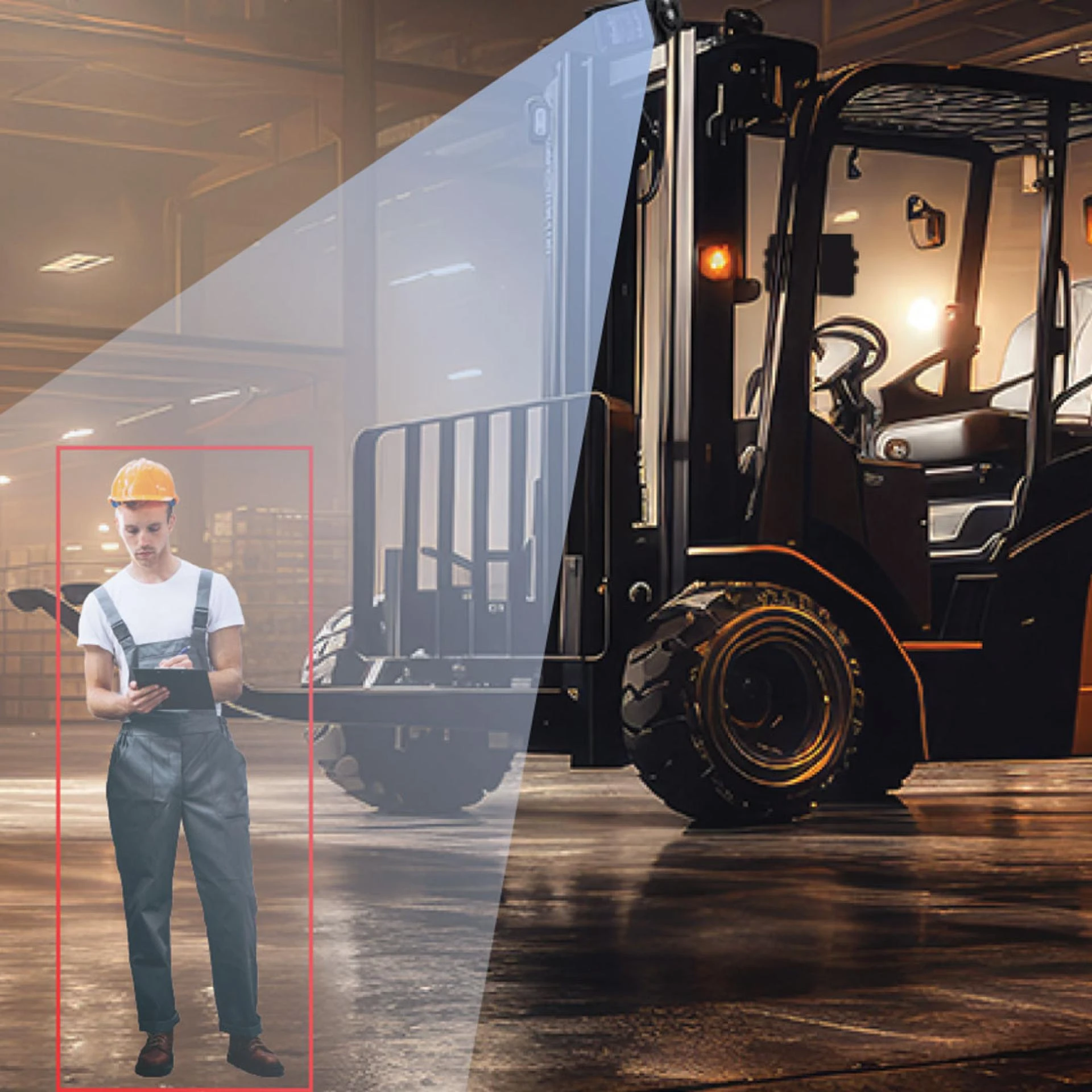
A fork-mounted camera — positioned to give a direct, real-time view of the fork tips and their immediate engagement zone — restores the tight visual feedback loop that exists at ground level, regardless of working height.
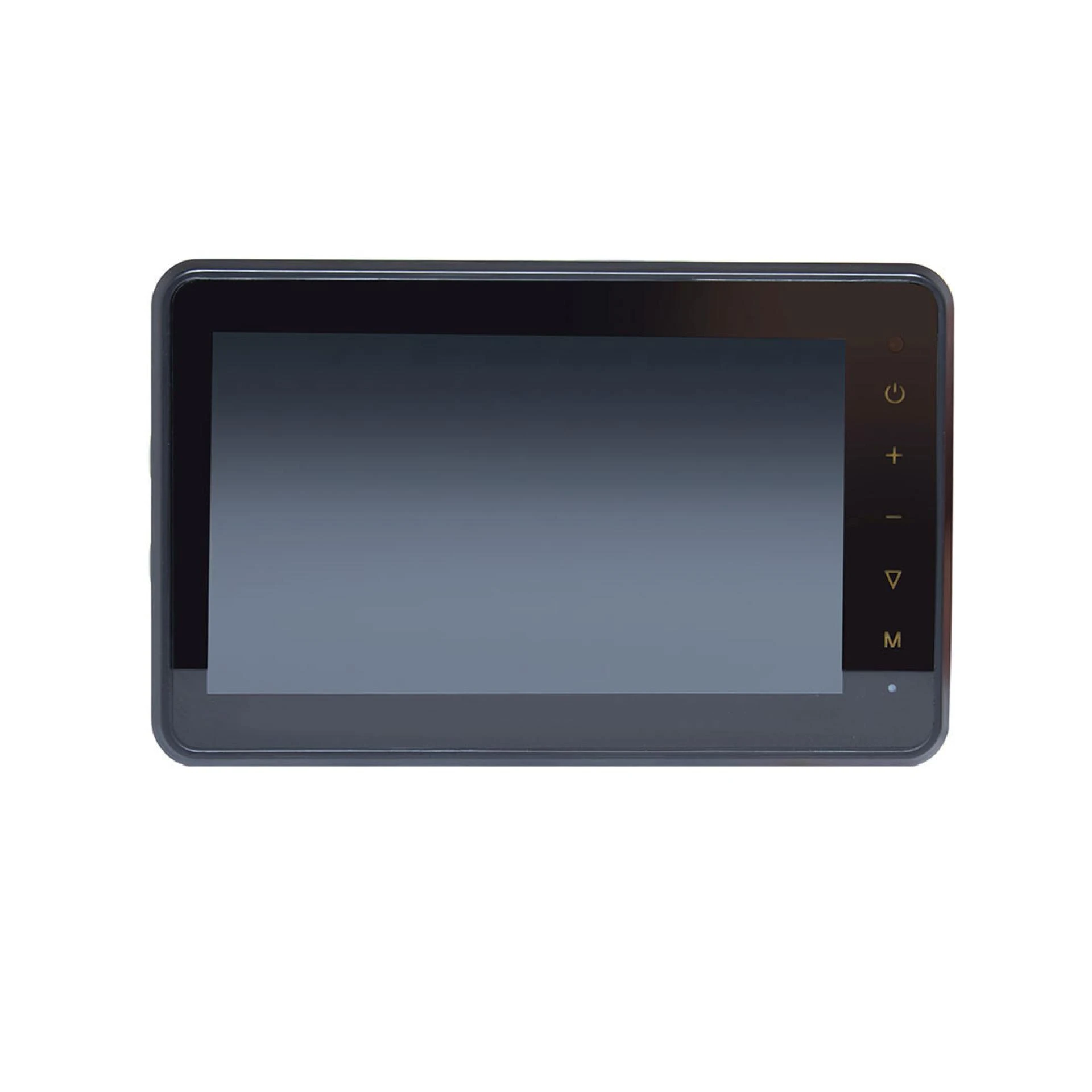
The camera transmits live footage wirelessly to a monitor in the operator's cab, giving them a close-up, first-person perspective of exactly what the forks are doing relative to the pallet entry points. Fine positional adjustments that would otherwise require estimation become visible, deliberate, and precise.
The practical impact of this is measurable and immediate. Operators report significant reductions in the number of approach corrections needed before successful pallet entry. Engagement time per pick or place operation decreases. And critically, the rate of pallet damage, racking contact, and load instability events drops sharply — because the root cause of most of those incidents is positional imprecision that the camera makes visible before it becomes a problem.
For a Forklift Wireless Camera System deployment focused specifically on fork positioning, camera placement and angle are everything. The optimal position is at or near the fork carriage, angled to give a clear view of both fork tips simultaneously, with sufficient field of view to capture the pallet face and entry points in a single frame. Systems that allow the operator to switch between multiple camera angles — including a carriage-level fork view and a wider mast-mounted overview — give the most complete picture for complex high-lift manoeuvres.
The Wireless Advantage in Fork Camera Applications
Why wireless specifically? In fork-mounted camera applications, the answer is more technically compelling than in most other use cases.
The forks and mast of a forklift are moving components. They extend, tilt, and travel vertically through a significant range of motion on every operating cycle. Running physical cables through or alongside this mechanism creates immediate and persistent problems — cables that snag on moving parts, get pinched between mast sections, develop intermittent faults from constant flexing, or simply fail under the mechanical stress of continuous movement.
A wireless forklift camera system eliminates all of that. The camera transmits its signal to the cab-mounted receiver without any physical cable connection spanning the moving mechanism. The transmission is continuous, stable, and unaffected by the mast's range of motion — meaning the operator gets a reliable, uninterrupted feed throughout the entire lift cycle, not just when the mast happens to be in a position where a cable isn't being stressed.
For facilities where forklifts are running multiple shifts and high-lift operations are frequent — exactly the environments where fork positioning accuracy matters most — this reliability is not a minor convenience. It's a fundamental requirement for a system that needs to perform consistently across thousands of operational cycles.
Precision at Height: The Racking and Product Damage Connection
It's worth being direct about the commercial dimension of fork positioning accuracy, because the numbers are significant.
Racking damage is one of the most consistently underreported cost items in warehouse operations. Minor impacts — the kind that a fork tip mis-entry causes on every affected pick — accumulate invisibly until a racking inspection reveals uprights, beams, or connectors that are damaged beyond safe tolerance. Racking replacement and repair costs are substantial. More critically, undetected racking damage creates structural risk that can result in catastrophic rack collapse — an event with potentially fatal consequences and enormous liability exposure.
Product damage from mis-engaged pallets is similarly cumulative. A pallet that's been lifted at a slightly wrong angle, or whose base has been compromised by repeated fork contact at the wrong point, is more likely to shed product during transit or storage. In high-value product environments — electronics, pharmaceuticals, temperature-sensitive goods — these losses add up fast.
SharpEagle's fork camera solutions, deployed across facilities in the UK, UAE, and Kuwait, consistently demonstrate measurable reductions in both racking contact incidents and product damage rates within the first months of operation. In ATEX-rated environments — where the consequences of a racking failure or product incident can extend to explosive atmosphere risk — the precision that fork cameras enable carries safety implications that go beyond the standard warehouse context.
Integration Into Your Broader Camera Strategy
A fork-mounted camera doesn't exist in isolation. The most effective deployments integrate fork-level visibility as one component of a broader wireless camera for forklift strategy — combining fork tip and carriage cameras with rear-view and side cameras to give operators comprehensive situational awareness across all phases of their operating cycle.
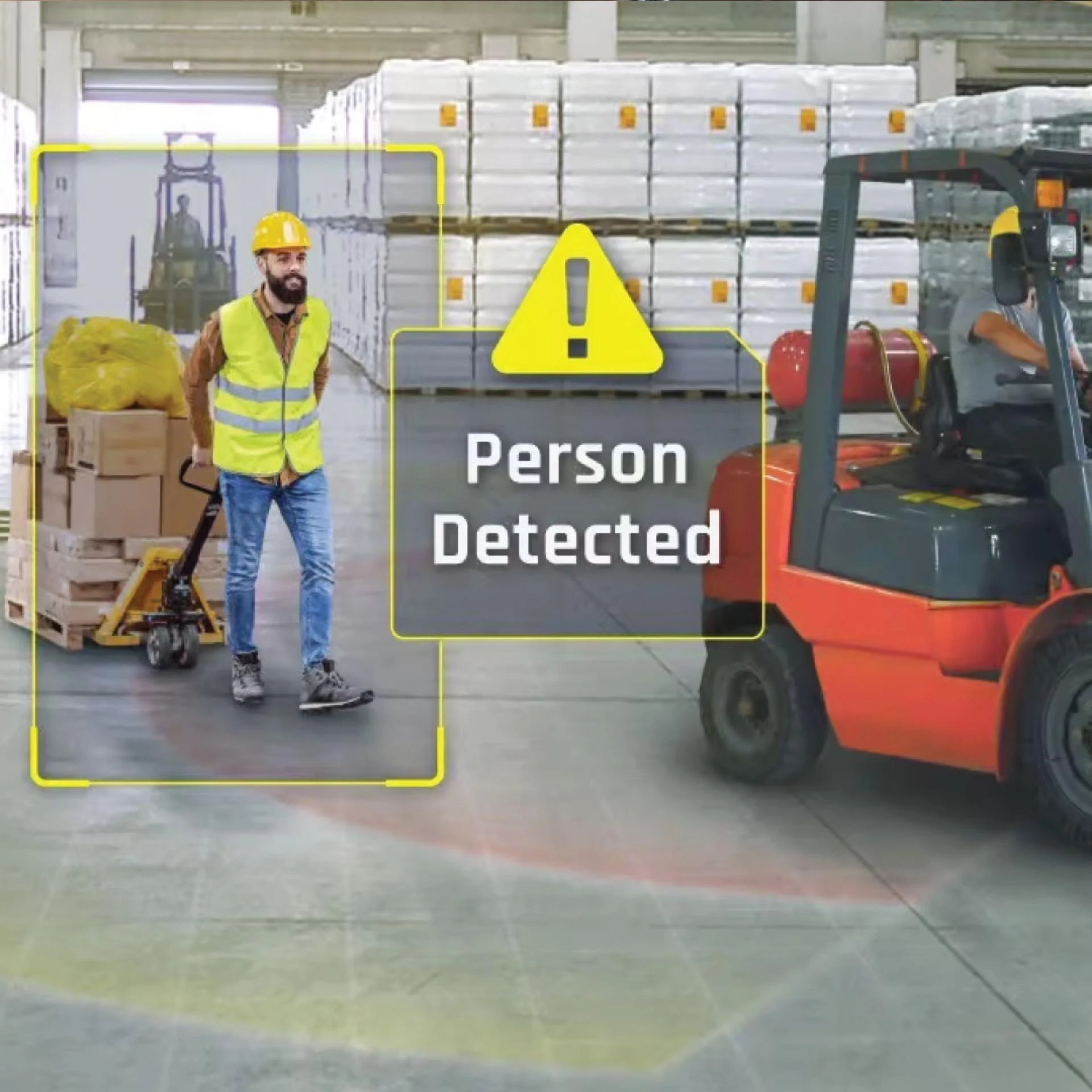
The camera that helps a driver position forks accurately at height is the same system that protects pedestrians during ground-level reversing manoeuvres. The wireless infrastructure that supports fork camera transmission is the same network that carries footage from the rear camera to the monitor during low-speed travel. Specifying and deploying these components as an integrated system — rather than as isolated bolt-ons — delivers both better safety outcomes and better value from the overall investment.
Facility managers evaluating fork camera solutions should ensure the system they select supports multi-camera integration from the outset, uses a wireless transmission standard robust enough to handle simultaneous feeds without degradation, and is mounted and protected to withstand the specific mechanical environment of the mast and carriage assembly.
Conclusion
Fork positioning accuracy is one of the most technically specific challenges in forklift operations — and one of the most consequential for product integrity, racking safety, and operator confidence at height. The limitations of unaided human vision at elevation are real, predictable, and addressable with the right technology.
A purpose-configured Forklift Wireless Camera System with dedicated fork and carriage-level cameras doesn't ask operators to develop superhuman spatial awareness. It simply gives them back the visual information they lose when the load goes above eye level — and in doing so, transforms high-lift operations from a process defined by estimation into one defined by precision.
SharpEagle's camera solutions are engineered for exactly these demands, built to perform reliably in the most challenging industrial environments and deployed with the regional expertise that facilities across the UK, UAE, and Kuwait depend on.
As you assess the fork positioning accuracy and racking damage profile across your own fleet, the question worth asking is: how many of your high-lift incidents over the last twelve months could have been prevented if your operators had simply been able to see exactly where their forks were going?