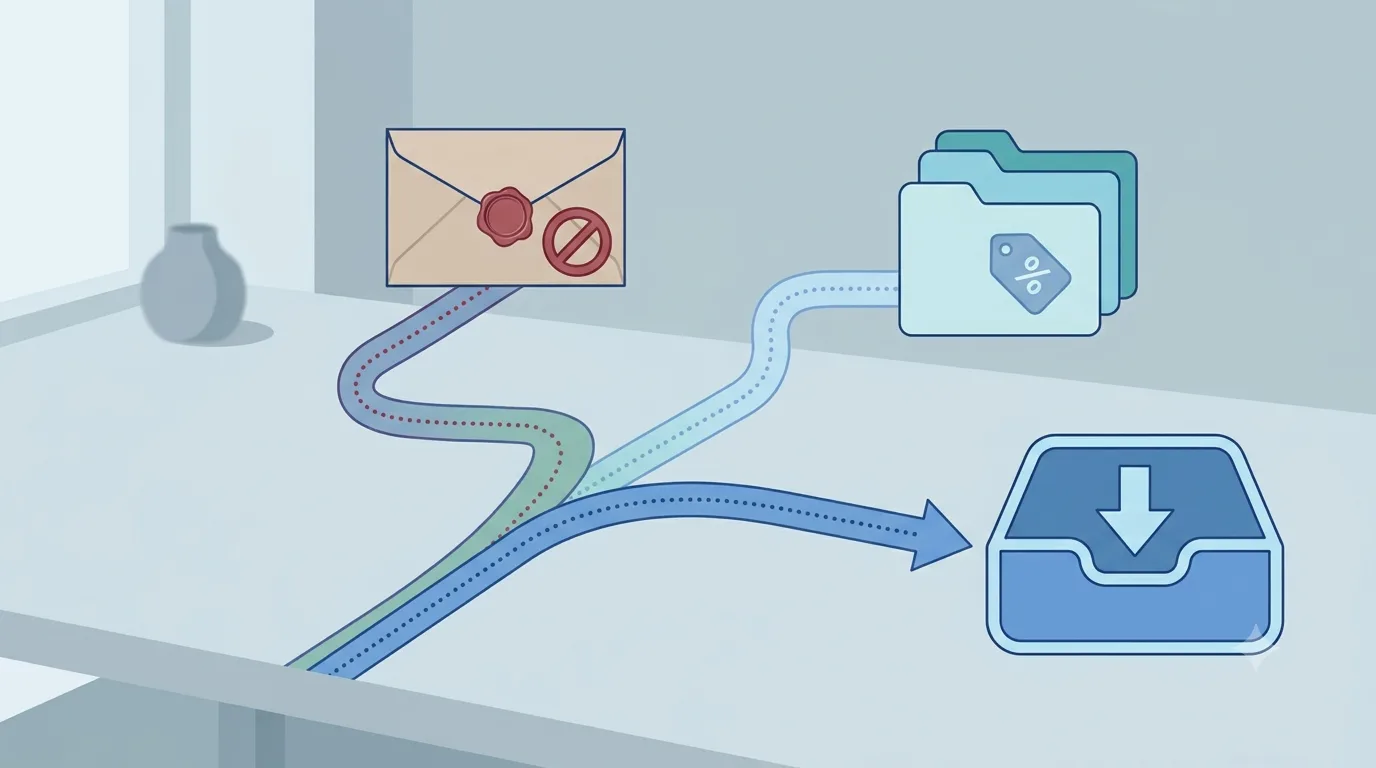
Most advice on how to improve email deliverability Klaviyo users receive treats deliverability as one problem with one solution. In reality, two quite different problems hide behind the word. One is about trust, meaning whether mailbox providers believe your mail is wanted. The other is about sorting, meaning which tab a trusted message ends up in. Knowing which one you have saves weeks of work spent on the wrong fix, and it explains why some brands do everything right and still see poor results.
Two problems that look identical on a report
Both issues show up as lower opens, fewer clicks and weaker revenue per email. That is why they are so often confused. A brand with a reputation problem may be reaching spam or being throttled. A brand with a placement problem is being delivered but filed in Promotions, where it competes with dozens of other marketing messages. The symptoms overlap, but the causes and the repairs do not.
What reputation work covers
Reputation work is the traditional core of Klaviyo deliverability. It includes authentication with SPF, DKIM and DMARC, a branded sending domain, warm-up for new domains, regular list cleaning, sunset flows and monitoring of complaints and bounces. Its aim is to convince Gmail, Yahoo and others that your mail is welcome. Done properly, it keeps you out of the spam folder and protects you from penalties. It is slow by nature, usually taking weeks, because trust is built through consistent behaviour.
What placement work covers
Placement work deals with the sorting decision. Gmail uses sender identification, content, link density, subscriber history and technical headers to decide between Primary and Promotions. Commercial mail from ecommerce brands scores high on many of those signals, so a strong reputation does not guarantee Primary placement. Klaviyo inbox placement tools such as Mailmend aim at this layer. Mailmend sends your emails to rotating test inboxes, analyses what it calls the promotional threshold and generates account-specific code that is dragged into Klaviyo templates, with no changes to copy or design.
How to tell which one you have
Look at your reputation indicators first, including complaint rate, bounces, engagement trends and the Klaviyo Deliverability Hub. If they are weak, start there. If they are healthy and your emails are still landing in Promotions, placement is the likelier culprit. A simple Gmail seed test gives a rough view, and a Klaviyo A/B test gives a firmer one.
Why the order of work matters
Fix the foundation before adding anything on top. A placement tool built on a damaged reputation will not perform well, and a reputation fix will not move a tab-placement problem. Mailmend's own guidance describes the two as complementary, with reputation tools handling hygiene and warm-up and placement tools handling the Primary versus Promotions decision. Its overview of ways to improve Klaviyo deliverability sets out that sequence in more detail.
Timing and peak season
Speed matters more than most brands expect. Reputation repair and domain warm-up take two to four weeks and involve reduced sending, which can cost revenue if it overlaps with a major sale. A deliverability strategist quoted in Klaviyo's guidance recommends beginning at least three months before Black Friday and Cyber Monday. Brands that discover a problem in October have fewer options, which is why some turn to faster placement fixes.
What brands report
Mailmend's case studies show what placement fixes can do when reputation is already sound. Dr. Squatch ran a test over its first day and saw email revenue more than double. StickerYou reported a boost on day one that grew to a doubling by the end of its first month. Larsson & Jennings, hit by a data failure at its email service provider and by promotions tab problems, credited the tool with saving its Black Friday. These are the company's own figures, so treat them as a prompt to run your own test rather than as a guarantee.
Measuring what works
Use Klaviyo's native A/B testing for any deliverability change, and compare opens, clicks and attributed revenue, not opens alone, because Apple Mail Privacy Protection inflates open figures. Keep a simple log of dates and changes so that cause and effect are easy to trace later.
Bringing it together
To improve email deliverability in Klaviyo, split the work in two. Protect your reputation with authentication, hygiene and sensible volume, and then deal with placement if Promotions remains the problem. Treating them as one task is the quickest way to spend months fixing the wrong thing.
Frequently Asked Questions
Is Klaviyo deliverability the same as inbox placement?
No. Deliverability covers whether your mail is accepted and avoids spam, while inbox placement covers which tab it lands in. A message can be delivered perfectly well and still sit in Promotions.
Can good sender reputation get me into the Primary inbox?
It helps you avoid spam, but it does not decide the tab. Tab placement is judged on separate signals such as sender identification, content, links and subscriber history.
What should I fix first if my open rates are low?
Check reputation and authentication first, then list quality. If those are healthy and emails still land in Promotions, look at placement.
Do I need to change my emails to improve placement?
Traditional advice suggests fewer images and links, but that often compromises effectiveness. Placement tools such as Mailmend work at the code level without changing visible content.