
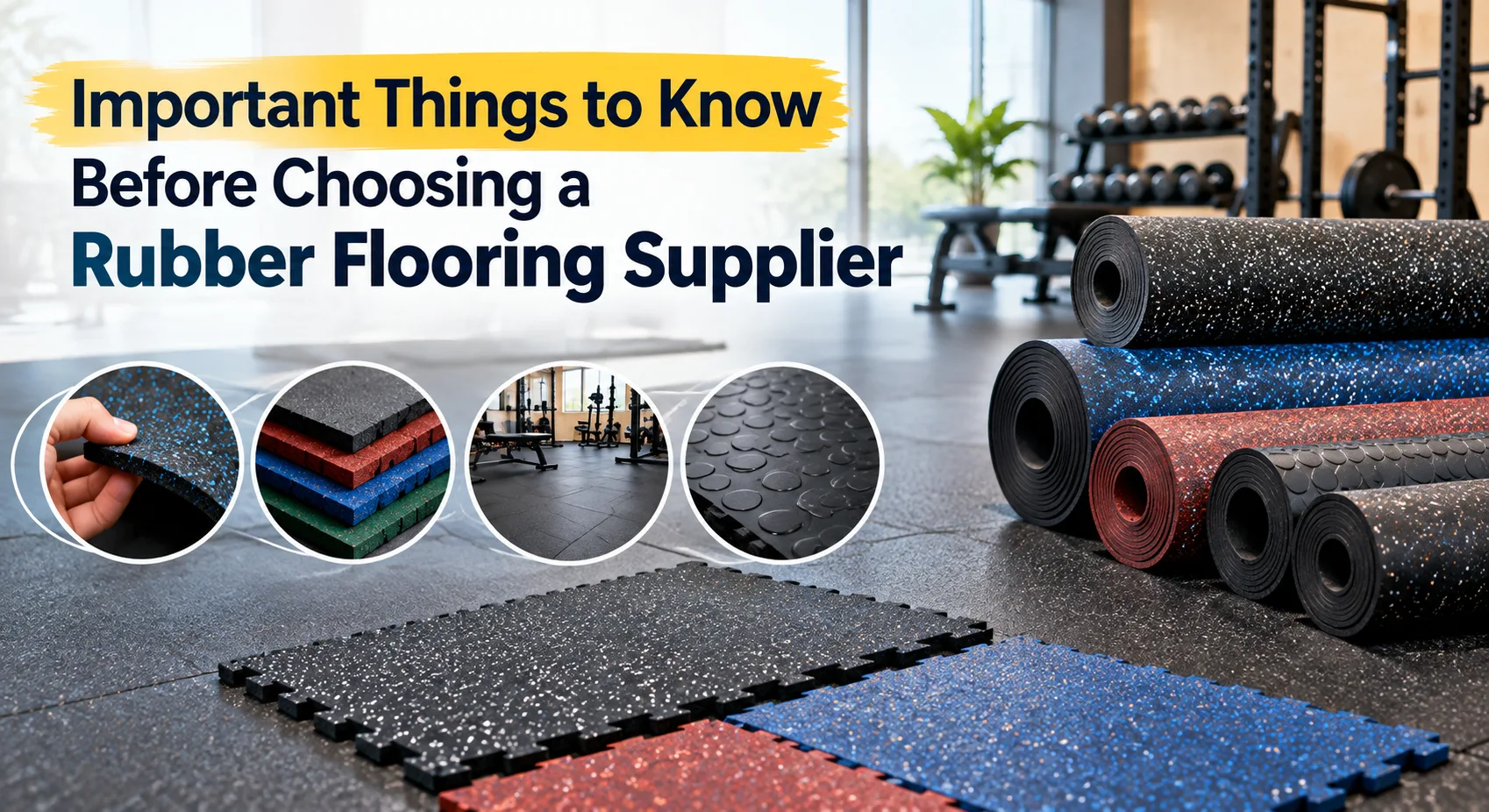
Rubber flooring is widely used in gyms, fitness centers, schools, playgrounds, commercial buildings, offices, and other high-traffic spaces. It is valued for its durability, shock absorption, slip resistance, and ability to handle regular wear. However, choosing the right flooring material is only one part of the process. Selecting a reliable supplier is equally important because the supplier can affect product quality, installation support, customization options, and the overall value of your flooring investment.
When looking for a rubber flooring supplier, it is important to consider more than product availability or price. A dependable supplier should offer suitable flooring solutions based on the intended application, expected foot traffic, installation environment, and maintenance requirements. Understanding these factors can help buyers make a practical decision and avoid problems related to poor-quality materials, incorrect specifications, or limited after-sales support.
Check the Quality of the Flooring
The quality of rubber flooring can vary depending on the materials, manufacturing process, thickness, density, and surface finish. Before placing an order, ask about the product specifications and intended usage. Flooring designed for a commercial gym may have different requirements from flooring used in a school, playground, or industrial area.
High-quality rubber flooring should provide good resistance to wear and maintain its performance under regular use. It should also have a suitable surface texture to support traction and reduce the risk of slipping. Checking samples before making a large purchase can help you understand the appearance, texture, and overall quality of the product.
Consider the Flooring Application
Every space has different flooring requirements. For example, fitness areas may require excellent impact absorption because weights and equipment can place significant stress on the floor. Play areas may need cushioning and slip resistance, while commercial spaces may require a combination of durability, appearance, and easy maintenance.
A good supplier should be able to explain which type of rubber flooring is appropriate for your specific application. They should also provide information about thickness, dimensions, surface patterns, and suitable installation methods.
Review Available Sizes and Designs
Rubber flooring is available in different formats, including tiles, rolls, and custom-cut options. Tiles can be convenient for areas where damaged sections may need to be replaced individually, while rolls can provide a more continuous surface over larger spaces.
Design and color choices can also influence the appearance of a facility. Depending on the supplier, buyers may have access to different colors, patterns, textures, and surface finishes. Reviewing available options in advance can make it easier to select flooring that matches the overall design of the space.
Ask About Installation Requirements
Proper installation plays an important role in the performance and appearance of rubber flooring. Before purchasing, ask the supplier about surface preparation, adhesives, installation methods, expansion requirements, and recommended subfloor conditions.
Some flooring products may require professional installation, especially when they are being installed over large areas or in spaces with demanding usage conditions. Understanding installation requirements beforehand can help prevent unexpected costs and ensure a more consistent final result.
Compare Durability and Maintenance
Rubber flooring is generally known for being durable, but maintenance requirements can differ between products. Ask about recommended cleaning methods, suitable cleaning products, resistance to stains, and expected performance under regular use.
A flooring solution that is easy to maintain can save time and reduce long-term maintenance expenses. It is also useful to understand how the flooring is expected to perform in areas exposed to moisture, heavy equipment, frequent foot traffic, or outdoor conditions.
Evaluate Supplier Support
A supplier's service quality is another important consideration. Communication should be clear from the initial enquiry through product selection, delivery, and installation. A reliable supplier should provide accurate product information and respond to questions about specifications, availability, and installation.
For larger projects, discuss delivery schedules, quantities, packaging, and replacement requirements before confirming the order. Clear communication can reduce delays and make project planning easier.
Compare Value Rather Than Only Price
Price is an important part of any flooring project, but the lowest price does not always provide the best overall value. Consider product quality, expected lifespan, installation requirements, maintenance needs, warranty terms, and supplier support when comparing different options.
A slightly higher initial investment may provide better long-term value if the flooring offers stronger durability and requires fewer repairs or replacements. Buyers should therefore compare complete product and service packages instead of focusing only on the initial quotation.
Conclusion
Choosing suitable rubber flooring requires careful consideration of quality, application, durability, installation, maintenance, and supplier support. Taking time to compare these factors can help ensure that the flooring meets the practical and aesthetic requirements of the space. Working with an experienced company such as Z&S Carpets can also help buyers understand their available flooring options and make informed decisions based on their project requirements.