It started with a twenty.
Daniel had always been the kind of man who double-counted his change, not out of distrust but out of habit. He worked long shifts at a printing shop, where precision mattered, and the attention to detail spilled over into his everyday life. So when the cashier at the corner grocery slid a crisp $20 bill back to him with his bag of bread, milk, and eggs, he folded it neatly into his wallet without so much as a glance.
It was late, the store lights buzzed faintly, and the clerk seemed eager to go home. Daniel didn’t think much about it until the next morning, when he stopped at a gas station to fill up.
“Sorry, man,” the attendant said after holding the bill up to the light. “This is fake.”
Daniel frowned. “What do you mean fake?”
The attendant pointed to the dull ink, the paper that felt more like copier stock than currency, the missing watermark. Daniel’s stomach dropped. He looked at the bill again, this time with suspicion, and the flaws glared at him like neon signs.
He tried to explain that he’d just gotten it as change at the grocery store, but the attendant’s skeptical look made it clear: counterfeit or not, the gas station wasn’t taking it. Daniel tucked the bill back into his wallet, embarrassed, and drove off on what little fuel remained.
Strike one.
The second encounter came a week later. Daniel had just finished a job interview across town, and to celebrate, he stopped at a diner he hadn’t visited in years. The waitress smiled warmly, refilled his coffee twice, and handed him his change after he paid the $12 bill with a $20.
But instead of small bills, she gave him a single $100 note. He blinked at it.
“This can’t be right,” he said.
The waitress shrugged. “That’s what the register says. We’re running low on small bills today.”
It felt odd, but Daniel wasn’t about to argue with good fortune. He slipped the $100 into his wallet, his heart fluttering with the small thrill of having more money than expected. Maybe it was a lucky sign, he thought. Maybe the job interview would come through.
The luck vanished two days later.
He was at the electronics store, eyeing a new set of headphones he’d promised himself if he landed steady work again. At the register, he confidently handed over the $100 bill. The cashier froze.
One call later, a manager appeared. He inspected the bill, rubbed it between his fingers, and gave Daniel a long, suspicious stare.
“This is counterfeit", the manager said flatly.
Daniel’s mouth went dry. “No—it can’t be. I got that from a diner!”
But his protests sounded weak, even to his own ears. The cashier crossed her arms, already impatient with the delay. The manager set the bill aside, muttering something about reporting procedures.
Daniel left the store empty-handed, his pulse hammering in his ears.
Strike two.
By the third time, paranoia had set in.
Daniel checked every bill he received. He squinted under the light, rubbed the paper, even held it up to windows. Friends started to joke that he was obsessed, but Daniel couldn’t shake the unease that followed him everywhere now.
And then, it happened again.
He was at a small café on a rainy afternoon, sipping coffee and working on a notebook full of half-formed ideas. The place was quiet, the kind of shop where the barista remembers your name. When he paid for his drink, the cashier handed him a $5 bill in change.
Daniel’s eyes lingered on it. Something felt off. The color seemed wrong—too pale, the green almost washed away. His fingers tightened around the bill, and a cold dread slid down his spine.
He knew before checking.
Another counterfeit.
Suspicion gnawed at him now. Three times in less than a month. Three different stores. Three different denominations.
It didn’t feel like coincidence anymore.
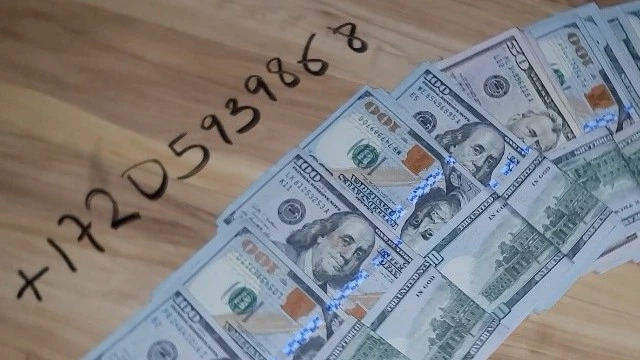
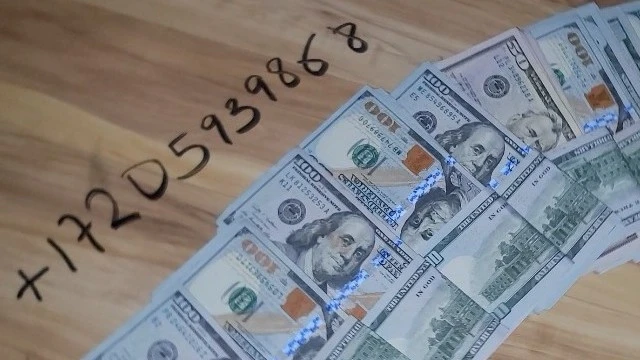
Daniel spread the bills out on his kitchen table that night—the $20, the $100, and the $5. He stared at them as if they might whisper their secret if he waited long enough. The thought crept in slowly, then refused to leave: was someone targeting him?
He remembered the faces of the clerks: the tired man at the grocery store, the smiling waitress at the diner, the cheerful barista at the café. All ordinary, all harmless—or so they had seemed. But what if they weren’t?
What if this was deliberate?
He couldn’t sleep. Each time he closed his eyes, he saw the dull ink of those bills, the accusing looks of strangers, the unspoken suggestion that maybe he was the one passing fakes around town.
The next morning, he carried the bills in an envelope and went back to the grocery store. The cashier who had handed him the $20 was gone, replaced by a young woman who smiled too easily. Daniel asked for the manager.
When the manager came, Daniel explained everything—every detail, every suspicion.
The manager listened politely, then shook his head. “We handle a lot of cash here. If something slipped through, it wasn’t intentional. You should probably go to the police.”
But Daniel didn’t. Something about the way the manager avoided his eyes unsettled him.
At the diner, the waitress who had given him the $100 was nowhere to be found. Another server said she had quit suddenly, without notice.
At the café, the barista acted confused when Daniel asked about counterfeit bills. “I just work the machine, man,” he said with a shrug.
Every answer felt like another brick in the wall closing around him.
By the end of the week, Daniel’s paranoia had sharpened into fear. He kept the envelope with the bills hidden in his jacket, convinced someone might break into his apartment to take them back.
The nights stretched long. Every noise outside his window made him flinch. Every stranger’s glance felt like suspicion. He started walking different routes home, checking over his shoulder.
It wasn’t just about the money anymore. It was about the pattern, the precision. Twenty dollars. One hundred. Five. Different amounts, different places, different people—but all of them finding their way to him.
Like a message.
But from who? And why?
The breaking point came when he returned home one night to find an envelope slipped under his door.
No name, no return address. Just a single sheet of paper inside.
On it, three numbers scrawled in thick black ink:
20 — 100 — 5
Daniel dropped the paper as if it burned his skin. His heart thudded against his ribs. Someone was watching him. Someone knew.
The counterfeit bills on his table suddenly seemed less like mistakes and more like markers, breadcrumbs leading him somewhere he didn’t want to go.
Daniel never reported the bills to the police. By the time he gathered the courage, the envelope had vanished from his apartment. So had the counterfeit money.
All that remained was the creeping knowledge that someone out there had chosen him, for reasons he couldn’t understand.
And sometimes, late at night, when the city is quiet and his apartment feels too still, Daniel swears he hears the faint crinkle of paper—like bills being counted in the dark.