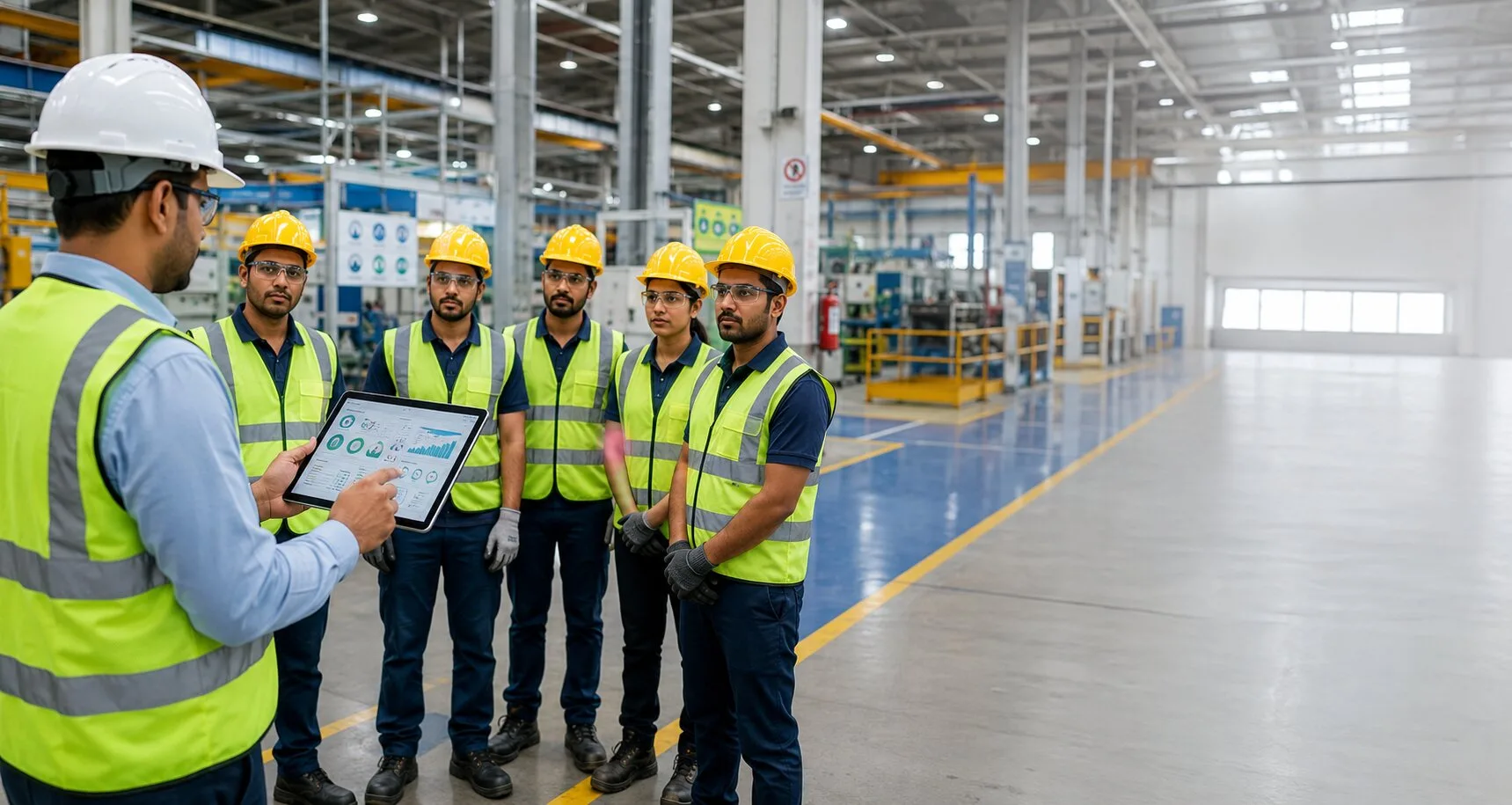
Health, Safety, and Environment (HSE) management has moved from being a compliance afterthought to a boardroom priority for organizations across India. As industries expand, regulatory scrutiny tightens, and workforce expectations shift, businesses can no longer rely on registers, spreadsheets, and manual inspections to manage workplace risk. This is where HSE software steps in. It is transforming how Indian companies identify hazards, track incidents, manage compliance, and build a genuine culture of safety. In this guide, we take a detailed look at what HSE software really means, why it matters so much in the Indian context, and how organizations can choose and implement the right system for their needs.
Understanding HSE Software and Why It Matters
HSE software refers to a digital platform designed to help organizations plan, monitor, and manage all aspects of workplace health, safety, and environmental performance. Instead of relying on scattered paperwork, disconnected spreadsheets, and email trails, an HSE platform brings everything together in one place. It typically covers incident reporting, risk assessments, audits and inspections, permit-to-work systems, training records, and environmental monitoring, all accessible through a single dashboard.
The reason this matters so much right now is that Indian industry is going through a period of rapid transformation. Manufacturing output is rising, infrastructure projects are multiplying, and sectors like renewable energy, logistics, and pharmaceuticals are scaling at a pace that traditional safety management methods simply cannot keep up with. When safety processes are manual, they are slow, inconsistent, and prone to human error. A near-miss might go unreported because filling out a paper form feels like too much friction. An expired certification might be missed because nobody was tracking renewal dates in real time. HSE software closes these gaps by making safety management proactive rather than reactive, giving leadership real visibility into what is actually happening on the ground rather than a delayed, incomplete picture assembled weeks after the fact.
The Regulatory Landscape Driving HSE Software Adoption in India
India's safety and environmental regulatory framework has historically been fragmented, spread across laws like the Factories Act, the Environment Protection Act, and various state-specific labour rules. However, the introduction of the Occupational Safety, Health and Working Conditions Code has been a significant shift, consolidating multiple older laws into a more unified structure and placing greater emphasis on documented safety processes, worker welfare, and employer accountability.
This regulatory evolution has direct implications for how companies manage compliance. Inspectors and auditors increasingly expect digital trails rather than dusty registers that may or may not reflect reality. Organizations operating in sectors like construction, chemicals, oil and gas, and manufacturing are under growing pressure to demonstrate not just that they have safety policies on paper, but that those policies are actively being followed, monitored, and improved. HSE software makes this demonstration far easier because every inspection, corrective action, and training record is timestamped, attributable, and instantly retrievable. When a regulator or client audit team asks for evidence of compliance, a company using digital HSE tools can produce it in minutes instead of days, which itself becomes a competitive and reputational advantage.
Beyond domestic regulation, many Indian companies now operate as part of global supply chains, supplying to multinational clients in Europe, the US, and the Middle East. These clients often mandate strict HSE reporting standards as a condition of doing business, and increasingly they want that reporting delivered through recognized digital systems rather than manual submissions. For export-oriented manufacturers and EPC contractors, adopting HSE software is no longer optional if they want to retain international contracts.
Why Indian Businesses Are Moving Beyond Paper-Based Safety Management
For decades, safety management in India relied heavily on physical registers, printed checklists, and Excel trackers maintained by site supervisors. While this approach worked when operations were smaller and simpler, it started to break down as companies grow. A large manufacturing plant with multiple shifts, a construction company running several sites simultaneously, or a logistics firm managing a widespread fleet cannot realistically maintain accurate, real-time safety data using paper alone.
The core problem with manual systems is not that people are careless, but that paper simply cannot scale. Information sits in silos. A safety officer at one site has no visibility into incidents happening at another. The head office often only receives a summary report once a month, by which time patterns that could have prevented an accident have already gone unnoticed. Data entry errors creep in when handwritten forms are transcribed into spreadsheets. And perhaps most importantly, paper-based systems make it nearly impossible to spot leading indicators of risk before they turn into actual incidents.
HSE software solves this by centralizing information the moment it is captured, often directly from a mobile device on the shop floor or job site. A worker who spots a hazard can log it instantly with a photo, and the responsible manager receives an alert immediately rather than finding out about it during a weekly review. This shift from reactive record-keeping to real-time visibility is really the heart of why so many Indian organizations are rethinking their approach to safety management altogether.
Key Features to Look for in HSE Software
When evaluating HSE software, it helps to understand what capabilities actually make a meaningful difference in day-to-day operations rather than just looking impressive in a sales demo.
Incident and near-miss reporting is usually the starting point. A good system allows any employee, regardless of technical skill, to report an incident quickly from a phone or tablet, complete with photos, location tagging, and witness details. What separates a strong platform from a basic one is what happens after the report is submitted. The software should automatically route the report to the right person, trigger an investigation workflow, and track corrective actions until they are actually closed out, rather than letting reports disappear into an inbox.
Risk assessment and hazard identification tools are equally important. Rather than relying on static risk matrices printed once a year, modern platforms let safety teams build living risk registers that update as conditions change, whether that is a new piece of machinery being installed or seasonal weather risks affecting an outdoor worksite.
Audit and inspection management is another area where software makes a tangible difference. Instead of a supervisor carrying a clipboard and later typing up findings, digital checklists guide inspectors through standardized questions, flag non-conformances automatically, and generate a report the moment the inspection is complete. This consistency matters enormously in India, where safety standards can vary widely from one site supervisor to another if left to individual judgment alone.
Training and certification tracking deserves particular attention given India's diverse and often transient workforce, especially in construction and manufacturing where contract labour is common. A strong HSE platform keeps a record of every worker's training history, flags upcoming certification expiries well in advance, and can even block access to certain high-risk work areas if a required certification has lapsed.
Finally, environmental monitoring and reporting capabilities are increasingly expected, particularly for industries dealing with emissions, effluent discharge, or hazardous waste. The ability to log environmental readings, track permit conditions, and generate reports aligned with Central and State Pollution Control Board requirements saves enormous manual effort during audit season.
Industries in India Benefiting Most from HSE Software
While HSE software has relevance across virtually every sector, certain industries in India are seeing particularly strong returns from adoption. Manufacturing remains the largest adopter, given the sheer scale of machinery-related risks, chemical handling, and the sector's exposure to both labour law and environmental regulation simultaneously. Construction and infrastructure companies are close behind, driven by the government's continued investment in roads, metros, and urban development projects, all of which come with intense safety scrutiny given the historically high accident rates associated with construction work in India.
The oil, gas, and chemical sector has long been a mature user of safety management systems because the consequences of failure are so severe, but even here, the shift from legacy, expensive enterprise systems toward more flexible, cloud-based HSE platforms is reshaping how mid-sized players in this space operate. Pharmaceuticals and life sciences companies, particularly those exporting to regulated markets like the US and EU, are adopting HSE software partly to satisfy domestic law and partly because global regulatory bodies expect documented, auditable safety and quality processes as a baseline requirement.
Logistics and warehousing is a newer but rapidly growing category of adopter, driven by the explosive growth of e-commerce and the associated rise in warehouse and last-mile delivery operations, both of which carry meaningful risks around manual handling, vehicle safety, and fatigue management. Renewable energy, especially solar and wind installation and maintenance work, is another emerging sector where remote site conditions and working-at-height risks make digital safety tracking especially valuable, since safety managers often cannot be physically present at every site every day.
Benefits of Implementing HSE Software
The advantages of moving to a digital HSE system extend well beyond simple convenience. One of the most immediate benefits organizations notice is a meaningful reduction in incident rates. This happens not because software magically prevents accidents, but because it surfaces patterns and near-misses that would otherwise go unnoticed, allowing safety teams to intervene before a minor issue becomes a serious one. When leadership can see, for example, that a particular type of near-miss has occurred five times in the last month across different shifts, they can address the root cause rather than treating each incident as an isolated event.
Cost savings represent another major benefit, though they are sometimes underappreciated until a company actually experiences them. Workplace incidents carry direct costs like medical expenses, equipment damage, and potential regulatory fines, but they also carry indirect costs such as production downtime, insurance premium increases, and reputational damage that can affect a company's ability to win future contracts, especially from multinational clients who now routinely evaluate a supplier's safety record before signing agreements. By reducing incident frequency and severity, HSE software has a direct and measurable impact on the bottom line.
Improved regulatory compliance is a benefit that Indian businesses in particular have come to value, given the complexity of navigating central and state-level regulations simultaneously. Digital record-keeping means that when a labour inspector or pollution control board official arrives for an audit, the company can produce accurate, complete records instantly rather than scrambling to locate paperwork that may be incomplete or outdated.
There is also a cultural benefit that is harder to quantify but arguably just as important. When workers see that their reported hazards are actually acted upon quickly, rather than disappearing into a drawer, they become far more engaged in the safety process. This creates a positive feedback loop where reporting increases, visibility improves, and the overall safety culture of the organization strengthens over time. In many Indian workplaces where hierarchical culture can sometimes discourage frontline workers from speaking up, a simple, anonymous, mobile-friendly reporting tool can meaningfully change participation levels.
Challenges in Adopting HSE Software in India
Despite the clear benefits, the path to adopting HSE software in India is not without obstacles, and it is worth being honest about them rather than glossing over the difficulties.
Workforce digital literacy remains a genuine concern, particularly in industries like construction where a large proportion of the workforce may not be comfortable using smartphones or apps for work-related tasks. Successful implementations typically address this by designing interfaces that are extremely simple, often relying heavily on icons, photos, and local language support rather than text-heavy forms, and by pairing software rollout with proper on-site training rather than assuming employees will figure it out on their own.
Connectivity is another practical challenge, especially at remote construction sites, mining locations, or rural infrastructure projects where internet access can be patchy or unreliable. This is why offline functionality, where the app allows data entry without a live connection and automatically syncs once connectivity is restored, has become an essential rather than optional feature for HSE platforms targeting the Indian market specifically.
Cost sensitivity also plays a role, particularly among small and medium enterprises that may perceive HSE software as an expense reserved for large corporations with bigger budgets. This perception is gradually shifting as more vendors introduce tiered pricing models suited to smaller operations, but cost remains a genuine barrier to adoption for a meaningful segment of Indian businesses, especially those operating on thin margins in competitive sectors like textiles or small-scale manufacturing.
Resistance to change within organizations, particularly from middle management accustomed to manual processes, is a softer but equally real challenge. Safety officers who have spent years building expertise around paper-based systems sometimes view new software as adding complexity rather than removing it, at least during the initial transition period. Overcoming this typically requires strong leadership buy-in and a phased rollout that demonstrates early wins before expanding the system across an entire organization.
How to Choose the Right HSE Software for Your Organization
Selecting the right HSE platform is a decision that deserves careful thought rather than being rushed based on a vendor's marketing pitch. The starting point should always be a clear understanding of your organization's specific risk profile and regulatory obligations, since a chemical manufacturing plant has very different needs from a software company's corporate office, even though both technically fall under HSE regulation.
Usability deserves as much weight as functionality, if not more. A platform loaded with advanced features means very little if frontline workers find it confusing or time-consuming to use, because adoption will simply fail at the ground level. It is worth actually testing the mobile experience yourself, ideally with input from the people who will use it daily, rather than relying solely on a demo delivered by the sales team.
Integration capability matters more than many buyers initially realize. HSE software rarely operates in isolation; it often needs to connect with existing HR systems for employee data, ERP systems for asset and maintenance records, and sometimes IoT sensors for real-time environmental or equipment monitoring. Choosing a platform with strong integration options prevents the frustration of maintaining duplicate data across multiple disconnected systems.
Vendor support and local presence are particularly important in the Indian context, given the regulatory nuances that vary by state and the practical realities of supporting operations across diverse geographies, from dense urban offices to remote industrial sites. A vendor with genuine understanding of Indian labour law, environmental regulation, and on-ground operating conditions will typically serve an organization far better than an international platform retrofitted for the Indian market without deep local expertise.
Finally, scalability should factor into the decision even if your current needs are modest. A growing company does not want to outgrow its HSE platform within two years and face the disruption of migrating to an entirely new system, so it is worth asking vendors directly how their platform handles growth in terms of users, sites, and data volume before committing.
The Future of HSE Software in India
Looking ahead, several trends are likely to shape how HSE software evolves within the Indian market over the coming years. Artificial intelligence is increasingly being woven into these platforms, moving beyond simple record-keeping toward predictive capabilities that can flag emerging risk patterns before an incident occurs, based on historical data across an organization's sites. This kind of predictive safety management, once available only to large multinational corporations with dedicated data science teams, is gradually becoming accessible to mid-sized Indian companies as well.
The integration of Internet of Things sensors with HSE platforms is another area of rapid development, particularly relevant to India's expanding manufacturing and industrial base. Sensors that monitor air quality, noise levels, machinery vibration, or worker fatigue can feed data directly into HSE software, creating a continuous stream of real-time safety intelligence rather than relying solely on periodic manual checks.
Mobile-first design will likely continue to deepen given India's mobile-heavy digital adoption patterns, with vendors increasingly prioritizing lightweight, low-bandwidth applications that work reliably even in areas with limited connectivity, since this remains one of the most practical barriers to widespread adoption outside major metro areas.
Government initiatives around digitization, combined with continued tightening of labour and environmental law, will almost certainly accelerate adoption further, as compliance expectations shift from being paper-based to being fundamentally digital by default. Companies that adopt HSE software early are likely to find themselves better positioned, both operationally and reputationally, as this shift continues to unfold across Indian industry.
Conclusion
HSE software has moved from being a nice-to-have tool for large enterprises to a practical necessity for organizations of every size operating in India today. The combination of tightening regulation, growing client expectations around safety documentation, and the sheer operational complexity of managing risk across multiple sites and a diverse workforce makes manual, paper-based safety management increasingly unsustainable. While challenges around digital literacy, connectivity, and cost remain real, the organizations that work through these obstacles thoughtfully, choosing platforms suited to their actual operating conditions rather than the flashiest option available, stand to gain significantly in terms of reduced incidents, stronger compliance, and a genuinely safer workplace culture. As India's industrial and infrastructure landscape continues to expand, HSE software will likely become not just a competitive advantage but a baseline expectation for doing business responsibly.