Effective Health, Safety, and Environmental (HSE) management plays an important role in modern organizations. Businesses need competent professionals who can evaluate workplace safety, environmental controls, risk management practices, and management system performance. Developing professional auditing capabilities helps individuals conduct systematic assessments, identify areas for improvement, and contribute to continual improvement.
Professional Development in HSE Auditing
HSE Auditor Training focuses on the principles, methods, and techniques required to plan, conduct, report, and follow up on management system audits. It commonly covers ISO 14001:2026 and ISO 45001 requirements and their application to auditing practices.
Participants learn to evaluate processes against established criteria, collect objective evidence, communicate with employees, identify nonconformities, and document findings. This combination of management system knowledge and practical auditing techniques helps professionals conduct evaluations in a structured and consistent manner.
Essential Skills and Knowledge for HSE Auditing
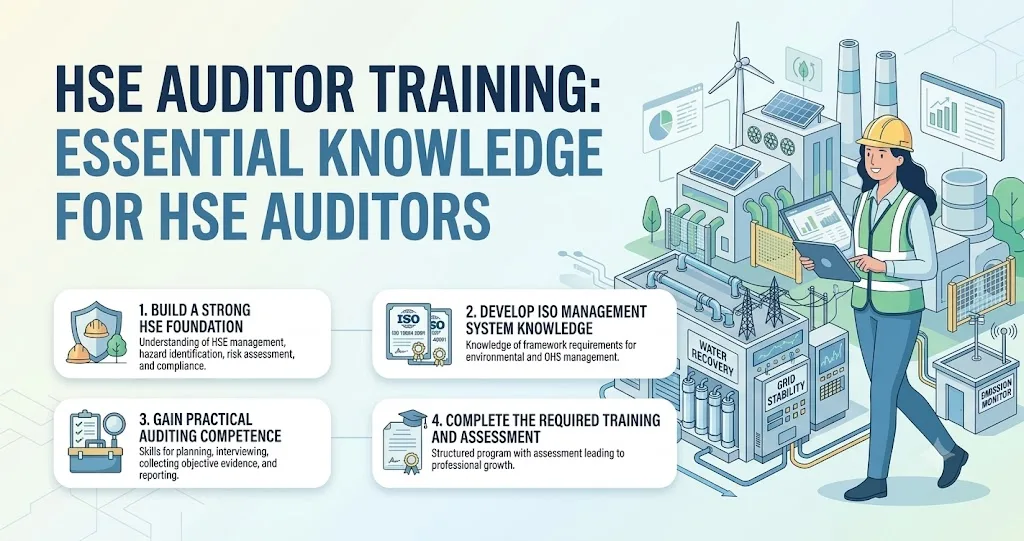
A career in HSE auditing requires relevant HSE knowledge, practical competence, structured learning, and successful completion of the applicable assessment. Professionals can follow several important steps to build the foundation required for effective auditing.
1. Build a Strong HSE Foundation
A sound understanding of occupational health and safety, environmental management, hazard identification, risk assessment, and compliance provides a useful foundation for an auditing career. Professionals should also become familiar with workplace safety practices, environmental controls, operational risks, and management system processes before taking on advanced auditing responsibilities.
2. Develop ISO Management System Knowledge
Knowledge of ISO 14001:2026 and ISO 45001 is important for professionals involved in management system auditing. ISO 14001:2026 provides a framework for environmental management, while ISO 45001 addresses occupational health and safety.
Understanding ISO 45001 requirements can help auditors evaluate workplace safety processes, controls, documentation, and implementation more effectively. Familiarity with these frameworks also supports consistent evaluation against established requirements.
3. Gain Practical Auditing Competence
Effective auditing requires more than theoretical knowledge. Auditors need to know how to prepare audit plans, develop checklists, conduct interviews, review documented information, collect evidence, evaluate findings, and prepare professional reports.
Communication, observation, analytical thinking, and effective questioning are equally important. These abilities allow auditors to gather reliable information and reach evidence-based conclusions.
4. Complete the Required Training and Assessment
A structured HSE Auditor Training program can provide practical guidance on audit planning, execution, risk assessment, hazard identification, environmental aspects, evidence collection, nonconformity reporting, corrective actions, and follow-up activities.
Participants generally complete an assessment during or after the program. Successful completion may lead to a training certificate according to the requirements of the selected program.
HSE Professionals Should Consider Auditor Training
HSE professionals should consider developing auditing capabilities as organizations continue to focus on workplace safety, environmental performance, risk management, and compliance. Professionals with practical auditing knowledge can contribute to evaluating processes, identifying system gaps, verifying corrective actions, and supporting continual improvement.
These capabilities can help professionals expand their existing responsibilities and prepare for roles involving internal audits, compliance evaluation, management system implementation, and HSE consulting.
Professional Growth Through HSE Auditing
Developing auditing skills enables professionals to take a structured approach to evaluating safety practices, environmental controls, risk management, and management system performance. It strengthens their ability to review processes, assess evidence, communicate findings, and support corrective actions.
These capabilities can be valuable across internal auditing, HSE compliance, environmental management, workplace safety, and management system improvement. For professionals seeking greater responsibility, practical auditing competence can support long-term career development and help them contribute more effectively to organizational safety and environmental objectives.
Choosing the Right HSE Audit Course
When selecting an HSE Auditor Training program, professionals should consider whether the course covers audit planning, evidence collection, risk assessment, hazard identification, nonconformity reporting, corrective actions, and audit follow-up.
A practical HSE auditor training course should combine management system requirements with real-world auditing techniques. This approach can help learners understand how to evaluate processes objectively and prepare clear audit reports.
Conclusion
Strong auditing capabilities can help HSE professionals contribute more effectively to workplace safety, environmental management, risk assessment, and compliance activities. HSE auditor training provides a structured path for developing practical auditing knowledge, understanding management system requirements, evaluating processes, and reporting findings effectively.
With the right combination of HSE knowledge and auditing competence, professionals can strengthen their expertise, improve their audit capabilities, and prepare for greater responsibilities in the field.