
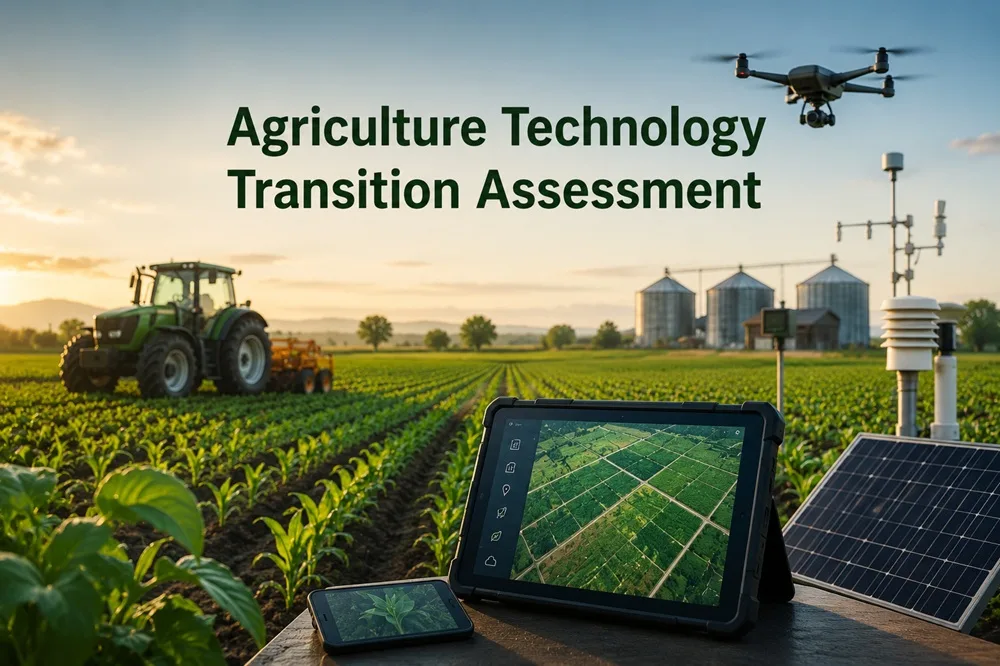
The Agriculture Technology Transition Assessment Market reflects the ongoing transformation of agricultural systems through the adoption of advanced digital and automation technologies. As producers seek greater efficiency, sustainability, and resilience, the sector is increasingly integrating data-driven tools across crop production, livestock management, aquaculture, and forestry. This transition is influencing investment priorities, operational models, and long-term agricultural development strategies worldwide.
What are the Key Drivers Supporting Market Growth?
- Growing demand for improved productivity and resource efficiency across agricultural operations.
- Increasing adoption of Precision Agriculture technologies to support informed decision-making.
- Rising investments in digital tools that enhance monitoring, forecasting, and farm management capabilities.
- Expanding focus on sustainable production practices and climate resilience within the agricultural sector.
Which Trends are Influencing the Market Transition?
- Greater deployment of Digital Agriculture Platforms that connect data, equipment, and farm operations.
- Increasing adoption of Agricultural Robotics and Automation to address labor challenges and improve operational efficiency.
- Wider integration of AI and IoT in Agriculture for real-time monitoring, predictive insights, and automated decision support.
Request A Sample for Agriculture Technology Transition Assessment - Evaluating Developments, Achievements, and Future Prospects, 2010-2020 and 2020-2030
How Will Technology Adoption Impact Agriculture in the Future?
The agricultural sector is expected to become increasingly connected, automated, and data-centric. Emerging technologies are enabling more precise management of crops, livestock, and natural resources while improving operational visibility. As digital ecosystems mature, technology adoption is likely to support higher productivity, better resource utilization, and more resilient agricultural systems. Continued innovation is expected to accelerate the transition toward smarter and more sustainable farming practices.
What Challenges and Opportunities Exist in the Market?
Technology adoption continues to face challenges related to implementation costs, infrastructure requirements, interoperability, and varying levels of digital readiness among agricultural stakeholders. In some regions, limited access to connectivity and technical expertise may slow deployment.
At the same time, significant opportunities are emerging from advancements in automation, artificial intelligence, connected devices, and data analytics. Expanding investment activity, growing industry collaboration, and increasing awareness of technology-driven benefits are expected to support broader adoption across agricultural value chains.
Click Here to Download the ToC
Conclusion
The Agriculture Technology Transition Assessment Market highlights the ongoing evolution of agriculture toward digitally enabled and technology-driven operations. Supported by advances in automation, connectivity, and analytics, the market reflects a broader shift toward efficient, sustainable, and resilient agricultural systems. As adoption expands across multiple farming segments, technology will continue to play a central role in shaping the future of global agriculture.