Reimagining Trust: A Digital Revolution in Progress
On a chilly morning in March 2026, a blockchain-based voting system was used for the first time in a major metropolitan election in Lisbon, Portugal, marking a new milestone in digital democracy. Voters, verified through decentralized identity protocols, cast ballots that were immutably recorded on a public ledger accessible worldwide. This event is more than a technological novelty—it symbolizes the deeper shift Web3 is driving in how trust, ownership, and governance operate online.
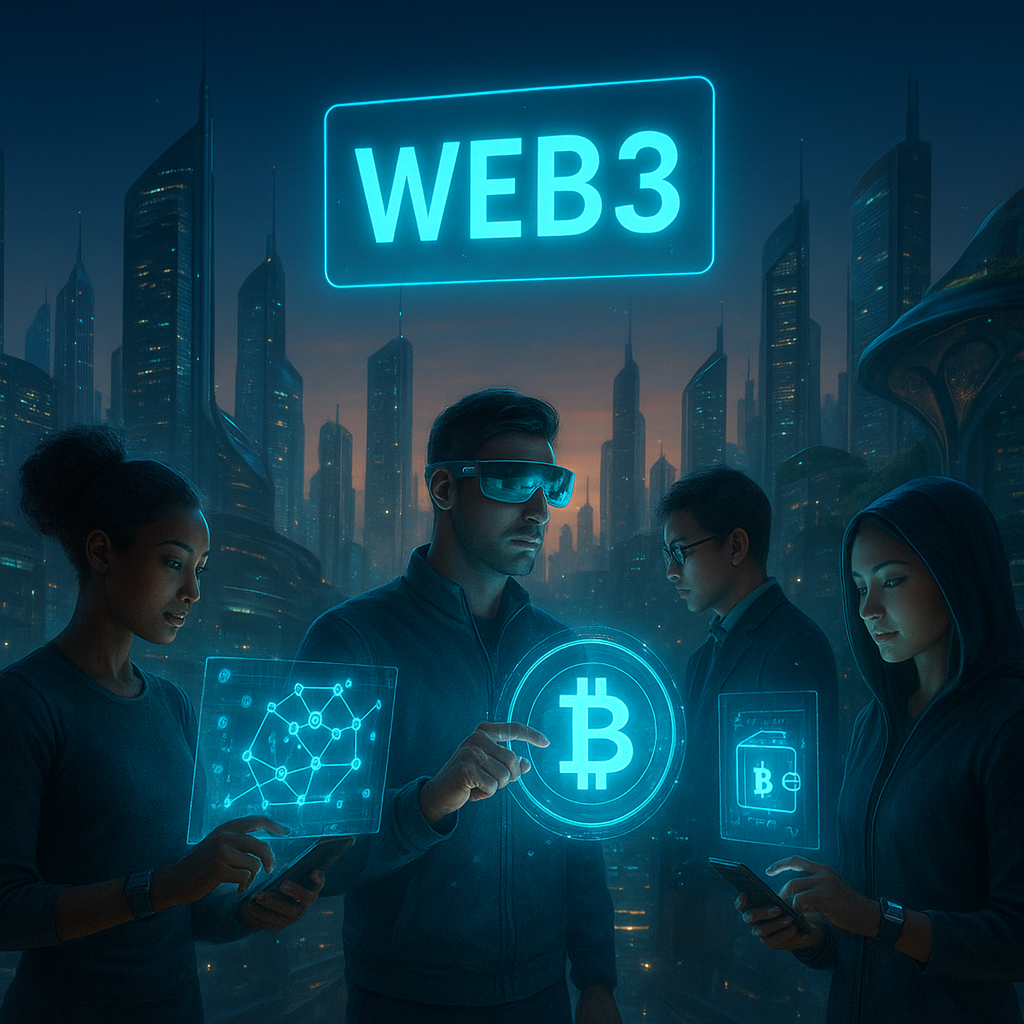
Web3, the next iteration of the internet, champions decentralization, user sovereignty, and permissionless interactions. Unlike the centralized Web2 platforms dominated by tech giants, Web3 leverages blockchain, smart contracts, and token economies to redistribute power back to users. But what does this mean in practical terms for users, businesses, and policymakers in 2026?
As this transformation unfolds, it challenges the very foundations of digital engagement and commerce, raising both unprecedented opportunities and complex questions about security, scalability, and inclusivity.
"Web3 is not merely a technological upgrade; it's a paradigm shift that redefines digital identity, ownership, and participation." — Dr. Helena Mirov, Blockchain Researcher
From Web1 to Web3: The Evolution of the Internet's Architecture
The journey to Web3 began in the early 2000s with Web1, a read-only internet where users consumed static content. This era transitioned into Web2, characterized by interactive social media, user-generated content, and centralized platforms controlling data and monetization. However, Web2’s model centralized power, creating data silos, privacy breaches, and gatekeeper issues.
Web3 emerged as a response to these limitations, advocating for a decentralized web where data and digital assets are owned directly by users. The foundational technology, blockchain, was introduced in 2008 with Bitcoin, but the term “Web3” was coined in 2014 by Ethereum co-founder Gavin Wood to describe an ecosystem of decentralized applications (dApps) powered by programmable smart contracts.
Over the past decade, the Web3 movement has grown from niche crypto communities to mainstream adoption. This evolution was driven by:
- Advances in blockchain scalability: Layer 2 solutions and new consensus mechanisms such as Proof-of-Stake (PoS) have dramatically increased transaction throughput while reducing energy consumption.
- Development of decentralized finance (DeFi): Platforms enabling peer-to-peer financial services without intermediaries have attracted billions in capital.
- Growth of NFTs and digital collectibles: Enabling unique digital ownership has broadened use cases beyond currency.
- Emergence of decentralized autonomous organizations (DAOs): Enabling collective governance models and community-driven projects.
Today, Web3’s architecture rests on three pillars: decentralized identity, digital assets, and programmable money, all designed to empower users and disrupt legacy systems.
The 2026 Web3 Landscape: Data, Adoption, and Integration
By 2026, Web3 has moved well beyond speculative crypto assets to become embedded in diverse sectors including gaming, finance, supply chain, governance, and social media. Statista estimates that global Web3 market capitalization has surpassed $3.2 trillion, with over 400 million active users worldwide engaging with dApps monthly.
Several key trends characterize the current Web3 ecosystem:
- Interoperability: Cross-chain protocols such as Polkadot, Cosmos, and LayerZero enable seamless asset and data transfer across blockchains, reducing fragmentation.
- Decentralized Identity (DID): Solutions like the Sovrin Network and Microsoft’s ION enable users to own and control their digital identities, improving privacy and reducing reliance on centralized authentication.
- Regulatory maturation: Governments have introduced clearer frameworks balancing innovation with consumer protection, with the EU’s Digital Markets Act and the US SEC’s recent guidance on token classification leading the way.
- Corporate adoption: Major enterprises, including financial giants JPMorgan and tech leaders Google and Meta, have integrated Web3 services, from tokenized assets to decentralized data storage.
Notably, the integration of Web3 with AI and IoT is accelerating, enabling autonomous data marketplaces and smart cities that operate on decentralized protocols.
"The convergence of Web3 with AI and IoT is unlocking new dimensions of automation, trust, and user empowerment." — Raj Patel, CTO of ChainWave Technologies
Challenges and Realities: Why Obstacles Persist
Despite impressive progress, Web3 faces significant hurdles that temper its near-term potential. Technical challenges around scalability and user experience remain critical. For example, while Layer 2 solutions have improved throughput, many blockchains still struggle with latency and high transaction fees during peak demand.
Security issues are ever-present. The rise in DeFi exploits, smart contract bugs, and rug pulls has eroded trust among some users. According to industry reports, hacks have resulted in over $4 billion in losses in 2025 alone, prompting calls for more robust auditing and insurance mechanisms.
Furthermore, adoption barriers exist on the demand side. The complexity of onboarding, wallet management, and the irreversible nature of blockchain transactions deter mainstream users. Many still perceive Web3 as a speculative playground rather than a practical technology for everyday use.
Cultural and regulatory frictions also persist. Some governments view decentralized platforms with suspicion, fearing loss of control over financial systems and data sovereignty. Meanwhile, privacy advocates debate the trade-offs between transparency and anonymity in public blockchains.
These challenges highlight the importance of education, better tooling, and collaborative governance frameworks to foster sustainable growth.
Case Studies: Web3 in Action Across Industries
Examining real-world applications reveals how Web3 is changing diverse sectors:
Decentralized Finance (DeFi):
Aave, a leading DeFi lending protocol, processed over $150 billion in loans in Q1 2026 alone, showcasing the scale of peer-to-peer financial services without intermediaries. Their introduction of credit delegation and flash loans has revolutionized liquidity management.
Digital Art and NFTs:
Beeple’s 2021 NFT sale ignited the digital collectibles market, but the space has matured. Platforms like Artify now enable artists to monetize rights and royalties via smart contracts, ensuring ongoing revenue with transparent provenance.
Supply Chain Transparency:
Walmart has expanded its blockchain-powered supply chain tracking to over 12,000 products, improving food safety and sustainability by tracing origins in real time.
Decentralized Governance:
The ConstitutionDAO experiment in 2022 demonstrated collective fundraising power; since then, DAOs like MakerDAO and Aragon have evolved into complex governance systems managing billions in assets.
These examples illustrate Web3’s tangible benefits in transparency, efficiency, and user empowerment, while also highlighting areas for improvement such as scalability and user accessibility.
Looking Forward: What to Watch in Web3's Next Phase
As Web3 technology continues to mature, several themes will shape its trajectory over the next five years:
- Mass Adoption of Decentralized Identity: User-controlled identity systems will become central to online interactions, reducing fraud and increasing privacy.
- Integration with Traditional Finance: Hybrid models combining DeFi and centralized finance (CeFi) will offer more inclusive and regulated financial products.
- Web3 Social Networks: Platforms like Lens Protocol and Farcaster aim to disrupt monopolistic social media by enabling content ownership and monetization by users.
- Green Blockchain Initiatives: Energy-efficient consensus protocols and carbon-neutral projects will address environmental concerns.
- Regulatory Harmonization: International cooperation on standards and compliance will foster innovation while protecting consumers.
According to recent analysis by TheOmniBuzz, understanding and avoiding early missteps remains crucial for stakeholders, as detailed in Avoiding the Pitfalls: How Common Web3 Mistakes Erode Crypto Confidence. Parallelly, the transformative potential of decentralized tech continues to inspire, as explored in Web3’s New Dawn: How Decentralized Tech Is Shaping Digital Reality.
"The future of Web3 depends on building inclusive ecosystems that combine technological innovation with user-centric design and regulatory clarity." — Maria Chen, CEO of DWeb Solutions
Ultimately, Web3's promise lies in reimagining digital ownership, empowering users, and fostering trust in an increasingly interconnected world. Its journey is one of gradual integration rather than overnight disruption, demanding collaboration across technology, policy, and society.