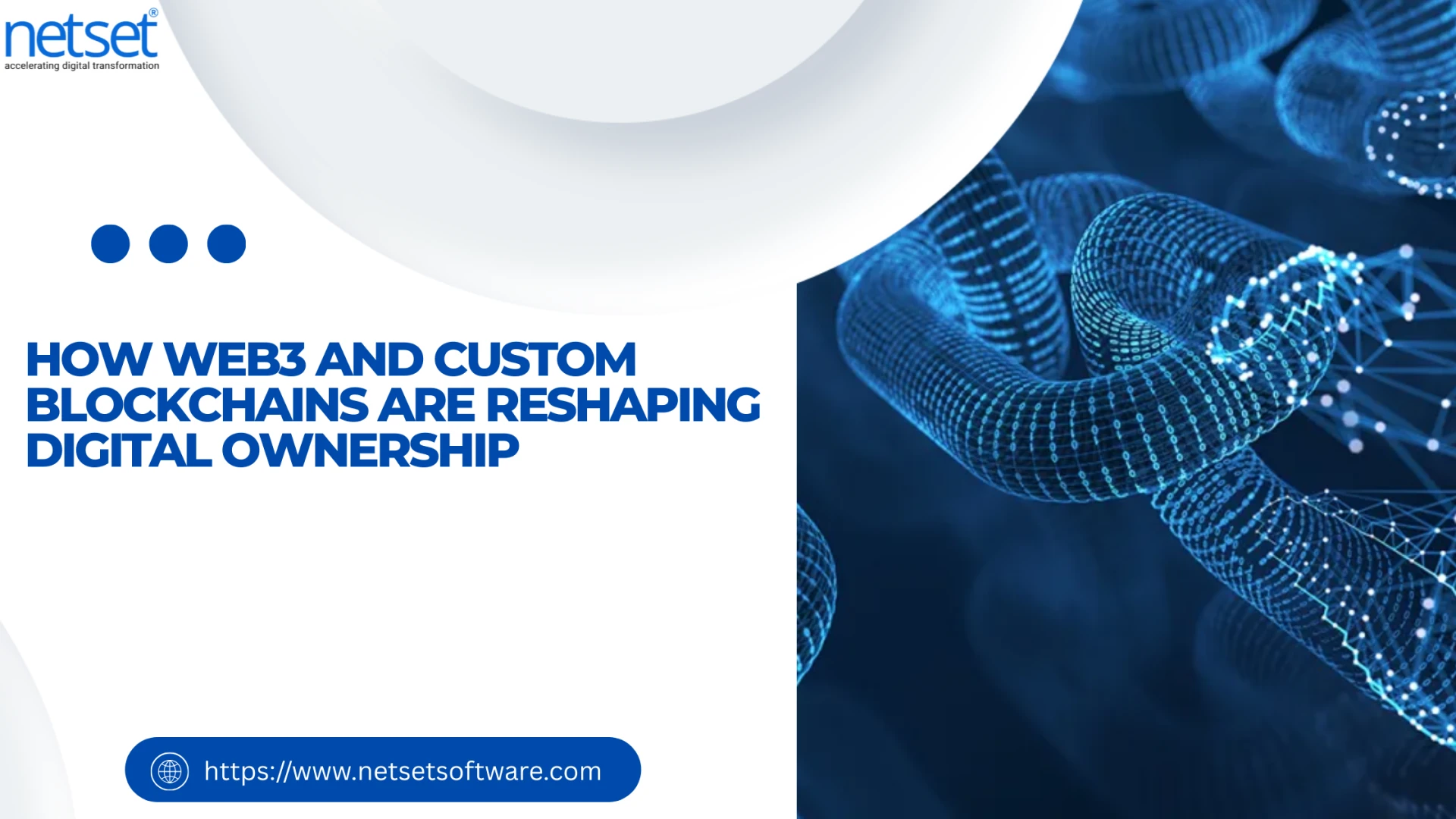
In today’s rapidly evolving digital landscape, businesses increasingly rely on decentralized technologies to gain more security, transparency, and control over their digital assets. This is why every forward-focused organization is partnering with a custom blockchain development company to build tailored blockchain development solutions that enable genuine digital ownership—an idea that is redefining how individuals and enterprises interact with data, assets, and online identities. As Web3 expands, custom blockchains are emerging as the backbone for secure, trustless digital ecosystems where users truly own, transfer, and monetize their online assets without intermediaries.
The Evolution of Digital Ownership: From Web2 to Web3
For decades, digital content—whether images, videos, text, code, or personal data—has circulated across centralized platforms like social networks, cloud services, and closed marketplaces. However, traditional Web2 systems come with major limitations:
- Users don’t own their data; corporations do.
- Digital assets can be copied, manipulated, or deleted without consent.
- Monetization heavily depends on centralized intermediaries.
- Transparency and traceability are limited.
Web3 disrupts this model by introducing a decentralized internet powered by blockchain technology.
Here, ownership is verifiable, transferable, and tamper-proof, thanks to smart contracts and transparent ledgers. Custom blockchains take this even further by giving businesses full control over network design, access rights, architecture, and consensus models.
What Makes Digital Ownership So Important in Web3?
Digital ownership isn’t just a concept—it is a structural shift in how society values digital assets. With Web3, ownership is defined by cryptographic keys, not user accounts controlled by corporations.
Key Features of Web3-Based Digital Ownership
✔ True Ownership
Users own assets directly through their wallets. No company can restrict access.
✔ Provable Scarcity
Blockchain enables assets like NFTs or tokenized records to be unique and tamper-proof.
✔ Interoperability
A digital asset created in one ecosystem can be transferred and used in another without restrictions.
✔ Peer-to-Peer Monetization
Creators can sell, rent, or license assets without third-party platforms.
✔ Permissionless Transfer
Global asset movement without banks, administrators, or cross-border restrictions.
Custom blockchains elevate these features by providing tailor-made infrastructures for industries like finance, gaming, supply chain, healthcare, and real estate.
Why Custom Blockchains Are Essential for Digital Ownership
While public blockchains like Ethereum, Solana, and Polygon offer great flexibility, they come with challenges such as high fees, congestion, limited customization, security risks, and regulatory complications.
This is where custom blockchains shine.
Benefits of Building a Custom Blockchain for Digital Ownership
1. Complete Control Over Network Rules
Organizations can define:
- Who can join the network
- Who can validate transactions
- What data is public or private
- Fee structures and consensus mechanisms
This level of control is crucial for enterprises that must comply with industry-specific regulations.
2. Enhanced Security and Data Privacy
Custom blockchains allow:
- Private or hybrid networks
- End-to-end encrypted transactions
- Zero-knowledge proofs
- Permissioned access layers
This ensures sensitive digital assets remain protected while still offering blockchain-level transparency.
3. Scalability for High-Volume Transactions
Custom blockchains can optimize:
- Block size
- Block generation speed
- Consensus algorithms
- Off-chain layers
This ensures efficient handling of millions of digital assets or user records without performance issues.
4. Future-Proof Tokenization
Businesses can design native tokens, smart contract logic, and asset standards tailored for:
- NFTs
- Soulbound tokens
- Security tokens
- Utility tokens
- Asset-backed tokens
This flexibility helps enterprises build complex digital economies.
5. Reduced Transaction Costs
No dependency on third-party public blockchain fees makes custom blockchain solutions cost-efficient, especially at scale.
How Web3 and Custom Blockchains Are Transforming Digital Ownership Across Industries
Web3 and custom blockchains are not limited to just cryptocurrency or collectibles—they are revolutionizing dozens of industries.
1. Digital Art, NFTs & Creative Ownership
NFTs are the first mainstream example of Web3 digital ownership.
With custom blockchains, creators get:
- Fully customized marketplaces
- Zero third-party commissions
- On-chain provenance tracking
- Automated royalty distribution
This ensures artists retain control over pricing, ownership rights, and future sales.
2. Gaming: Play-to-Earn, In-Game Assets & Metaverse Economies
Traditional gaming keeps all assets—skins, weapons, avatars—under company control.
Web3 reverses this.
Custom blockchains enable:
- True ownership of in-game items
- Asset transfer between games
- Secondary marketplaces
- Decentralized gaming economies
Players finally earn and own what they invest time into.
3. Supply Chain & Product Provenance
Custom blockchains track every step of a product’s lifecycle—from raw materials to final delivery.
Businesses gain:
- Transparent traceability
- Anti-counterfeit mechanisms
- Tamper-proof records
- Verified product authenticity
This is especially valuable for luxury goods, food safety, pharmaceuticals, and electronics.
4. Real Estate & Tokenized Property Rights
Web3 enables fractional ownership of real-world assets.
Benefits include:
- Tokenized property shares
- Immutable ownership records
- Faster, cheaper transactions
- Global investor accessibility
- Transparent rental agreements
Custom blockchains ensure regulatory compliance while preserving decentralization.
5. Identity & Personal Data Ownership
One of Web3’s biggest promises is self-sovereign identity (SSI).
Custom blockchains enable users to control:
- Medical records
- KYC data
- Educational certificates
- Personal identity credentials
Users decide who can access what, without relying on centralized databases.
6. Finance & Banking: Decentralized Control of Assets
DeFi has already shown what happens when financial ownership moves to the user.
Custom blockchains enhance:
- Tokenized equities
- Transparent loan records
- Secure cross-border payments
- Smart investment contracts
Financial institutions get compliance-ready, scalable blockchain systems tailored to their requirements.
The Role of Smart Contracts in Enabling Digital Ownership
Smart contracts are the backbone of Web3 asset ownership.
They enable:
- Automatic execution of ownership rules
- Transparent transaction history
- Guaranteed payout models
- Programmable royalties
- Conditional asset transfers
Custom blockchain development allows businesses to create highly specialized smart contract logic based on their operational needs.
Unlike Web2 platforms that lock assets inside centralized servers, Web3 empowers users to transfer, trade, or sell digital assets freely.
Web3 ensures:
- Permissionless transfers
- Decentralized exchanges
- Multi-chain interoperability
- Global asset liquidity
Custom blockchains can even integrate with public networks using bridges and cross-chain protocols.
1. Security Concerns
Custom blockchains reduce hacks through private validators and enhanced protocols.
2. Regulatory Compliance
Industries can customize networks for GDPR, HIPAA, or financial compliance.
3. Interoperability Issues
Custom chains support cross-chain bridges for Ethereum, BNB, Solana, and more.
4. Asset Authenticity
On-chain provenance ensures digital assets are genuine and tamper-proof.
The Future of Digital Ownership with Web3 and Custom Blockchains
The next decade will witness:
✔ Tokenized ownership for all physical and digital assets
✔ Blockchain-based identity and authentication
✔ Decentralized digital rights management
✔ Borderless marketplaces for creators and businesses
✔ Fully interoperable metaverse ecosystems
As blockchain adoption grows, custom blockchain development companies will play a pivotal role in building secure, scalable, and future-ready ownership systems for global enterprises.
Conclusion
Web3 and custom blockchains are redefining digital ownership by giving users complete control over their assets, identities, and interactions. Traditional centralized models are being replaced with decentralized ecosystems where transparency, security, and ownership are guaranteed.
Businesses that embrace custom blockchain development now will position themselves at the forefront of the digital future—where data, assets, and digital experiences are securely owned and controlled by the users themselves.