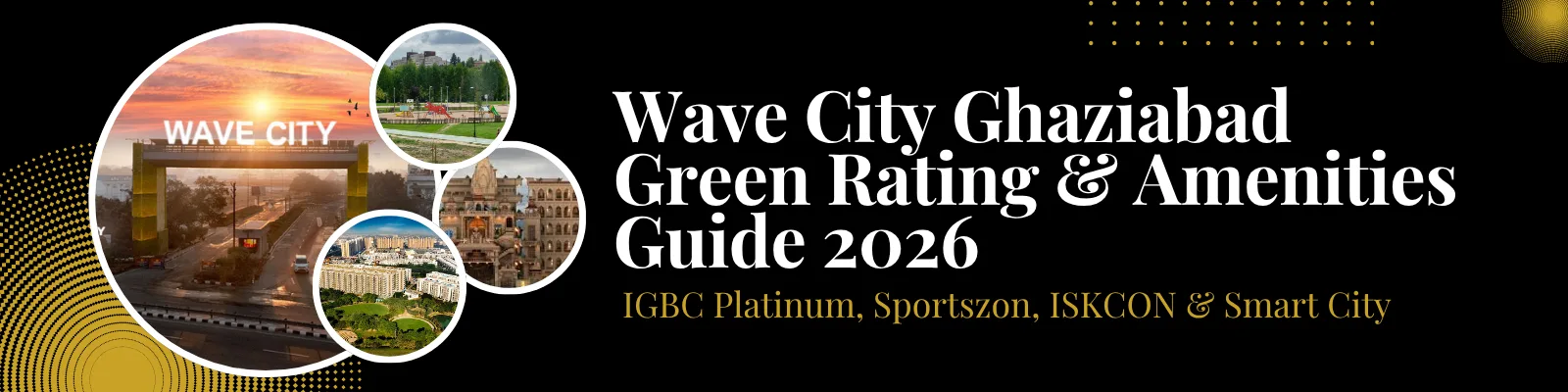
When buyers look at a township like Wave City Ghaziabad, they often focus first on price, location, and property type. But in 2026, many buyers are also asking a smarter question. How future-ready is the township itself? That is where the Wave City IGBC green rating becomes important. This is not only a fancy label added for marketing. It reflects the township’s larger planning idea around sustainability, infrastructure efficiency, and better long-term living standards. For buyers who want more than just a flat or a plot, this rating adds real meaning.
IGBC stands for Indian Green Building Council. It gives ratings to projects that follow greener planning standards. These standards usually include water conservation, waste management, energy efficiency, open green space, better mobility planning, and smarter use of natural resources. When a township gets a high green rating, it usually means the project has been designed with long-term environmental and operational thinking in mind. In a market where many projects only focus on short-term visual appeal, this can make a major difference.
Wave City’s green positioning matters because this is not a small housing complex. It is a large township with multiple sectors, residential projects, roads, utility systems, and commercial areas. In such a large development, sustainability is not only about planting trees. It is about how the whole township works every day. Water use, drainage planning, electricity systems, internal movement, and waste handling all become part of the bigger picture. That is why the IGBC green rating gives buyers a useful way to judge the project beyond only brochure promises.
One of the strongest parts of green township planning is water management. In large NCR townships, water has become a serious issue over time. Buyers now understand that future living quality depends not only on supply, but also on how efficiently a township manages that supply. A green-rated township usually performs better in areas like rainwater harvesting, water recycling, smart monitoring, and treatment systems. This improves long-term sustainability and can also support better resource control for residents. When these systems are built into the township structure, they create practical value and not just environmental value.
Energy efficiency is another major advantage linked with a green rating. Modern township planning is not only about providing electricity. It is also about smarter distribution, better monitoring, and reducing waste where possible. When a township uses organized energy systems, smart metering, and stronger internal infrastructure planning, residents usually benefit from more reliable operations over time. This also supports better maintenance management. Buyers may not always see these systems directly during a site visit, but these background systems affect daily life more than many visible amenities.
The physical environment also becomes stronger in a green-rated township. Open spaces, parks, tree-lined roads, and better green planning improve the living feel of the area. This matters more than many people first realize. A greener township usually feels less crowded, more breathable, and more balanced. Children get better outdoor space. Senior citizens get more walking comfort. Families get a calmer daily environment. Over time, this creates a better lifestyle experience compared with dense projects that focus only on towers and parking.
Another reason this rating matters is long-term value perception. Buyers today are becoming more aware of project quality. A township that is designed with sustainability and infrastructure planning in mind often stands out better in the resale and end-user market. People may not always ask for technical details in the beginning, but they do notice the difference in on-ground experience. Better roads, more open space, smoother utilities, stronger water systems, and cleaner surroundings all influence how a township is viewed in the market. So a green rating can also support brand value and buyer confidence.
At the same time, smart buyers should understand the green rating in a practical way. A rating is a positive sign, but it should not replace on-ground checking. Buyers should still inspect the actual sector, project, road quality, parks, water comfort, and current development level. A green certification shows strong planning intent, but the real value comes when the systems are visible in everyday use. That is why the best approach is to treat the rating as an important advantage, but not the only decision point.
This is especially true in a large township where different projects may offer different levels of completion and quality. The township-level green vision may be strong, but buyers should still study the exact residential project they are considering. Some project-level features like clubhouses, pools, gyms, and internal landscaped areas depend on the builder and the specific development. So the green township story and the project-level lifestyle story should both be checked separately.
In simple words, Wave City’s IGBC green rating matters because it adds depth to the township’s identity. It shows that the project was planned with more than short-term construction goals in mind. It points toward better water systems, smarter infrastructure, greener surroundings, and a more future-focused living environment. For buyers in 2026, this is a real advantage. It may not be the only factor that matters, but it is definitely one of the stronger reasons Wave City continues to attract serious attention from both homebuyers and long-term investors.