Understanding Why Liquidity Matters in Forex Trading with FXTechPro
When people start learning about forex trading, they usually pay attention to currency prices, charts, and market movements. But there is another important factor that every trader should understand, and that is liquidity. It plays a major role in forex trading because it affects how easily people can buy and sell currencies.
What Is Liquidity in Forex?
In simple terms, liquidity means how easily a currency can be bought or sold in the market. When there are many buyers and sellers, liquidity is usually high. This means traders can complete their transactions more easily without causing major changes in currency prices.
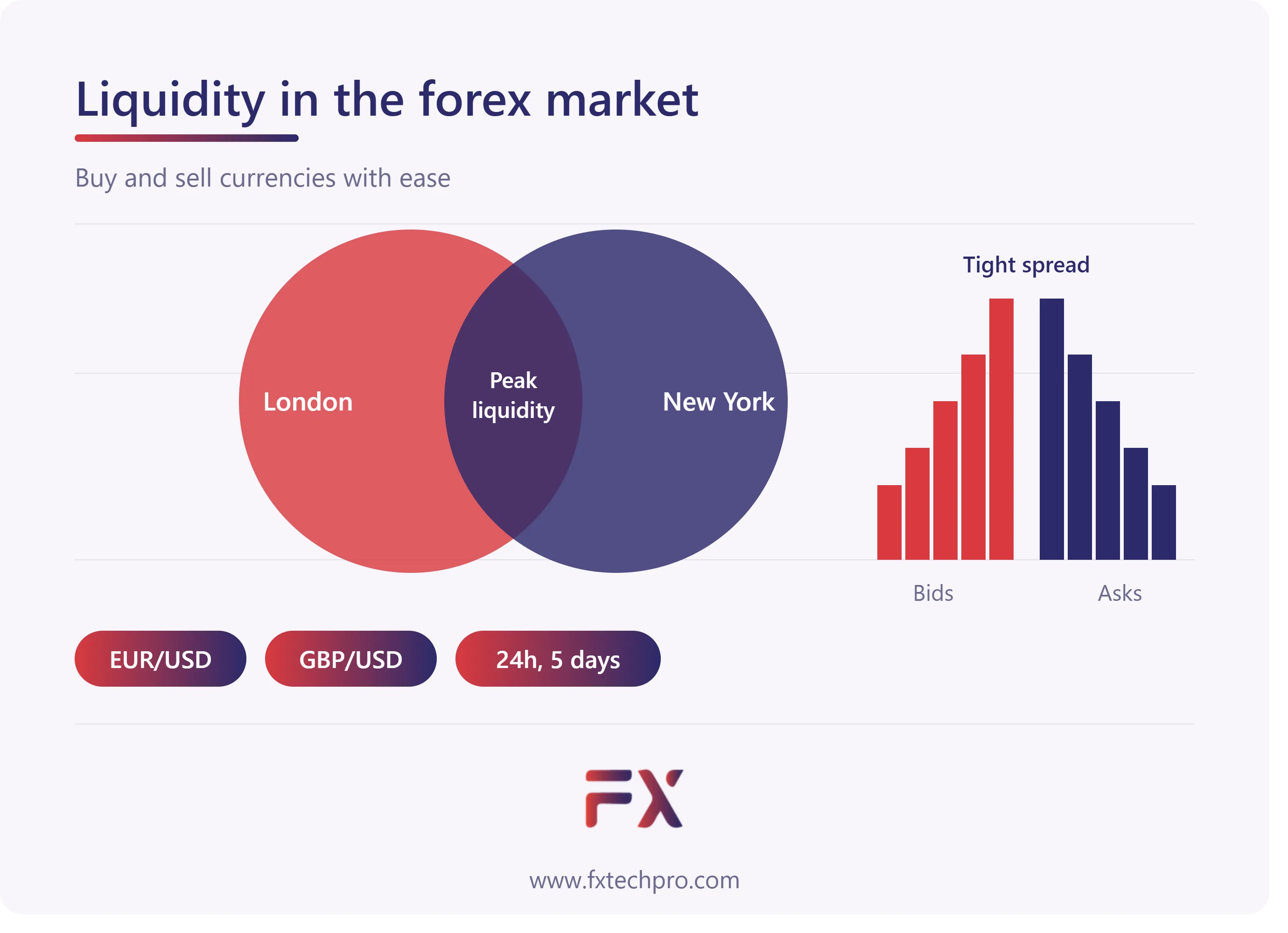
For example, EUR/USD and GBP/USD are two popular currency pairs that are traded by people around the world. Since many traders buy and sell these pairs every day, they usually have higher liquidity than less popular currency pairs.
Why Does Liquidity Matter?
Liquidity is important because it makes buying and selling currencies easier. When the market has enough buyers and sellers, traders can usually enter or exit their positions quickly.
Another important factor is the spread. The spread is the difference between the buying price and the selling price of a currency pair. In a market with high liquidity, spreads are generally smaller. When liquidity is low, spreads may become wider, which can increase trading costs.
For beginners, understanding this difference is useful because it helps them know why trading conditions can change at different times.
When Is Liquidity Usually High?
The forex market operates 24 hours a day, five days a week. However, trading activity is not the same throughout the day.
The London and New York sessions are among the busiest trading sessions. When both sessions overlap, more traders are active in the market. As a result, liquidity is generally higher during this period.
The Asian trading session is also important, especially for currency pairs involving the Japanese yen and Australian dollar. Knowing about these sessions can help traders understand when different currency pairs are more active.
How Does Economic News Affect Liquidity?
Economic news can also affect liquidity and currency prices. Announcements about interest rates, inflation, employment, and economic growth often attract the attention of traders.
For example, when a central bank announces a change in interest rates, traders may start buying or selling the related currency. This can increase market activity and lead to sudden price movements. Sometimes, spreads may also become wider during important announcements.
Following an economic calendar is a simple way to stay updated about important market events.
How Can Beginners Understand Liquidity?
Beginners do not need complicated methods to start understanding liquidity. They can observe popular currency pairs, compare their spreads, and watch how prices move during different trading sessions.
They can also follow market news and notice how trading activity changes during important economic announcements. Spending time observing these movements can help them understand the forex market better.
Learn More About Forex Trading with FXTechPro
Learning about liquidity is one of the basic steps towards understanding forex trading. It helps traders know why some currency pairs are easier to trade and why market conditions change throughout the day.
FXTechPro provides a platform where individuals can explore forex trading, learn about financial markets, and understand different trading concepts. By learning about topics such as liquidity, currency pairs, and market movements, beginners can gradually build their trading knowledge.
Understanding these basic concepts can help anyone who wants to learn more about how the forex market works.