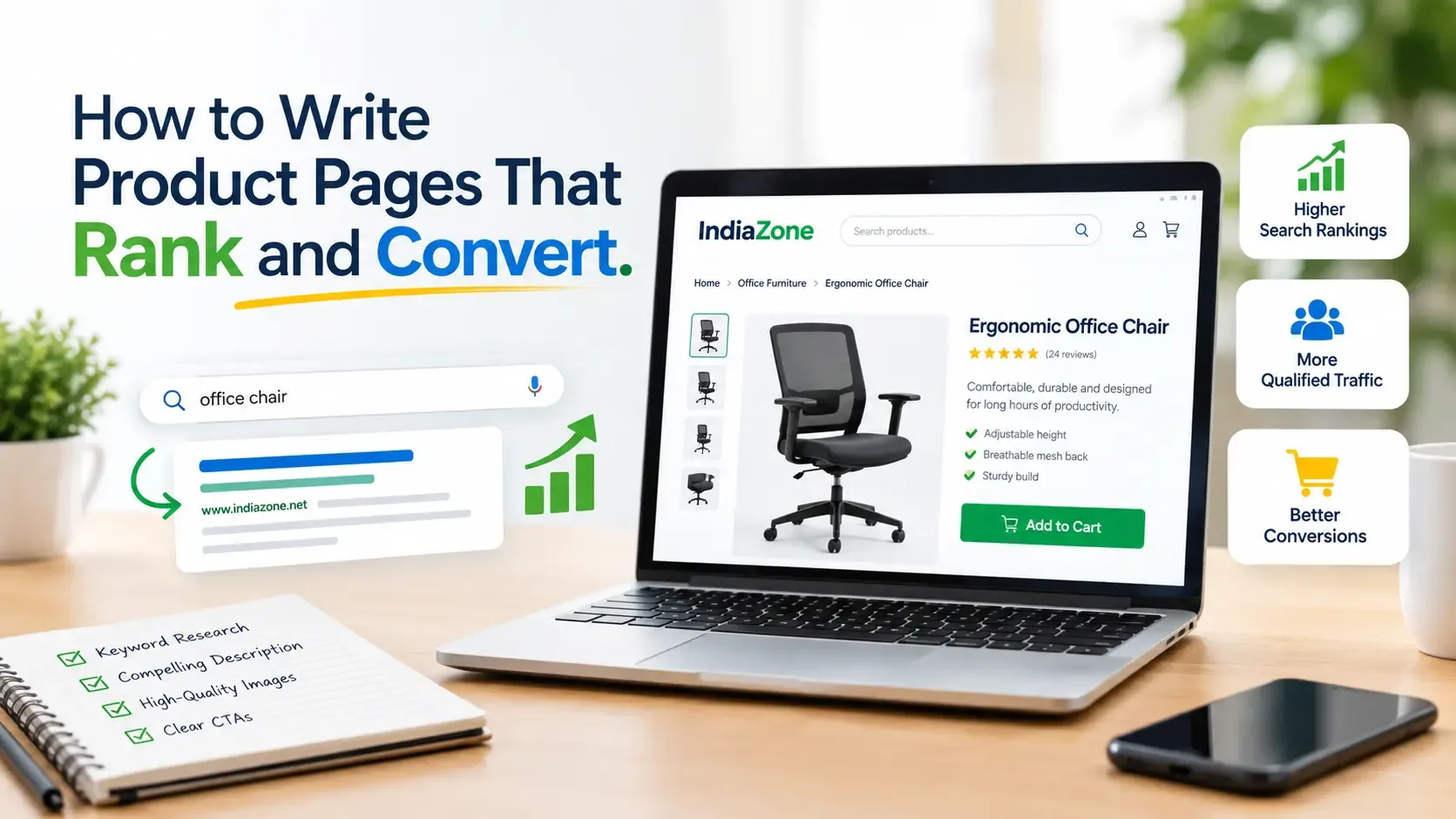
A business can offer a useful product and still struggle to generate enquiries online. Potential buyers may find it difficult to discover the product, understand whether it meets their requirements, or decide how to contact the business.
A product page should do more than describe what is being sold. It should provide the information buyers need to evaluate the offering, build confidence in the business, and take the next step toward an inquiry.
For businesses selling through online channels, search visibility is only one part of the process. Product information, technical specifications, applications, credibility, and a clear enquiry process all influence how useful a page is to potential buyers.
So, how can you create product pages that rank in search results and encourage meaningful enquiries? It starts with understanding buyer intent and building content around the questions buyers actually need answered.
1. What Is a Product Page in B2B?
When buyers search for a product online, they need more than its name or a few images. They want to understand what the product offers, whether it meets their requirements, and how they can get in touch with the business.
A product page provides this information in one place. It focuses on a specific product or offering, helping potential buyers explore its features, applications, and suitability before making an inquiry.
Unlike a general business homepage, a product page gives more detailed information about an individual offering. It also supports a professional online presence , allowing businesses to showcase their products and capabilities to potential customers beyond their existing network.
A useful product page may include:
- Product name and category
- Product description
- Technical specifications
- Available sizes, grades, or variations
- Materials and applications
- Minimum order quantity (MOQ)
- Packaging and delivery information
- Industries served
- Product images or documentation
- Supplier or manufacturer details
- Enquiry or quotation options
The information required will depend on the product and the buyer's needs. For example, someone looking for industrial equipment may need detailed technical specifications, while a wholesale buyer may be more interested in order quantities, pricing, packaging, and delivery terms.
The main purpose of a product page is to answer the questions buyers are likely to have before they decide to contact a business. When the information is clear, relevant, and easy to find, the page becomes more useful for both potential customers and the business.
2. Understand What Buyers Search For
Before writing a product page, businesses should understand the search intent behind the product.
Not every search represents the same stage of the buying journey. Someone searching for general information may not be ready to contact a supplier, while a buyer searching for a specific product specification may already have a purchasing requirement.
B2B product-related searches can include:
- Informational searches: What is a particular product used for?
- Commercial searches: Which type of product is suitable for a specific application?
- Supplier searches: Where can I find a manufacturer or supplier?
- Specification searches: What are the available sizes, grades, or technical details?
- Transactional searches: How can I request a quotation or place a bulk order?
A strong product page should focus on the intent most relevant to the offering.
For example, a page for an industrial packaging manufacturer should not only repeat the product name. It should explain the product's material, applications, available options, industries served, and how buyers can enquire.
Understanding buyer intent helps businesses create content that is more relevant than a page built around keywords alone.
This is especially relevant for Indian MSMEs that face online business discovery challenges and need to make their products easier for relevant buyers to find.
3. Use a Clear and Specific Product Title
The product title is one of the first elements that users and search engines encounter.
A vague title such as “Quality Products Available” does not communicate enough information. A specific title helps buyers understand what the page offers.
A useful product title should clearly identify:
- The product
- The relevant type or variation
- The primary application, where appropriate
- A meaningful specification, if important
For example:
- Industrial Corrugated Packaging Boxes
- Stainless Steel Fasteners for Industrial Applications
- Wholesale Cotton Fabric Supplier
- Commercial Food Processing Equipment
- Bulk Organic Spice Supplier in India
The title should remain natural and accurate. Businesses should not add multiple locations, unrelated keywords, or exaggerated claims simply to increase keyword coverage.
A product title should help the buyer answer one immediate question:
“Is this the product I am looking for?”
4. Write Product Descriptions That Answer Buyer Questions
A product description should explain what the product is, who it is for, and why it may be relevant to the buyer.
Many product pages use short descriptions such as:
“We offer high-quality products at competitive prices. Contact us for more details.”
This type of description is too general. It does not provide enough information for buyers to evaluate the offering or for search engines to understand the page in depth.
A more useful product description should address questions such as:
- What is the product?
- What is it made from?
- What applications does it support?
- Which industries commonly use it?
- What sizes, grades, or variations are available?
- What makes the product suitable for the intended use?
- Can the business support bulk or customised requirements?
For example, instead of only stating that a company supplies industrial packaging, the page could explain the packaging materials, use cases, available dimensions, printing options, order quantities, and industries served.
The content should be based on the actual capabilities of the business. Avoid adding specifications, certifications, or performance claims that cannot be verified.
Useful product information improves both search relevance and buyer confidence.
5. Organise Technical Specifications Clearly
Technical information is especially important for B2B products because buyers often need to compare products against specific purchasing requirements.
A product page should make important specifications easy to locate and understand.
Depending on the product, relevant information may include:
- Material
- Dimensions
- Weight
- Capacity
- Grade
- Colour
- Finish
- Tolerance
- Power requirements
- Packaging type
- Minimum order quantity
- Customisation options
A structured format can improve readability. For example, product specifications may be presented using short sections or a simple table when multiple values need to be compared.
However, specifications should not be included merely to make the page longer. Prioritise information that affects the buyer's decision.
If a specification varies by product model, clearly explain the variation rather than publishing one general value that could mislead buyers.
Clear technical information can also reduce unnecessary enquiries by helping buyers determine whether the product is suitable before contacting the supplier.
6. Include Information About Applications and Industries
Buyers may search for products based on their intended use rather than the exact product name.
For example, a buyer may search for:
- Packaging materials for food businesses
- Industrial components for machinery
- Fabric for garment manufacturing
- Equipment for commercial kitchens
- Raw materials for construction
Including relevant applications and industries helps explain the context in which the product is used.
Clear application information can also help buyers narrow their options when finding the right supplier for a specific product or business requirement.
A useful product page can include sections such as:
Common Applications
Explain the practical uses of the product.
Industries Served
Identify the industries the business actually supplies.
Suitable Buyer Requirements
Describe the types of business requirements the product may support, such as bulk orders, customised dimensions, or recurring supply.
This information creates semantic relevance around the product without relying on repetitive keyword insertion.
For example, a packaging product page may naturally mention manufacturing, food processing, retail packaging, logistics, and bulk distribution if those industries are genuinely relevant to the product.
Use industry and application information to improve understanding, not to target unrelated searches.
7. Use Location Information Naturally
Location can be important for B2B buyers who consider transportation, delivery timelines, supplier proximity, service coverage, and regional availability.
However, adding the same location keyword repeatedly can make a product page difficult to read and may reduce trust.
Instead, include location information where it provides practical value.
Relevant details may include:
- Manufacturing or operating location
- Service areas
- Delivery coverage
- Nearby industrial regions
- Regional supply capabilities
- Export markets, where applicable
- Availability for buyers across India
For example, a manufacturer based in Kerala may explain its operating location and delivery coverage when this information is relevant to the buyer.
A business can also strengthen its local online presence through accurate business information and relevant search profiles. For more information, read why Google Business Profile matters for B2B discovery .
Avoid creating separate, nearly identical product pages for every city unless each page provides genuinely useful, location-specific information.
8. Build Trust Into the Product Page
A buyer may find a product through search but still hesitate to make an enquiry if the business information is incomplete.
B2B purchases often involve larger quantities, repeat orders, technical requirements, and longer decision-making processes. Buyers need confidence that the supplier can understand and respond to their requirements.
Trust-building information may include:
- Complete business name
- Business location
- Manufacturer or supplier status
- Years of experience, if verifiable
- Product capabilities
- Relevant certifications
- Quality-control information
- Product images
- Business contact details
- Customer or industry segments served
- Clear enquiry process
Only include claims that the business can support.
Providing clear information about the business and its purpose also helps potential buyers understand who they are dealing with. Learn more about the IndiaZone business ecosystem and its purpose .
A verification badge or business profile can provide useful context, but it does not replace independent buyer due diligence. Businesses should provide accurate information and buyers should evaluate suppliers based on their own requirements.
A complete business profile also helps potential buyers understand the company beyond an individual product. Businesses can explore vendor registration to build a more structured presence within the IndiaZone ecosystem.
9. Optimise Product Pages for Search Engines and AI Search
Search engines and AI-powered search systems need clear information to understand the subject of a page.
A product page should not be written only for keyword placement. It should provide direct, well-organised answers that make the product, business, and use cases easy to understand.
Use Descriptive Headings
Organise the page with headings such as:
- Product Overview
- Key Features
- Technical Specifications
- Applications
- Industries Served
- Packaging and Delivery
- Frequently Asked Questions
- Request a Quotation
Answer Specific Questions
Include direct answers to relevant buyer questions instead of hiding important information in long paragraphs.
For example:
What is the minimum order quantity?
State the actual MOQ, or explain whether it varies based on the product or customisation requirements.
Can the product be customized?
Explain the available customisation options and any limitations.
Where is the product supplied?
Describe the actual delivery or service coverage.
Use Related Terms Naturally
A product page may naturally include related terms such as:
- B2B marketplace
- Supplier
- Manufacturer
- Wholesale
- Bulk purchase
- Product specifications
- Request for Quotation (RFQ)
- Business profile
- Product applications
The exact terms should depend on the product and buyer intent. Do not force every keyword from the IndiaZone keyword pool into every page.
Clear structure, meaningful headings, and direct answers make the content easier for both human visitors and automated systems to interpret.
10. Create a Clear Enquiry Path
A product page can rank well and still generate few enquiries if visitors do not know what to do next.
The page should provide a clear and relevant action based on the buyer's intent.
Possible calls to action include:
- Request a Quote
- Send an Enquiry
- Ask About Availability
- Contact the Supplier
- Request Product Specifications
- Discuss Bulk Requirements
- Submit an RFQ
The call to action should be connected to the information on the page.
For example, a buyer looking for a customized industrial product may need to provide dimensions, quantity, material, delivery location, and timeline. An enquiry form that collects relevant information can make the communication more useful for both parties.
For larger or specification-heavy purchases, a Request for Quotation (RFQ) can provide a structured way to communicate requirements and request supplier responses.
Avoid using too many competing calls to action. Make the next step clear without forcing the visitor to search for contact information.
11. Improve Product Images and Supporting Information
Product images help buyers understand the offering, particularly when physical appearance, design, finish, packaging, or configuration affects the purchasing decision.
Use relevant images that represent the actual product whenever possible.
Useful image practices include:
- Use clear, high-quality product images.
- Show different views when necessary.
- Include product variations where relevant.
- Avoid misleading stock images.
- Use descriptive image file names.
- Add meaningful alternative text.
- Ensure images do not significantly slow page loading.
Images should support the written content rather than replace it. Search engines and buyers may need additional information about specifications, applications, and availability that cannot be understood from an image alone.
For technical products, product brochures, specification documents, diagrams, or downloadable information may also be useful when accurate and up to date.
12. Add Relevant Internal Links
Internal linking helps visitors discover related information and supports a clear website structure.
A product page can link to relevant pages such as:
- Related product categories
- Supplier or manufacturer profiles
- Industry pages
- Business registration pages
- RFQ pages
- Educational blog articles
- Delivery or service information
For example, a product page can link to an article explaining B2B marketplace when the article helps visitors understand how supplier discovery works.
Internal links should be placed where they provide additional value. Avoid adding links to unrelated articles or repeating the same anchor text excessively.
A well-organised B2B business ecosystem can connect product information, supplier details, industry categories, and buyer education in a way that supports the complete discovery process.
Businesses can explore the IndiaZone B2B marketplace to discover products, suppliers, and business opportunities through a connected B2B business ecosystem.
13. Measure More Than Product Page Rankings
Search rankings are useful, but they do not provide a complete picture of product page performance.
Businesses should also evaluate whether pages attract relevant visitors and encourage meaningful actions.
Important metrics may include:
- Organic search impressions
- Relevant search queries
- Organic clicks
- Engagement with product information
- Enquiry form submissions
- Quote requests
- Phone or email enquiries
- Conversion rate
- Enquiries by product
- Quality of incoming leads
A product page that receives fewer visitors but generates relevant enquiries may be more valuable than a page that attracts large amounts of unrelated traffic.
The objective is not simply to attract visitors. It is to connect the right buyers with useful product information and a clear way to proceed.
14. A Practical Product Page Checklist
Before publishing a B2B product page, check whether it includes the following:
- A clear and specific product title
- A useful product description
- Relevant technical specifications
- Product applications and industries served
- Accurate business and location information
- Minimum order quantity, where applicable
- Product images and supporting documents
- Relevant keywords used naturally
- Descriptive headings
- Answers to common buyer questions
- A clear enquiry or quotation option
- Relevant internal links
- Mobile-friendly page layout
- Accurate and verifiable claims
- A way to measure enquiries and conversions
The checklist should be adapted to the product. Not every business needs to include every field, but important buyer questions should not be left unanswered.
Final Takeaway
A product page that ranks and converts needs more than keywords, product names, and promotional claims.
It should help search engines understand the offering while giving buyers the information they need to evaluate the product and take the next step.
For B2B businesses, the strongest product pages generally combine:
- Search intent
- Clear product information
- Relevant specifications
- Application-focused content
- Trust signals
- Natural location information
- Helpful internal links
- A simple enquiry process
SEO helps potential buyers discover the page. Useful content helps them understand the offering. Trust and a clear call to action help move the buyer toward an enquiry.
The goal is not just to make a product page visible. It is to make the page useful enough that the right buyer has a reason to take action.