
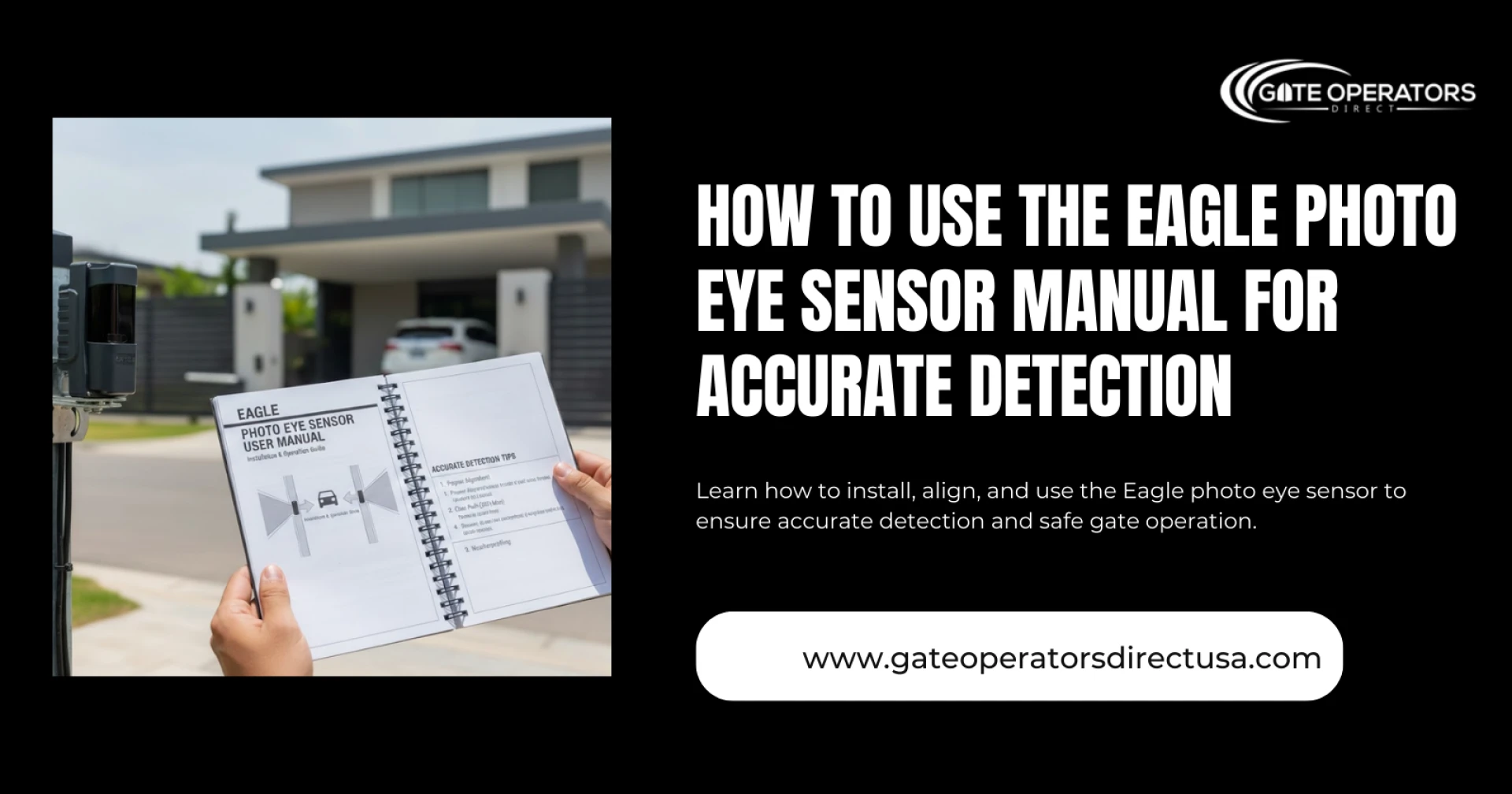
If you’ve ever dealt with a gate that refuses to close—or worse, closes when it shouldn’t—you already know how critical photo eye sensors are to safe, smooth operation. These small but mighty devices act as the “eyes” of your gate system, detecting obstacles and preventing accidents. When it comes to setting them up correctly, the Eagle Photo Eye Sensor manual is your best friend.
Whether you’re a homeowner fine-tuning a driveway gate or a technician brushing up on best practices, this guide breaks down how to use the manual effectively so you get accurate, reliable detection without the headache.
Why Photo Eye Sensors Matter More Than You Think
Photo eye sensors work by sending an invisible infrared beam between a transmitter and a receiver. If that beam is interrupted—by a car, a person, or even a stray pet—the gate knows to stop or reverse. This is especially important in a residential gate operator system, where safety and convenience need to coexist.
Incorrect installation or misalignment can cause false triggers, inconsistent operation, or unsafe conditions. That’s why the manual isn’t just paperwork—it’s a roadmap to getting things right the first time.
Getting Familiar with the Eagle Photo Eye Sensor Manual
Before touching a screwdriver, spend a few minutes with the manual. It typically covers:
- Sensor components and wiring diagrams
- Mounting height recommendations
- Alignment procedures
- LED indicators and what they mean
- Troubleshooting tips
The Eagle photo eye sensor manual is written to walk you step by step through setup, so resist the urge to skip ahead. Understanding how the sensor communicates with your gate operator will save you time later.
Step-by-Step: Setting Up for Accurate Detection
1. Choose the Right Mounting Location
Most Eagle photo eyes are designed to be installed 12–24 inches above ground. This height helps detect vehicles while still catching smaller obstacles. Make sure both the transmitter and receiver have a clear line of sight—no plants, gravel buildup, or decorative gate elements in the way.
2. Wire It Exactly as Shown
Wiring mistakes are one of the most common causes of sensor failure. Follow the wiring diagram in the manual closely, paying attention to power requirements and polarity. If your sensor is part of a residential gate operator system, confirm compatibility with the operator’s control board before powering up.
3. Align the Sensors Carefully
This is where patience pays off. The manual explains how to use LED indicators to confirm alignment. Typically, a steady light means the beam is aligned, while blinking or no light means adjustment is needed. Take your time here—precise alignment is the key to consistent detection.
Testing the System the Right Way
Once everything is installed, testing is non-negotiable. The manual usually recommends:
- Walking through the beam path while the gate is closing
- Rolling a vehicle slowly through the detection zone
- Observing gate response (stop or reverse)
Repeat these tests from different angles. Accurate detection isn’t just about whether the gate stops—it’s about whether it stops every single time it should.
Troubleshooting Common Issues
Even with careful installation, things can go sideways. Thankfully, the Eagle photo eye sensor manual includes a troubleshooting section that’s genuinely useful. A few common problems include:
- Intermittent triggering: Often caused by sunlight interference or loose wiring
- No detection at all: Usually a power issue or misalignment
- Gate won’t close: The sensor beam may be blocked or constantly misaligned
Following the diagnostic steps in the manual helps isolate the issue without guesswork. In many cases, a simple realignment or tightening of a connection solves the problem.
Maintenance Tips for Long-Term Accuracy
Photo eyes aren’t “set it and forget it” devices. Dust, rain, and temperature changes can affect performance over time. The manual recommends periodic checks, including:
- Cleaning the sensor lenses
- Verifying alignment after severe weather
- Inspecting wiring for wear
These small maintenance habits go a long way toward keeping your residential gate operator system reliable and safe year-round.
When to Reference Expert Resources
Sometimes, even with a solid manual, you might want a second opinion—especially if you’re upgrading or integrating new components. Many installers and property owners turn to industry-focused suppliers like Gate Operators Direct LLC for general product knowledge and compatibility insights, not sales pitches. Having access to that kind of background information can make manual instructions easier to apply in real-world situations.
Final Thoughts
Using the Eagle photo eye sensor manual properly isn’t about technical perfection—it’s about creating a safer, smoother gate experience. By following the manual step by step, paying attention to alignment, and testing thoroughly, you can achieve accurate detection without frustration.
In any residential gate operator system, photo eye sensors are silent guardians. Treat them with care, use the manual as intended, and you’ll enjoy a gate that works exactly the way it should—every time.