Running a small business means finding practical ways to reach new customers, build trust and keep your brand in people's minds. While online marketing has become an important part of business promotion, traditional advertising methods still have a valuable role to play. Printed marketing materials offer something different: customers can hold them, read them, share them and keep them for future reference. When used creatively, print marketing can help small businesses attract attention, promote their services and develop stronger relationships with their local communities.
1. Understand the Value of Print Marketing
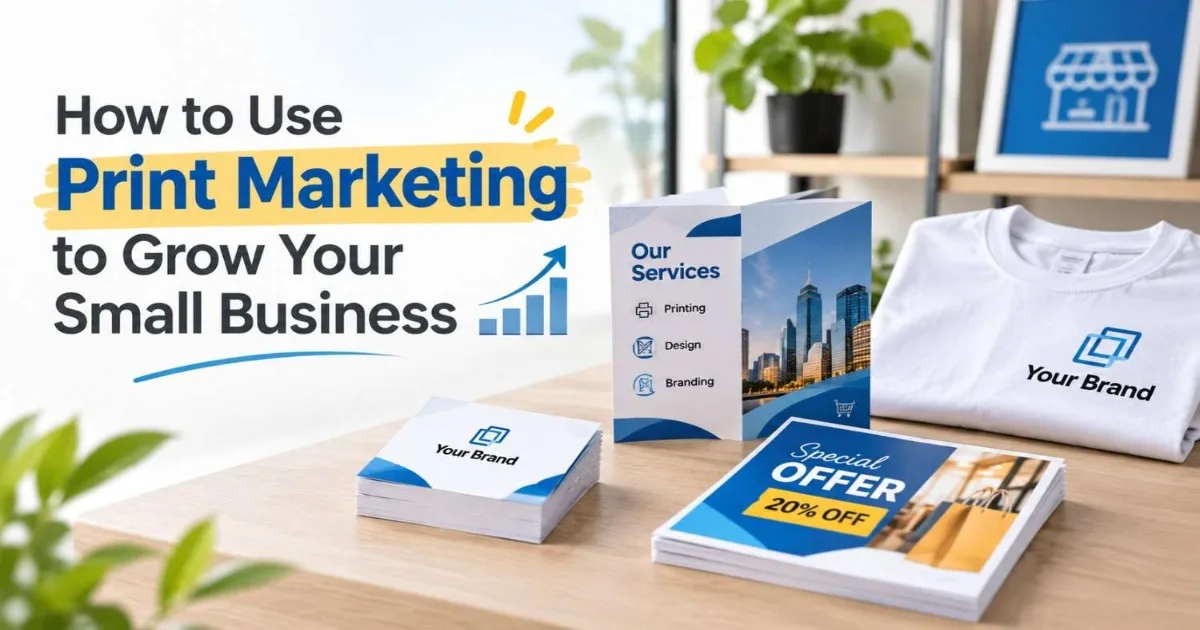
Print marketing is a way of promoting a business through physical materials such as brochures, flyers, business cards, posters, postcards, banners and promotional products. These materials help businesses communicate directly with potential customers without depending entirely on digital platforms.
One of the biggest advantages of printed advertising is that it creates a physical connection with your audience. For example, a customer may scroll past an online advertisement within seconds but a well-designed flyer or brochure can stay on their desk for several days.
Print marketing is especially useful for small businesses because it offers several opportunities:
- Build brand recognition: Consistent colors, logos, fonts and messaging help customers recognize your business.
- Reach local audiences: Printed materials can be distributed in neighborhoods, shopping areas, offices and community events.
- Create a professional image: High-quality printing gives customers a positive impression of your products and services.
- Encourage repeat business: Promotional cards and printed offers can remind existing customers to return.
- Support digital marketing: Printed materials can include website addresses, QR codes and social media details.
The key is to choose the right printing materials according to your business goals and target audience.
2. Use Brochures to Explain Your Products and Services
A brochure is one of the most useful marketing tools for businesses that want to provide more information about what they offer. Unlike a small advertisement, a brochure gives you enough space to explain your services, highlight important benefits and introduce your company.
For example, a real estate agency can use brochures to showcase properties, while a salon can include its services, pricing and special packages. Similarly, restaurants can use printed brochures to introduce their menus and seasonal offers.
Investing in professional Brochure printing in Los Angeles can help local businesses create attractive marketing materials that communicate their services clearly. A well-designed brochure can be shared with potential customers, distributed at business events or displayed at reception areas.
Here are a few ways to make brochures more effective:
- Keep the design simple: Avoid overcrowding the pages with too much information.
- Use attractive images: Include clear product photographs and relevant visuals.
- Highlight important details: Make your services, benefits and contact information easy to find.
- Include a clear call to action: Encourage readers to visit your website, call your business or request a quote.
- Maintain brand consistency: Use the same visual style across your brochures and other marketing materials.
Remember, a brochure should answer the customer's basic questions while giving them a reason to choose your business.
3. Promote Your Business with Flyers and Posters
Flyers and posters are affordable ways to spread information about your business. They are particularly useful when promoting limited-time discounts, grand openings, seasonal sales, new product launches and local events.
For small businesses with limited marketing budgets, these printed materials can provide good exposure without requiring a complicated advertising campaign.
For instance, a local restaurant can distribute flyers featuring a special lunch offer, while a fitness center can display posters announcing new membership plans.
To get better results from flyer and poster marketing, consider these tips:
- Choose the right locations: Distribute flyers where your potential customers regularly visit.
- Use attention-grabbing headlines: A short and interesting headline can encourage people to read further.
- Promote one main offer: Avoid including too many unrelated messages in one design.
- Add business information: Include your phone number, website, address and social media handles.
- Use readable fonts: Make sure important information is visible from a reasonable distance.
You can also use different sizes depending on where the materials will be displayed. Small flyers are suitable for hand distribution, while larger posters work well in shop windows and public display areas where permitted.
4. Turn Customers into Brand Promoters with Promotional Products
Promotional products are another creative way to increase brand awareness. Instead of simply giving customers information about your business, you provide something useful that they can use in their daily lives.
Popular promotional products include:
- Custom T-shirts and branded clothing
- Printed mugs and water bottles
- Tote bags and shopping bags
- Caps and other accessories
- Branded notebooks and stationery
Among these options, custom T-shirts are particularly effective because people can wear them outside their homes, allowing your brand to reach more people.
Businesses can use T-Shirt printing in Los Angeles to create customized clothing for employees, promotional campaigns, community events and customer giveaways. For example, a small café can provide branded T-shirts to its staff, while a fitness studio can sell or distribute customized shirts featuring its logo.
The best promotional products are those that customers find useful. When people regularly use or wear branded items, your business receives repeated exposure without having to run another advertisement.
5. Use Business Cards to Build Professional Connections
Business cards may look simple but they continue to be an effective networking tool. Whether you attend a trade show, business meeting, exhibition or community event, having a professional business card makes it easier for people to remember and contact you.
A good business card should include your business name, logo, contact number, email address, website and a short description of your services.
You can also add a QR code that directs customers to your website, online portfolio or social media profile.
Keep your business cards clean and easy to read. Avoid using too many colors or unnecessary information. A professional design with good-quality paper can make a stronger impression than an overcrowded card.
6. Combine Print Marketing with Digital Marketing
Print and digital marketing work better when they support each other. Instead of treating them as separate promotional methods, small businesses can combine both to create a more effective marketing strategy.
For example, a printed flyer can introduce a special offer and include a QR code that takes customers directly to an online booking page. Similarly, a postcard can encourage customers to follow your social media accounts for regular updates.
Here are some simple ways to connect print and online promotions:
- Add QR codes to brochures, flyers and posters.
- Include your website and social media handles on printed materials.
- Use unique discount codes to measure responses from different campaigns.
- Promote online contests through printed advertisements.
- Direct customers to online reviews to build trust and credibility.
This approach makes it easier to track customer engagement and understand which marketing materials are bringing more inquiries.
7. Measure the Results of Your Print Marketing Campaigns
Like any other marketing activity, print advertising should have clear goals. Simply printing and distributing promotional materials does not guarantee business growth. You need to understand whether your efforts are reaching the right audience and generating actual results.
Start by deciding what you want to achieve. Your objective might be increasing store visits, generating phone inquiries, promoting a new service or attracting repeat customers.
You can measure campaign performance through a few simple methods:
- Unique discount codes: Give different offers to customers who receive different printed materials.
- QR code tracking: Monitor how many people scan your printed QR codes.
- Customer feedback: Ask new customers how they heard about your business.
- Website visits: Use campaign-specific links to measure traffic from printed promotions.
- Sales comparisons: Compare sales before, during and after a campaign.
Reviewing these results will help you understand which materials perform best. You can then focus your budget on successful campaigns instead of spending money on promotions that produce little response.
Print marketing remains a practical and effective way for small businesses to connect with customers, increase brand visibility and build a professional reputation. From brochures and flyers to business cards and promotional products, every printed item can serve a specific purpose in your marketing strategy. The most important thing is to understand your audience, choose suitable materials and maintain consistent branding across every campaign. By combining creative printed promotions with digital marketing and regularly measuring results, small businesses can develop stronger customer relationships and create more opportunities for long-term growth.