
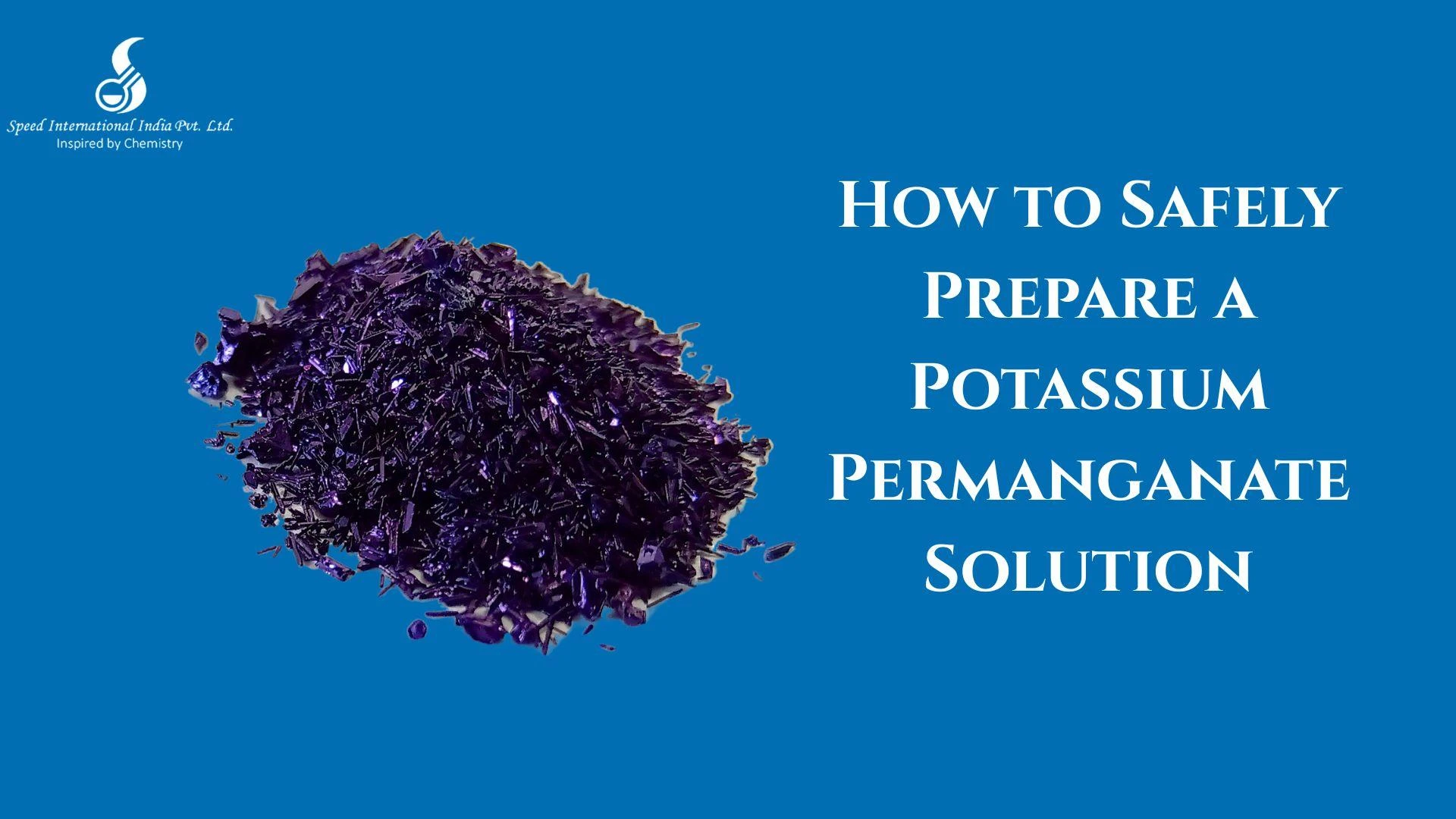
Potassium permanganate (KMnO₄) is a powerful oxidizing agent widely used in water treatment, disinfection, and chemical experiments. However, due to its reactive nature, handling and preparing potassium permanganate solution requires strict attention to safety and precise measurement. In this guide, we walk through the step-by-step process to safely prepare a potassium permanganate solution, covering essential precautions, equipment, handling protocols, and correct disposal methods.
Understanding Potassium Permanganate: Composition and Use
Potassium permanganate appears as deep purple or dark violet crystals. It is highly soluble in water and forms a bright purple solution when dissolved. KMnO₄ is used for:
- Disinfecting water
- Treating skin conditions (in dilute form)
- Removing iron and manganese in water systems
- Oxidizing agent in analytical chemistry
Despite its usefulness, it is corrosive, toxic in high concentrations, and must be handled with care.
Essential Safety Precautions Before Preparation
Before handling potassium permanganate, implement the following strict safety measures:
- Wear protective gear: Always wear chemical-resistant gloves, safety goggles, and a lab coat or apron.
- Ensure proper ventilation: Prepare the solution in a well-ventilated space or under a fume hood.
- Keep flammable substances away: KMnO₄ can ignite upon contact with combustible materials.
- Store correctly: Store crystals in tightly sealed, labeled containers away from sunlight and organic matter.
- Keep away from children and pets: KMnO₄ is not safe for home use without proper understanding and controls.
Materials Required to Prepare a Potassium Permanganate Solution
To safely prepare a potassium permanganate solution, gather the following materials:
- Analytical balance (accurate to 0.01 g)
- Beaker or glass container
- Distilled or deionized water
- Stirring rod or magnetic stirrer
- Measuring cylinder
- KMnO₄ crystals (lab-grade)
- Funnel (optional)
Ensure all containers and equipment are chemically resistant and clean to avoid contamination.
Step-by-Step Instructions to Prepare the Solution
Step 1: Determine Desired Concentration
The first step is to define the concentration of the solution needed. Common concentrations include:
- 0.01% (100 mg/L) for wound cleaning and mild disinfection
- 0.1% (1 g/L) for water treatment or stronger antiseptic uses
Concentration can be calculated using the formula:
Mass (g) = Volume (L) × Concentration (g/L)
Step 2: Weigh the KMnO₄ Crystals
Using an analytical balance:
- Turn on and calibrate the balance.
- Place a clean, dry weighing dish on the scale and tare it to zero.
- Carefully measure the required amount of KMnO₄ crystals, avoiding direct contact with skin.
Example: For a 1-liter solution of 0.1% KMnO₄, weigh 1 gram of potassium permanganate.
Step 3: Measure the Water
Measure the appropriate volume of distilled or deionized water using a clean measuring cylinder. For lab or medical use, avoid tap water, which may contain minerals that react with KMnO₄.
Step 4: Dissolve the Crystals
- Pour the measured water into a glass beaker or container.
- Slowly add the KMnO₄ crystals while stirring continuously with a glass stirring rod or magnetic stirrer.
- Continue mixing until all crystals are completely dissolved. The solution will appear deep purple and must be free from visible particles.
Avoid using metal stirrers or containers, as KMnO₄ is corrosive and may react with metal surfaces.
Storage and Stability of Potassium Permanganate Solution
Once prepared, the solution should be:
- Stored in dark glass bottles to prevent light degradation.
- Labeled clearly with concentration, date of preparation, and safety warnings.
- Used within a reasonable timeframe, as prolonged storage may reduce its effectiveness.
Never store the solution in metal or plastic containers that are not chemically compatible.
Safe Usage Guidelines
- Always dilute appropriately for medical or topical use.
- For disinfection, avoid contact with eyes and mucous membranes.
- Never mix KMnO₄ with acids, alcohols, glycerin, or other organic compounds, as this can cause violent reactions.
- In case of spills, neutralize with a reducing agent (like sodium thiosulfate) and rinse thoroughly with water.
Disposal of Potassium Permanganate Solution
Do not dispose of KMnO₄ directly into drains without neutralization. Follow these steps:
- Neutralize with sodium thiosulfate or hydrogen peroxide until the purple color fades.
- Once decolorized, it is safe to dilute with excess water.
- Dispose of the neutralized solution according to local hazardous waste guidelines.
Never pour undiluted or unneutralized potassium permanganate down household drains or into the environment.
Emergency Measures and First Aid
- Skin contact: Rinse thoroughly with water for at least 15 minutes.
- Eye contact: Immediately flush eyes with water and seek medical attention.
- Inhalation: Move to fresh air and consult a physician if symptoms persist.
- Ingestion: Seek medical help immediately. Do not induce vomiting.
Always keep Material Safety Data Sheets (MSDS) accessible when working with chemicals like KMnO₄.
Applications of Potassium Permanganate Solutions
When prepared correctly, potassium permanganate solutions serve many beneficial uses:
- Water treatment plants use it to oxidize iron, manganese, and hydrogen sulfide.
- Hospitals apply dilute solutions to treat skin infections and ulcers.
- Aquaculture uses it to control parasites and fungal growth in fish tanks.
- Laboratories employ it in titration experiments and oxidation reactions.
The key to effective use lies in accurate preparation and strict safety compliance.
Common Mistakes to Avoid
- Using metal utensils that corrode and react with KMnO₄
- Guessing concentrations instead of precise measurements
- Improper disposal leading to environmental harm
- Storing in clear or plastic bottles that degrade or react with the solution
- Neglecting protective gear, risking burns or staining
Avoiding these errors ensures safe handling and effective application.
Final Thoughts
Preparing a potassium permanganate solution safely is not just a technical task—it’s a chemical responsibility. By adhering to strict measurement protocols, using the right equipment, and observing safety practices, we can harness the powerful benefits of KMnO₄ without compromising health or safety. Always consult your institutional guidelines or chemical safety officer when handling concentrated chemicals.