Hello, friends! If you're part of a corporate event planning team, marketing department, or an executive or event coordinator tasked with hosting hybrid or virtual experiences, I'm glad you're here. I'm going to walk you through how I run hybrid board meetings that feel seamless, inclusive, and professional—whether some attendees are in the room and others are dialing in remotely. My hope is you'll take away actionable tips to elevate your next meeting and create a truly unified experience.
Throughout this post, I'll use a friendly, first-person tone, share what I've learned, and include plenty of hybrid meeting best practices, virtual board meeting tips, and remote-participation strategies. I'll also mention a trusted partner I work with for AV and setup—Lucas Productions USA, a full-service AV company that makes hybrid meetings run smoothly.
Let's dive in.
Why Hybrid Board Meetings Matter for You
The shift in how boards and executive teams meet
Over the past few years, I've seen how boards, senior leadership teams, and brands have embraced the hybrid meeting model. With part of the team in-person and part remote, the dynamics change—but so do the opportunities. The benefits include:
- Flexibility: You allow remote participation from anywhere, which is great for global stakeholders.
- Cost-efficiency: less travel, fewer hotel stays—and you still get board engagement.
- Inclusivity: When done right, remote members can contribute just as much as those in the room.
- Preparedness: companies that master hybrid board meetings are better equipped for unexpected disruptions (travel issues, public-health events, weather delays, etc).
What I've realised from planning these meetings
- Even when everything looks set up, I've watched remote participants feel sidelined because of audio issues, camera angles, or meeting flow.
- On-site attendees sometimes dominate discussion simply because they can turn to each other and whisper—not because they intend to exclude remote folks, but because the technology or facilitation isn't set up for fairness.
- The planning time for hybrid board meetings needs to be greater than "send a Zoom link + book a room." The experience has to be intentionally designed.
- The good news: As you fine-tune your process, you'll create an experience that feels as seamless as an all-in-person meeting (or at least closer to that ideal) and earns trust across stakeholders.
Primary Components of a Seamless Hybrid Board Meeting
Making a meeting feel cohesive when some folks are remote and some are present requires attention to technology, agenda design, participant experience, and facilitation style. I'm going to break each one down and share how I approach them.
1. Technology & Setup: Pay attention to audio-visual and connectivity
- Choose reliable conferencing software: Whether you use Zoom, Microsoft Teams, Webex, or another platform, make sure you've tested it in a live setting with your room's equipment.
- Room setup: In the physical boardroom, I move beyond the "camera over there" approach. I set up:
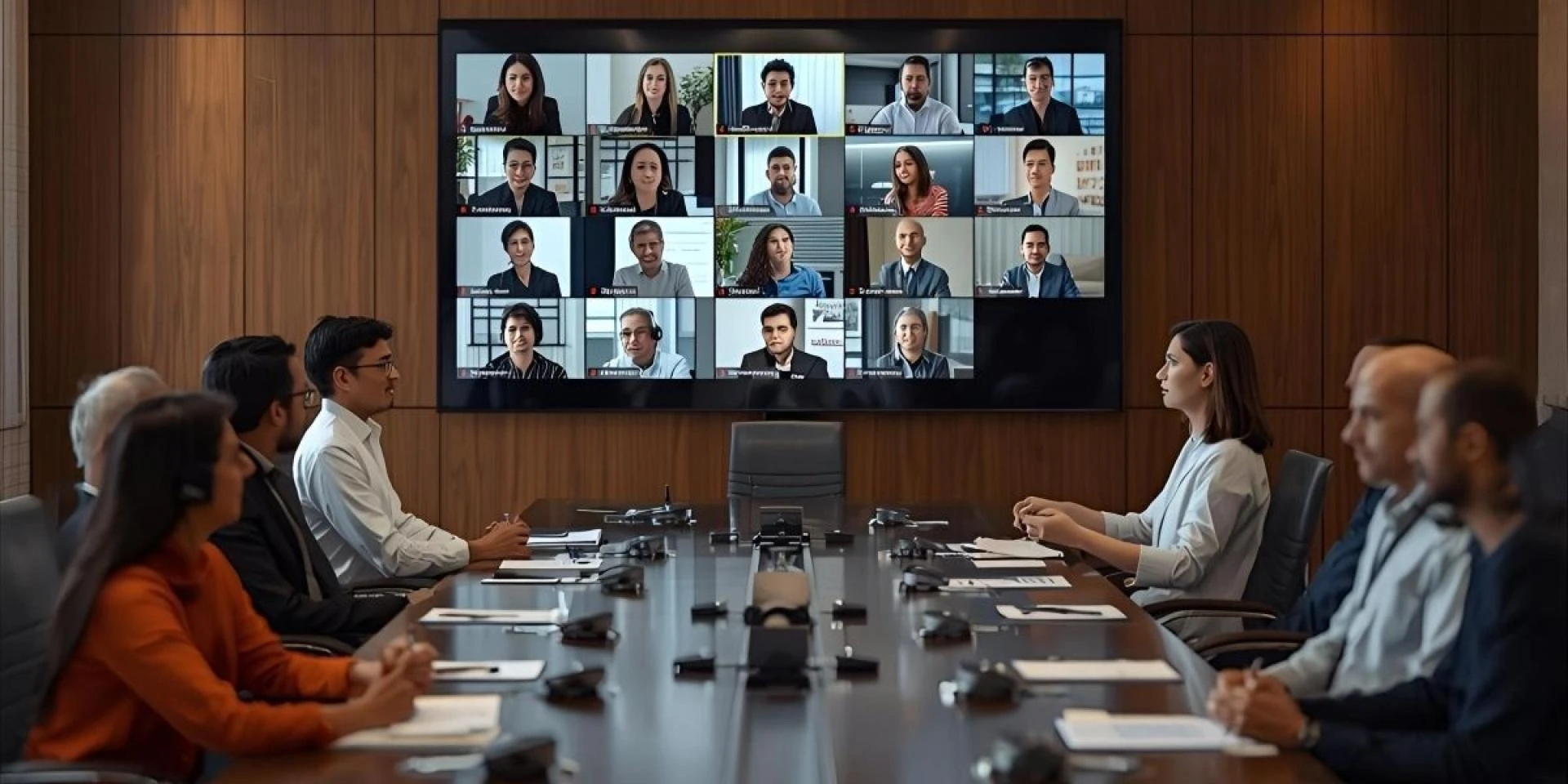
- A wide-angle camera (or two) so remote participants can see the in-room group.
- A screen or monitor showing remote participants so in-room folks can see them easily.
- A high-quality microphone system and speakers so remote folks can hear in-room conversations clearly. Good acoustics matter a lot. (A recent pilot study found that room acoustic design significantly affects communicative success in hybrid meetings.)
- Connectivity backup: I always plan for poor internet scenarios—I'll have a backup hotspot or alternate conference line ready.
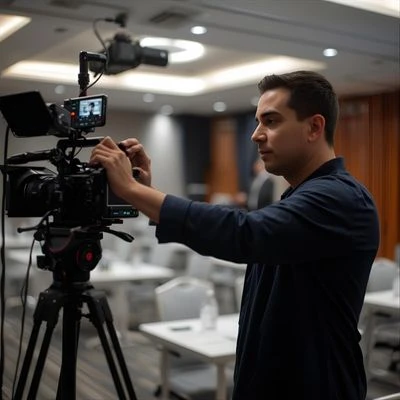
- AV partner: For major meetings, I bring in a professional full-service AV company—like Lucas Productions USA—to handle lighting, audio, cameras, streaming, and troubleshooting. Having that dedicated expertise frees me to focus on content and facilitation rather than panic when something goes wrong.
2. Agenda Design: Treat remote the same as in-room
- Pre-distribute agenda and meeting materials in advance, making sure remote participants have access to them (perhaps via a shared cloud folder).
- Define roles: I always assign a "remote facilitator" (even if it's me) whose job is to monitor chat, raise remote participants, check for connection issues, and ensure remote voices are heard.
- Balance the agenda: Avoid a long monologue of in-room presenters. Instead, I alternate between in-room and remote speakers, incorporate Q&A and breakouts, and schedule time explicitly for remote input.
- Check-ins and breaks: For hybrid meetings, I build-in quick "all-participant" check-ins—like "remote folks, any quick thoughts?" at specific agenda points. This keeps remote engagement fluid and intentional.
3. Participant Experience: Make everyone feel equally present
- Lighting and background matter: In-room participants are framed well in camera; remote folks are shown with clear video. I ask in-room attendees to not block the camera view or whisper outside mic pickup.
- Name visibility: For remote participants, I encourage them to display their full name and organization so in-room attendees know who's speaking.
- Use visual cues: I say things like "If you're remote, please raise your virtual hand" or "In-room folks: turn toward the camera when speaking so remote folks see you." These micro-gestures help bridge the "in-out" divide.
- Mix-mode breakout groups: When I plan breakout sessions, I try to mix remote and in-room participants—this helps build cohesion across zones and prevents remote attendees from becoming passive observers.
4. Facilitation & Moderation: Lead with intentional inclusivity
- I start the meeting with a quick acknowledgment: "We have some folks in the room, others joining remotely—let's make sure everyone has an equal voice."
- I frequently ask remote participants: "What do you think?" rather than assuming quiet means assent.
- I mute distractions in the room—phone notifications, side conversations, food noise. Remote participants can't filter that out, so the in-room group must be extra disciplined.
- I build time for polls, live chats, and virtual whiteboards so remote attendees can contribute in interactive ways, not just listen.
- I end with a remote-specific wrap-up: "Coming to you online: did you feel heard? Anything you'd like us to do differently next time?" This feedback loop keeps improving your hybrid board meeting experience.
Common Pitfalls & How I Navigate Them
As someone who's run many meetings, I've seen problems repeat themselves—and I've learned how to avoid them.
Pitfall 1: Remote attendees feel like observers, not participants
What happens: The in-room conversation flows freely. A remote participant joins, but never gets a direct question, is cut off by a physical whisper, or loses track of who is speaking.
My fix: I explicitly schedule "remote voice" moments. I ask remote participants by name, encourage in-room people to speak into the mic, and make remote voices visible on screen. Also, I remind in-room attendees: "Please look at the camera when you speak—it helps our remote team feel seen."
Pitfall 2: Technical issues derail the meeting
What happens: The internet connection is shaky, the audio echoes, the video freezes, remote participants drop off, and chaos ensues.
My fix: I always perform a full tech-rehearsal at least one day before the meeting. I confirm internet speed, test the microphones, check ear-speaker volumes, and have the AV team (Lucas Productions USA) ready on call. I also share a fallback link or dial-in number for remote attendees in case the primary connection fails.
Pitfall 3: The agenda is too in-room-centric
What happens: The materials, visuals, and flow focus only on the in-person group—remote folks are relegated to side-view only.
My fix: I design the agenda with both modes in mind: visuals must be visible online, every slide is shared digitally, remote folks have handouts, and I avoid "we'll just talk this out in the room" segments (unless the room plans to include remote via camera). I ensure that remote attendees can see the same whiteboard or flip chart via webcam or shared screen.
Pitfall 4: After-meeting follow-up ignores remote participants
What happens: The meeting ends, minutes are sent only to in-room people, and follow-up actions assume physical presence and overlook remote responsibilities.
My fix: I distribute meeting minutes, action items, and recordings via a cloud link accessible to all. I tag remote participants with action items explicitly, and I schedule a short 10-minute remote check-in for those who couldn't stay until the end. This maintains the inclusive culture.
Tools, Infrastructure & Checklist I Use
Here's the toolkit and Checklist I rely on, and you can adapt it for your hybrid board meeting environment.
Recommended Tools & Software
- HD webcam(s) and tripod(s) positioned to capture the entire in-room group.
- Conference room microphone array or USB boundary mic for in-room sound clarity.
- Large display(s) in the room and screen sharing for remote participants.
- Stable high-speed internet with quality of service (Quality of Service) for video streaming.
- A backup hotspot or alternative network.
- Video-conferencing platform with breakout rooms, polling, chat, and recording.
- Virtual whiteboard or collaboration tool (Miro, Microsoft Whiteboard, etc.).
- Meeting management software or agenda templates for tracking actions and minutes.
Pre-Meeting Checklist (what I do the day before / hour before)
- Book the in-room venue and confirm AV equipment.
- Run a full tech check with remote and in-room confirmed participants.
- Send the agenda and all materials to everyone at least 24 hours in advance with download links.
- Confirm remote participants have the correct link / dial-in number.
- In-room: check lighting, seat arrangements, camera sightlines, mic placement.
- Remote: remind participants to join 10 minutes early, test audio/video, and turn off background noise.
- Create and share a participant list with names, roles, and locations (remote vs in-room).
- Assign roles: remote facilitator, time-keeper, note-taker (can be remote or in-room).
- Set ground rules at the start: "We'll ask remote participants first on each agenda item," "Please identify yourself before speaking," etc.
- Plan for a 5-minute break halfway through for both remote and in-room groups to refresh.
Tips for Engaging Hybrid Participants
When you want to move beyond "just functional" to "highly engaging", here are my favorite tactics.
Encourage Visual Engagement
- Ask remote participants to keep video on, and encourage in-room participants to occasionally look toward the camera—not just at each other.
- Use visuals: slides, live polls, and Q&A tools to keep remote attendees active.
- Break up sessions: alternate speaker formats and include interactive segments rather than only presentations.
- Use chat or poll features actively: e.g., "Remote attendees, use the chat to highlight your one key takeaway," then read one aloud to the in-room group.
Foster Social Connection
- Start with an informal check-in: Have everyone answer a fun question ("What's your greatest coffee habit this week?") or show their remote location's view.
- Use breakout rooms that mix in-room and remote participants: this builds rapport across geographies.
- After the meeting, send a thank-you email with a short survey about how remote vs in-room attendees felt. Use the feedback to improve next time.
Clarify Next Steps & Responsibilities
- End with a clear action-item list that names persons, roles, deadlines—and pinpoints whether they are remote or in-room.
- Send a video recording link (if appropriate) with timestamped agenda items—remote participants can review if audio glitches occurred.
- Schedule a short remote-only follow-up session (15 minutes) so remote participants can ask any final questions or clarify next steps without the in-room noise.
Why Hiring a Full-Service AV Partner Matters
I used to think "we'll just use the built-in meeting room tech." Still, over time, I realised that for board-level hybrid meetings—and especially when brands hosting hybrid or virtual experiences are involved—having a professional AV partner elevates the experience.
Here's why I recommend Lucas Productions USA:
- They handle camera setup, audio integration, streaming, and ensure remote participants hear and see everything clearly.
- They understand board-level expectations: high-quality video, crisp sound, minimal delays, and professional lighting.
- They offer on-site support when the meeting happens, so you don't have to worry about "what if the mic fails?"
- They help with post-meeting deliverables—recordings, edited highlights, and archives.
- They allow me, as the meeting planner or facilitator, to focus on content, tone, and participant experience, knowing the technical side is solid.
If you're planning a hybrid board meeting that matters—whether for a brand reveal, investor update, or executive strategy session—investing in a full-service AV company like Lucas Productions USA makes the difference between "it worked" and "it felt seamless".
Final Thoughts: Making Hybrid Board Meetings Feel Seamless
Running hybrid board meetings is more art than science—but with the right mindset, tools, and preparation, you can create gatherings that feel inclusive, efficient, and elevated. Here are my final takeaways:
- Prioritise remote participants from the get-go—design the setup, agenda, and facilitation accordingly.
- Don't let technology be an afterthought—audio and video matter just as much as the discussion.
- Facilitation style changes in a hybrid setting—you must lead with inclusion, not assumption.
- Breakouts, polls, and visual engagement help turn passive attendees into active participants.
- A professional AV partner like Lucas Productions USA isn't just "lovely to have"—for high-stakes meetings, it's a strategic advantage.
- After the meeting, ask for feedback—especially from remote participants—and iterate.
Planning well, leaning into inclusivity, and paying attention to the little details will move your hybrid board meetings from "functional" to "flawless". Thank you for reading—I hope you feel ready, equipped and confident to run your next meeting. If you want help diving into a specific setup, case study, or script, just let me know—I'd be glad to help.