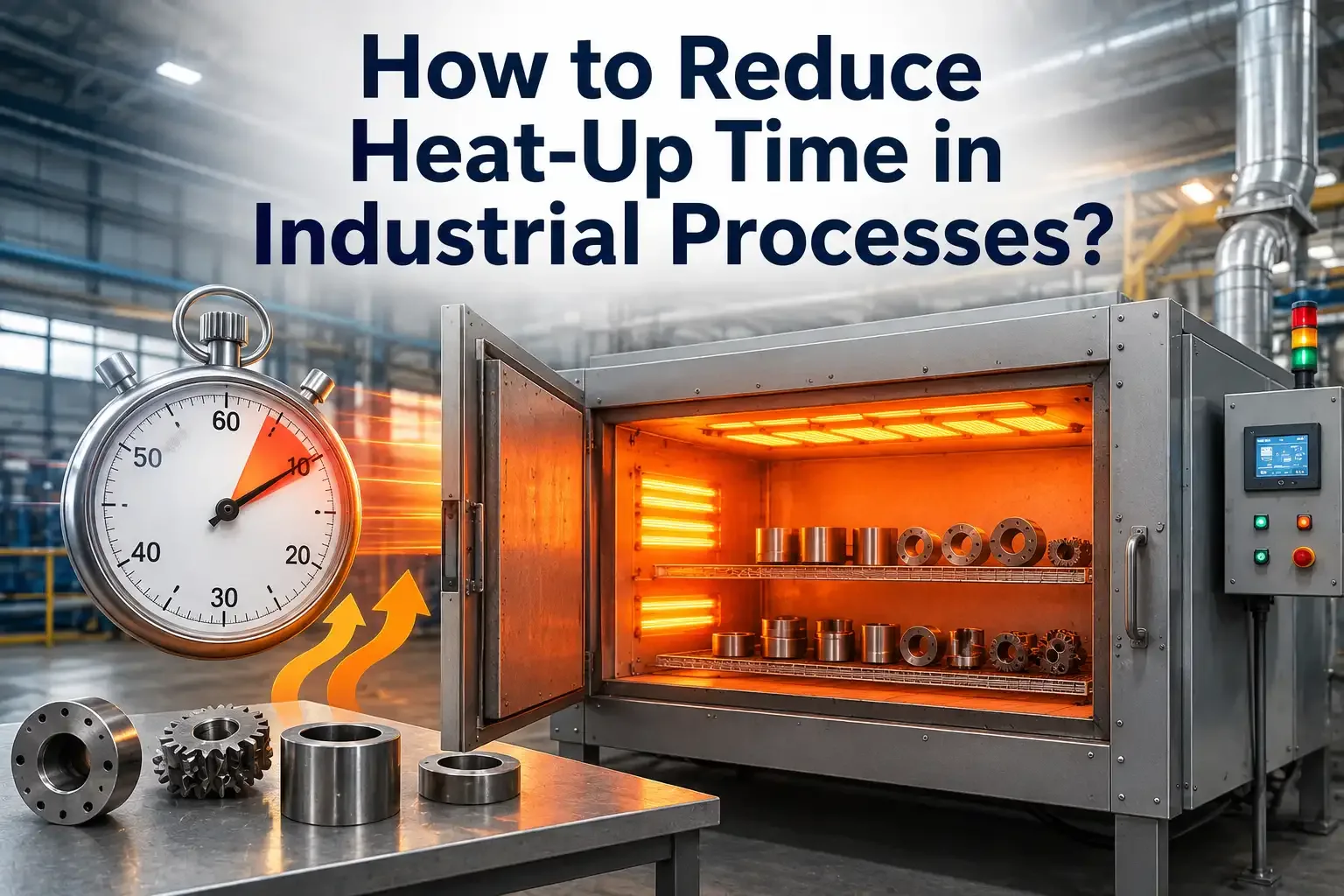
Heat-up time can slow down a whole factory line. A part must first reach the right heat level. This comes before it can be cured, coated, or shaped. For big or thick parts, this step alone can take a long time.
The good news is simple. You can cut heat-up time. You just need better airflow, smarter loading, tighter heat control, and in some cases, preheat ovens before the main process.
Why Does Heating Take So Long?
Many things affect how fast a part heats up:
- Material type. Metal, plastic, and other stuff heat at different speeds.
- Part thickness. Thick parts take longer to heat all the way through.
- Start heat. A cold part takes longer than a part that starts warm.
- Target heat. A bigger jump in heat takes more time.
- Part shape. Flat, thin parts heat faster than thick, odd parts.
- Airflow. Hot air must reach the part, not just fill the oven.
- Batch size. Packed loads block heat from reaching every part.
Here's an example. A thick steel plate takes longer to heat than a thin one. The outside heats up fast. But the middle stays cool for a while. If you turn up the oven heat too much, the outside can overheat. The middle still won't catch up. That can warp the part or leave weak spots.
Problems Caused by Long Heat-Up Times
When heat-up takes too long, it causes real problems:
- Longer work cycles
- Fewer parts made per day
- Higher energy bills
- Backups before the main oven
- Uneven heat across a batch
- Wasted oven time on warm-up, not real work
Even a small cut in heat-up time adds up. A 10% to 15% cut can mean one more full batch by shift end.
Five Ways to Cut Heat-Up Time
1. Preheat the Part First
This is the biggest fix. Split the heat-up step from the main process.
Without a preheat step: Cold part → Main oven does all the work → Target heat reached
With a preheat step: Cold part → Preheat oven warms it first → Main oven finishes the job
A preheat oven has one job. It brings parts close to the right start heat. This way, the main oven does less work. It can spend more time on the real job, like curing or coating. It spends less time just warming the part up.
This helps most with heavy metal parts. It also helps on lines where the main oven is the slow step.
2. Improve Airflow
Hot air only helps if it reaches the part. Bad airflow is a top cause of slow heating. It's also easy to fix.
Check these things:
- Leave space between parts so air can move around them
- Don't let racks block airflow to parts in the middle
- Don't overload the oven past what the fans can handle
- Watch for dead zones where air barely moves
3. Match Oven Power to the Load
A small oven always takes longer to heat a full batch. This is true no matter what else you fix.
When you pick oven power, think about:
- Your biggest batch weight, not the average
- The material and how it holds heat
- Part size and shape
- How far the target heat is from room heat
- Your target speed and cycle time
Going too big isn't the fix either. A big, oversized oven wastes energy and cash. It won't save much time.
4. Cut Extra Weight in the Oven
An oven doesn't just heat your part. It also heats the racks and trays inside it. Heavy fixtures soak up heat. That heat should go to the part instead.
Use lighter racks where you can. Open frames beat solid trays. This saves heat and time.
5. Fine-Tune Temperature Control
Good sensors help the oven hit the right heat fast. A well-tuned system stops it from swinging too high or too low.
For key jobs, check the part's real heat. Don't just check the air around it. A sensor on the part shows you when it's truly ready.
When Should You Add a Preheat Oven?
Look into a preheat step when:
- Big or heavy parts always take too long to heat
- Heat-up time is your main slowdown
- The main oven spends too much time on warm-up alone
- Parts need the same start heat every time
- You run several batches a day
- Part sizes vary and each needs a different heat-up time
For small or rare jobs, a preheat oven may not pay off. It makes more sense as batch size and count grow.
How to Choose the Right Preheat Oven
Pick a preheat oven that fits your real needs. Don't just pick the biggest one. Start with these facts:
- Part size and max batch weight
- Material and how it holds heat
- Start heat and target preheat heat
- Target speed and cycle time
- How parts get loaded (racks, belt, cart)
Once you know these, you can size the oven, power, airflow, and controls to fit.
Conclusion
Cutting heat-up time isn't just about turning up the heat. You need the right mix. Match oven power to the load. Get airflow to every part. Cut extra weight. Tighten heat control. Add a preheat step when it makes sense.
Cold or heavy parts can slow down your main oven. A preheat step can lift that load off. Your main oven can then focus on its real job. Is it worth it? That depends on your part size, batch count, and target heat. But for busy plants with heavy loads, the payoff is often clear.