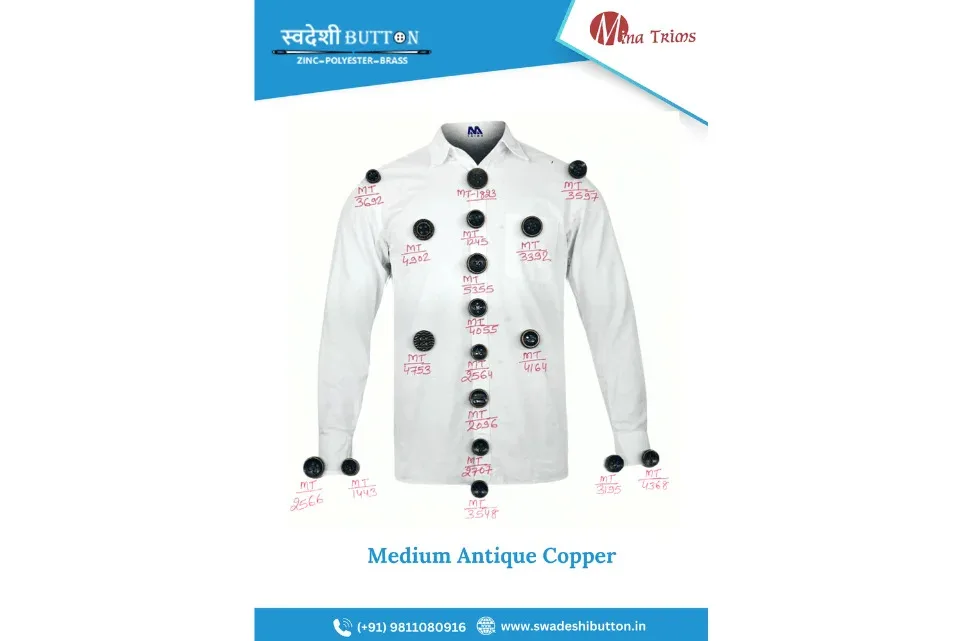
Most button problems start with a vague order. "Medium white shirt buttons" can mean ten different things to ten different suppliers, and the result is wrong sizes, mismatched shades and rejected lots. A button specification sheet fixes this by putting every detail in writing, so the supplier, the factory and the buyer all work from the same reference. This guide explains each part of a spec sheet, shows how to fill one in, and gives a template you can copy.
What Is a Button Specification Sheet?
A specification sheet (often called a spec sheet or trim card) is a one-page document that describes a button or fastener in enough detail that anyone can reproduce or reorder it exactly. It usually accompanies a physical sample and is shared with the supplier, the sampling team and the quality inspector.
Using one saves time at every stage. A supplier who receives a clear brief can quote accurately, sample faster and avoid guesswork. That is why experienced buyers send a spec sheet to every one of their Garment Button Suppliers in Delhi instead of relying on phone calls or photos.
The Core Fields of a Spec Sheet
1. Reference and Style Details- Spec number or code: A unique ID for easy tracking
- Style or garment name: Where the button will be used
- Season or order reference: Helps with reorders
- Date and revision number: Keeps versions clear
- Position on garment: Front placket, cuff, collar, pocket, waistband
- Ligne (L): The trade standard. 40L equals about 25.4 mm
- Millimetre diameter: Always include both to avoid confusion
- Tolerance: The acceptable variation, such as plus or minus a small fraction of a millimetre
State the material clearly: polyester, zinc alloy, brass, shell, wood, coconut, nylon or other. Add any specific grade or requirement, such as heat-stable polyester or a plating type.
4. Construction- Hole count: Two-hole, four-hole or shank
- Hole size and spacing: Important for thread and needle choice
- Thickness: In millimetres
- Rim style: Raised, flat or bevelled
- Dish depth: Shallow, medium or deep
- Edge finish: Rounded, bevelled or sharp
- Colour name or code: Use a reference such as a swatch, lab dip or colour standard
- Finish: Matte, glossy, pearl, marble, antique, brushed or plated
- Colour approval method: Physical sample, lab dip or digital reference
- Shade tolerance: How much variation is acceptable between batches
List the tests the button must pass:
- Wash durability and number of cycles
- Colour fastness
- Heat and pressing resistance with a stated temperature
- Pull strength
- Corrosion resistance for metal items
- Any buyer-specific requirements
- Order quantity per size and colour
- Wastage buffer if included
- Packing method: Polybags, cartons, counts per pack
- Labelling: Size, colour, batch and quantity on each pack
- Delivery date and schedule: Single lot or staggered
- Sample approval status: Submitted, approved, revised or rejected
- Approved by and date
- Master sample reference: Where the signed sample is stored
A Ready-to-Use Spec Sheet Template
Copy and adapt this layout:
FieldDetailsSpec code Style / garment Position on garment Size (ligne / mm) Size tolerance Material Hole count / shank type Hole size and spacing Thickness Rim and dish Edge finish Colour name / code Colour reference method Finish Shade tolerance Wash test requirement Heat / press requirement Pull strength requirement Corrosion requirement (metal) Quantity per size / colour Wastage buffer Packing and labelling Delivery date / schedule Sample status and approver Revision / dateHow to Read a Supplier's Spec Sheet or Quote
When a supplier sends back a specification or sample card, check each item against your own:
- Does the size match in both ligne and millimetres?
- Is the material exactly what you requested?
- Do holes, thickness and rim match the sample?
- Is the colour referenced to your standard, not just a name?
- Are test claims specific and measurable?
- Are quantity, packing and lead time clearly stated?
Be cautious of vague wording such as "good quality" or "standard finish". Ask the supplier to replace it with measurable details.
Spec Sheets for Different Order Types
Large Production OrdersFor high volumes, tolerances and batch consistency matter most. Include shade tolerance, single-run requirements and delivery schedules. Working with Bulk Clothing Button Suppliers in Delhi is easier when the spec sheet clearly defines these points, since pricing and production planning depend on them.
Ready Stock PurchasesEven when buying existing designs, record the specification so you can reorder the same item later. Stock sourced from Wholesale Garment Buttons in Delhi may not include a formal sheet, so create your own from the sample, noting size, material, finish and colour code.
Small Shop and Tailor PurchasesTailors and resellers often buy in small lots from Garment Button Wholesalers in Delhi or Sewing Button Wholesalers in Delhi. A simplified card with size, material, colour and supplier is enough to keep reorders consistent, particularly for repeat customers who return for matching buttons.
Manufactured and Branded ProgrammesWhen a production house buys directly from Clothing Button Manufacturers in Delhi, a full spec sheet becomes a shared quality contract. It ensures each production run matches the last, and it gives both sides a clear reference if a question arises later.
Writing Specs for Fasteners
Snaps, tack buttons, rivets and hooks need their own details:
- Component list: Cap, socket, stud and post for snaps
- Dimensions: Cap diameter, post length and base size
- Material and plating
- Closure force or strength requirement
- Fabric range: Minimum and maximum thickness the fastener suits
- Attachment method: Machine type and tooling
Clothing Fastener Manufacturers in Delhi can advise on which post length and tooling suit your fabric, and a clear spec sheet speeds up that advice.
Writing Specs for Fashion and Design Buttons
Design-led buttons need extra visual information:
- Reference images from several angles
- Finish description and any layered or mixed-material details
- Placement sketch showing how many buttons and where
- Acceptable variation for natural materials
Presenting a complete brief to Fashion Button Suppliers in Delhi helps them propose accurate options for the season, cutting down the number of sample rounds.
Writing Specs for Custom Buttons
Custom orders need the most detail because the tooling is made for you. Add:
- Artwork files in a clear, high-resolution format
- Logo dimensions and depth (embossed, engraved or flat)
- Exact colour references
- Minimum order quantity and tooling terms
- Exclusivity expectations
- Sample approval steps
Custom Garment Button Makers in Delhi can work faster and more precisely when the brief includes all of these from the start.
Managing Multiple Garments With a Master Trim Sheet
Apparel companies producing many styles benefit from a master trim sheet listing every button and fastener used across the range, with a code that links to its detailed spec. This helps merchandisers, factories and quality teams see at a glance which trims are shared between styles and where consolidation is possible. Apparel Button Manufacturers in Delhi who supply multiple materials and sizes can then quote against the whole sheet instead of item by item.
Best Practices for Spec Sheets
- Attach a physical sample whenever possible; photos and descriptions can mislead.
- Use measurements, not adjectives. "20L, 3.2 mm thick" beats "medium and thin".
- Version your sheets. Increase the revision number whenever something changes.
- Share the same sheet with everyone involved in sourcing and production.
- Keep digital and printed copies with the master sample.
- Update after problems. If a defect occurs, add the lesson to the spec.
Common Spec Sheet Mistakes
Leaving out tolerance. Without a stated range, any variation can become a dispute.
Naming colours without a reference. "Navy" differs between suppliers.
Skipping performance requirements. The button looks right but fails in use.
Not recording changes. Old and new versions get confused.
Forgetting packing instructions. Mixed or unlabelled packs slow down production.
Sending specs only by phone. Verbal details are easily forgotten or misheard.
Final Thoughts
A good button specification sheet is a small document that prevents big problems. It makes quotes more accurate, sampling faster and production smoother, and it gives you a reliable record for every reorder. Whether you run a tailoring shop, a boutique label or a large export unit, writing specifications clearly is one of the simplest ways to protect quality and save time.
To explore buttons, fasteners and custom options that you can sample against your own specifications, visit Swadeshi Button and request a sample set.