A well-planned CCTV installation is a highly effective way for property owners and facility managers to protect assets, monitor activity, and maintain reliable event records. Achieving full coverage requires more than simply installing cameras. Effective planning includes a thorough property assessment, careful camera selection, strategic placement, and a well-designed cabling network to ensure reliable connectivity.
This article outlines the essential steps for planning a CCTV installation that provides consistent, comprehensive coverage for properties of any size.
Start with a thorough site assessment.
A successful CCTV installation starts with a detailed site evaluation. This assessment determines the number and type of cameras needed for each area and guides cabling network design.
During the site assessment, the installer or security consultant identifies all areas requiring monitoring. These include entry and exit points, high-value locations such as server rooms and cash-handling stations, and areas with high foot traffic or a history of incidents. Outdoor areas exposed to direct sunlight, rain, or extreme temperatures require weatherproof cameras with appropriate ingress protection (IP) ratings. Indoor areas with variable lighting, such as lobbies or stairwells, may require cameras with wide dynamic range or low light capabilities. Documenting these conditions early helps prevent equipment mismatches that could compromise image quality after installation.
Define Coverage Goals and Camera Roles
Each camera serves a specific purpose. Before selecting equipment, define the coverage goal for each area: overview, detection, or identification.
Overview Coverage
Overview cameras offer a wide view of large areas, showing general activity rather than fine details. Wide-angle or fisheye lenses are typically used to capture wide areas.
Detection Coverage
Detection cameras are positioned to identify when a person or vehicle enters a specific zone, such as a restricted corridor or secure perimeter. These cameras focus on a narrower field of view and are calibrated to detect movement reliably. Motion detection and analytics features are often enabled on detection cameras to trigger alerts when activity is identified in a defined area.
Identification Coverage
Identification cameras are placed to capture clear images of faces, license plates, or other identifying details. These devices are typically positioned at entry points, cash registers, or access control stations. High-resolution sensors and narrower focal lengths are required to achieve the image quality necessary for reliable identification. Defining these roles before equipment selection ensures the right camera type is used in each location rather than relying on a single model for all purposes.
Select the Right Camera Types and Specifications
Camera selection should be driven by the coverage goals identified in the previous step. Several camera types are available, each suited to specific applications within a CCTV camera installation.
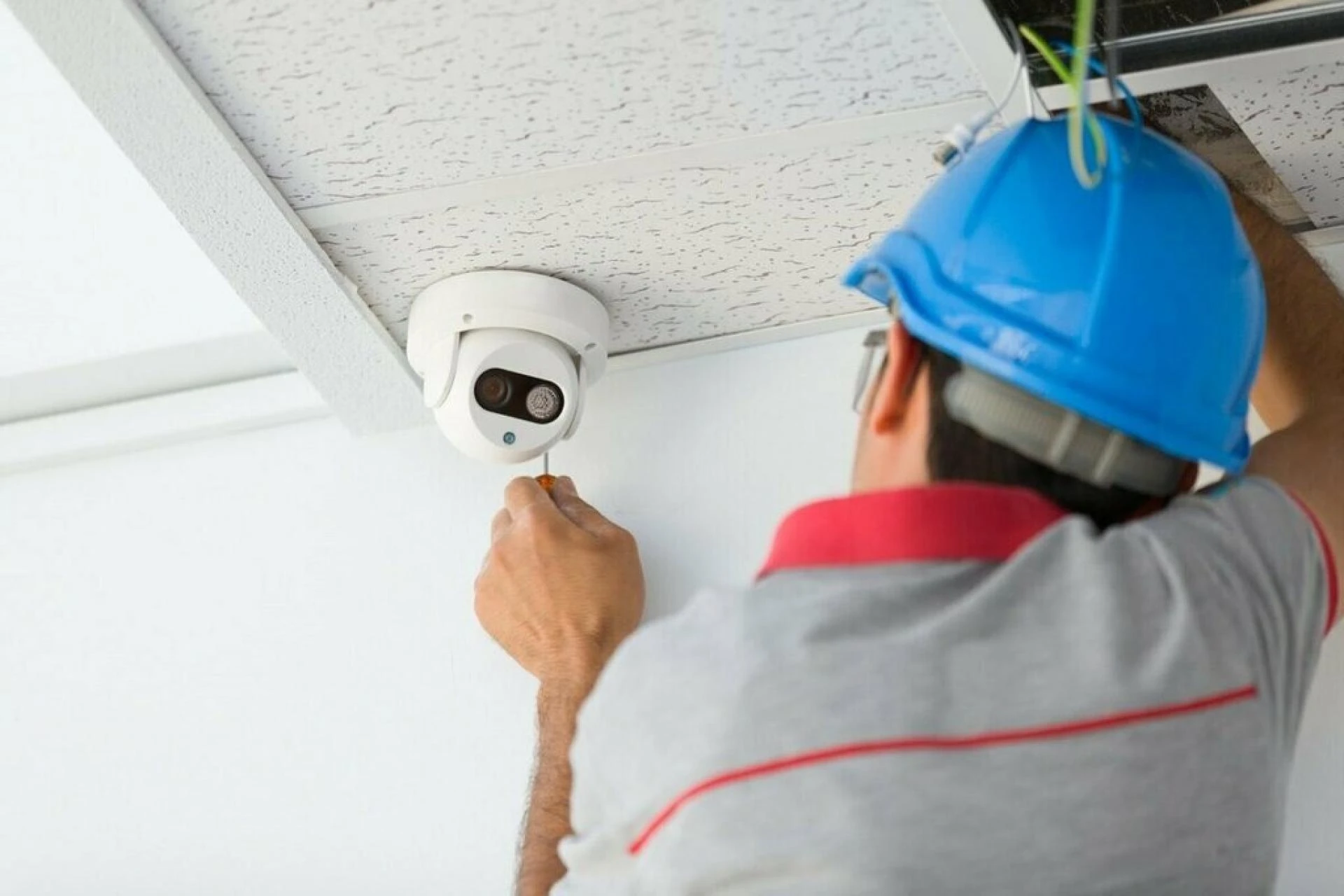
Dome cameras are widely used indoors due to their low-profile design and wide viewing angles. Bullet cameras are better suited for outdoor use where a longer range is required, as their design accommodates larger lenses and built-in infrared illumination. PTZ (pan-tilt-zoom) cameras offer remote control of the viewing direction and zoom level, making them suitable for large open areas where a single camera must cover multiple zones. Box cameras provide maximum flexibility in lens selection and are commonly used in controlled indoor environments.
Resolution is another critical specification. Higher-resolution cameras capture more detail and are particularly important for coverage of identification areas. However, higher resolution also results in larger file sizes, which affect storage capacity requirements. Balancing resolution with storage budget is an important consideration in the planning process.
Plan the Cabling Network Carefully
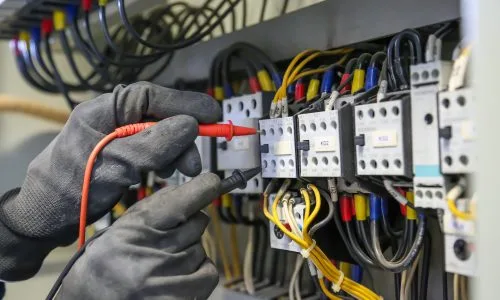
The cabling network is one of the most critical and often underestimated elements of any surveillance system. A well-designed cabling network ensures that all cameras transmit video signals reliably, receive stable power, and remain connected to recording and monitoring equipment without interruption.
Cable Types and Their Applications
Two primary cable types are used in modern CCTV installations. Coaxial cable (RG59 or RG6) is traditionally used with analog camera systems and analog HD formats such as HD-TVI, HD-CVI, and AHD. An Ethernet cable (Cat5e or Cat6) is used for IP camera systems and supports both data transmission and power delivery via Power over Ethernet (PoE). The choice between these cable types is determined by the camera technology selected for the system.
For IP camera systems, the cabling network typically routes Cat6 cables from each camera back to a central network switch, which connects to the network video recorder (NVR). PoE switches eliminate the need for separate power supplies at each camera location, simplifying installation and reducing the number of cable runs.
Cable Routing and Protection
Cable routing requires careful planning to avoid interference, physical damage, and unnecessary exposure. Cables should be routed through conduit wherever they pass through walls, ceilings, or exposed exterior surfaces. Conduit protects cables from physical impact, moisture, and rodent damage, significantly extending the service life of the cabling network.
Cable runs should also be kept away from high-voltage electrical wiring to prevent electromagnetic interference, which can degrade video signal quality on analog systems or cause data errors on IP networks. When parallel runs cannot be avoided, the surveillance cables should cross power cables at a 90-degree angle rather than running alongside them.
Cable Length Limitations
Both coaxial and Ethernet cables have maximum effective transmission distances that must be respected during planning. Standard Cat5e and Cat6 Ethernet cables support PoE transmission up to 328 feet (100 meters). For longer runs, network switches or PoE extenders must be placed at intermediate points along the cabling network. Coaxial cable runs for analog systems can reach greater distances, but signal quality degrades over very long runs without amplification. Accounting for these limitations during the planning stage prevents signal loss issues after installation.
Determine Recording and Storage Requirements
Recording and storage planning must align with the number of cameras, their resolution, the frame rate at which they record, and the required retention period. Most commercial facilities retain footage for a minimum of 30 days, while higher security environments may require 60 to 90 days or longer.
Digital video recorders (DVRs) are used with analog camera systems, while network video recorders (NVRs) manage IP camera footage. Both types of recorders should be sized with enough storage capacity to accommodate the full retention period at the chosen recording quality. Using motion-triggered recording rather than continuous recording can reduce storage consumption significantly without sacrificing coverage of actual events.
Cloud storage options are also available for systems that require off-site backup or remote access to footage. A hybrid approach, combining local recorder storage with cloud backup for critical footage, provides redundancy in the event of on-site equipment failure or tampering.
Test the System Before Finalizing the Installation
Once cameras are mounted, cables are run, and recording equipment is configured, a full system test should be conducted before the installation is considered complete. Each camera should be reviewed on the monitoring screen to confirm that the field of view matches the intended coverage area, that image quality meets the required standard, that night vision or infrared illumination is functioning correctly, and that motion detection zones are accurately configured.
Any gaps in coverage identified during testing should be addressed by adjusting camera angles, adding additional cameras, or repositioning existing devices. Documenting the final camera positions, cable routes, and system configuration creates a reference for future maintenance or expansion.
Working with a Professional Installation Team
Planning and executing a CCTV camera installation that delivers maximum coverage across a complex property requires technical knowledge in camera optics, network infrastructure, cable management, and recording system configuration. Errors at any stage of the planning process can result in blind spots, poor image quality, unreliable connectivity, or inadequate storage capacity.
Centex Security Cameras provides professional planning, installation, and configuration of CCTV camera systems for commercial, industrial, and residential properties. Their team conducts thorough site assessments, designs cabling network layouts suited to each property, and selects camera equipment matched to the specific coverage needs of each location.
From single-building offices to large multi-site campuses, Centex Security Cameras supports clients through every phase of the project, including post-installation testing, staff training on system operation, and ongoing technical support to keep the system functioning at full capacity.
Conclusion
A successful CCTV camera installation depends on systematic planning rather than simply deploying equipment. Site assessment, coverage goal definition, appropriate camera selection, a properly designed cabling network, and correctly sized recording infrastructure all contribute to a system that performs reliably over its intended service life.
The cabling network, in particular, deserves close attention during the planning process, as it directly affects the reliability and performance of every camera connected to the system. A well-routed, properly protected cabling network reduces maintenance issues and ensures consistent signal quality regardless of environmental conditions.
Organizations that invest time in thorough planning before installing CCTV cameras are far more likely to achieve the coverage, image quality, and system reliability they need to protect their property and maintain an accurate record of on-site activity.