
A destination wedding in Ras Al Khaimah gives you more than a beautiful place to exchange vows. It gives you different landscapes, venues and experiences that you can use to make every wedding function feel completely different. For Indian couples planning several celebrations, this creates an opportunity to turn the entire wedding into one connected experience rather than repeating the same décor, setting and atmosphere at every event.
Start With the Experience You Want
Before choosing décor or entertainment, decide how you want your guests to feel throughout the celebrations. Your Mehendi might feel bright, relaxed and colourful. Your Sangeet could be energetic and glamorous. The wedding ceremony can focus on tradition and elegance, while the reception can become a sophisticated evening celebration.
Once you define the mood of each function, venue selection becomes easier. Instead of trying to make one space work for everything, you can choose settings that naturally support the personality of each event.
Use Ras Al Khaimah’s Landscapes
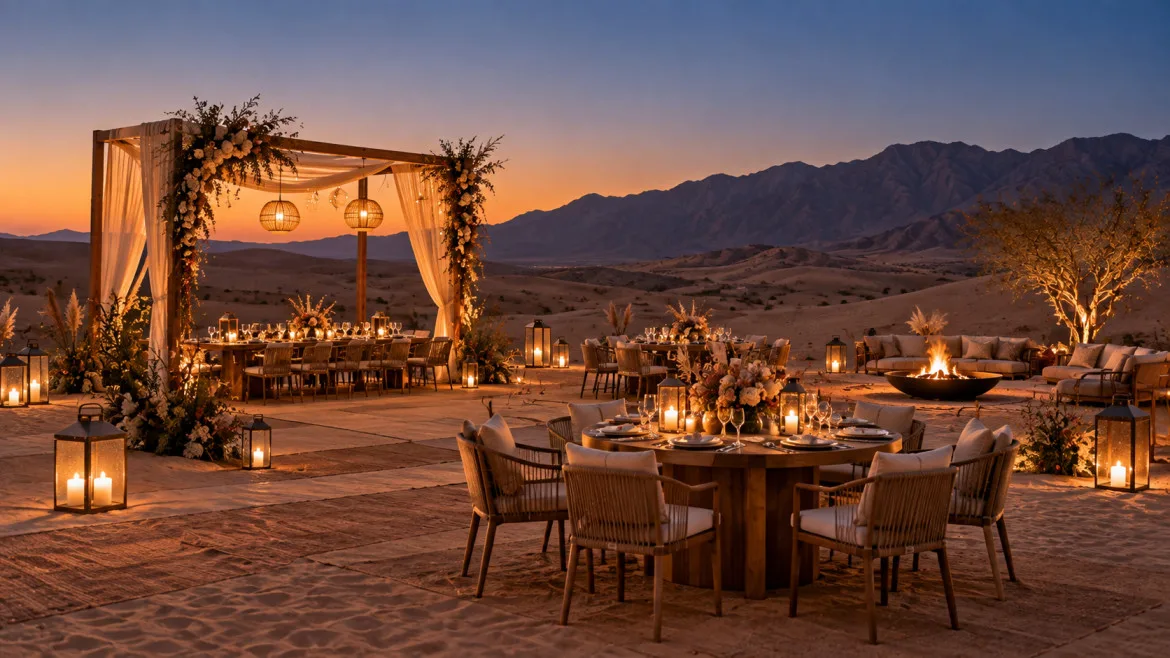
One of the biggest advantages of a Ras Al Khaimah wedding is the variety of natural settings available within the destination. You can create a coastal celebration overlooking the Arabian Gulf, choose a resort setting for a more polished event, or move towards the desert for a private evening surrounded by dunes.
Mountain locations offer another possibility. The dramatic landscape around Jebel Jais can provide a completely different visual identity from a beachfront celebration. This variety allows you to change the atmosphere without forcing every function to look dramatically different through décor alone.
Give Indian Traditions Their Own Setting
Indian weddings often include several important traditions, and each deserves room to have its own identity. A Mehendi works beautifully with colourful details, informal seating and interactive entertainment. A Haldi can feel lighter and more playful with bright floral elements and an outdoor setting.
The Sangeet can take a more dramatic direction with a stage, lighting and performances, while the main wedding ceremony can focus on the Mandap, family rituals and meaningful traditions. The reception can then shift towards elegant dining, music and conversation.
The key is not to make every function bigger. Make every function different.
Plan Around Your Guests
Your guests are experiencing the destination with you, so the wedding schedule should leave enough space for them to enjoy it. Avoid filling every hour with events. Give your family and friends time to relax, explore the resort, enjoy the beach or simply spend time together.
Accommodation also becomes an important part of the planning process. Keeping major events convenient for guests can make the entire celebration smoother, especially when several functions take place across different days.
Think About Food Beyond the Main Menu
Food is an important part of an Indian destination wedding, and your menu can become another way to distinguish each function. A daytime Mehendi might suit lighter dishes and refreshing drinks, while a Sangeet can feature interactive food stations and favourites designed for a lively evening.
For the main wedding and reception, discuss dietary requirements early. Vegetarian, Jain, vegan and allergy friendly options should be considered during the initial planning rather than added at the last moment. Regional preferences can also matter when you are bringing families together from different parts of India.
Make the Destination Part of the Décor
You do not need to cover every venue with elaborate decoration. Let Ras Al Khaimah contribute to the visual identity of your wedding. Beachfront views can provide a natural backdrop. Desert landscapes can work with warm lighting, candles and understated floral arrangements. Mountain scenery can become the centrepiece without competing with excessive décor.
This approach can make the wedding feel more sophisticated because the surroundings remain part of the experience.
Plan the Transition Between Events
A multi event wedding becomes much easier when the transitions are planned properly. Think about transportation, event timings, guest movement, changing arrangements and setup requirements before the celebrations begin.
Your planning team should also coordinate with venues, caterers, decorators, entertainers, photographers and hotel staff. When everyone understands the schedule, your family can focus on enjoying the celebration instead of managing small details.
Create Memories Beyond the Ceremony
Some of the best destination wedding memories happen outside the main events. A relaxed welcome gathering, a family breakfast, a sunset moment by the beach or an evening together under the desert sky can become just as memorable as the formal celebrations.
These smaller experiences help guests connect with each other and make the destination feel like part of the wedding story.
The Best Destination Wedding Feels Personal
A memorable wedding does not come from using the biggest venue or the most elaborate decoration. It comes from creating celebrations that feel connected to you, your family and the destination.
Ras Al Khaimah gives Indian couples the flexibility to combine traditional ceremonies with beaches, resorts, deserts and mountains. With thoughtful planning, every event can have its own character while still feeling like part of one beautiful wedding journey.
The goal is simple: let every function tell a different part of your story, and let Ras Al Khaimah provide the setting that brings it all together.