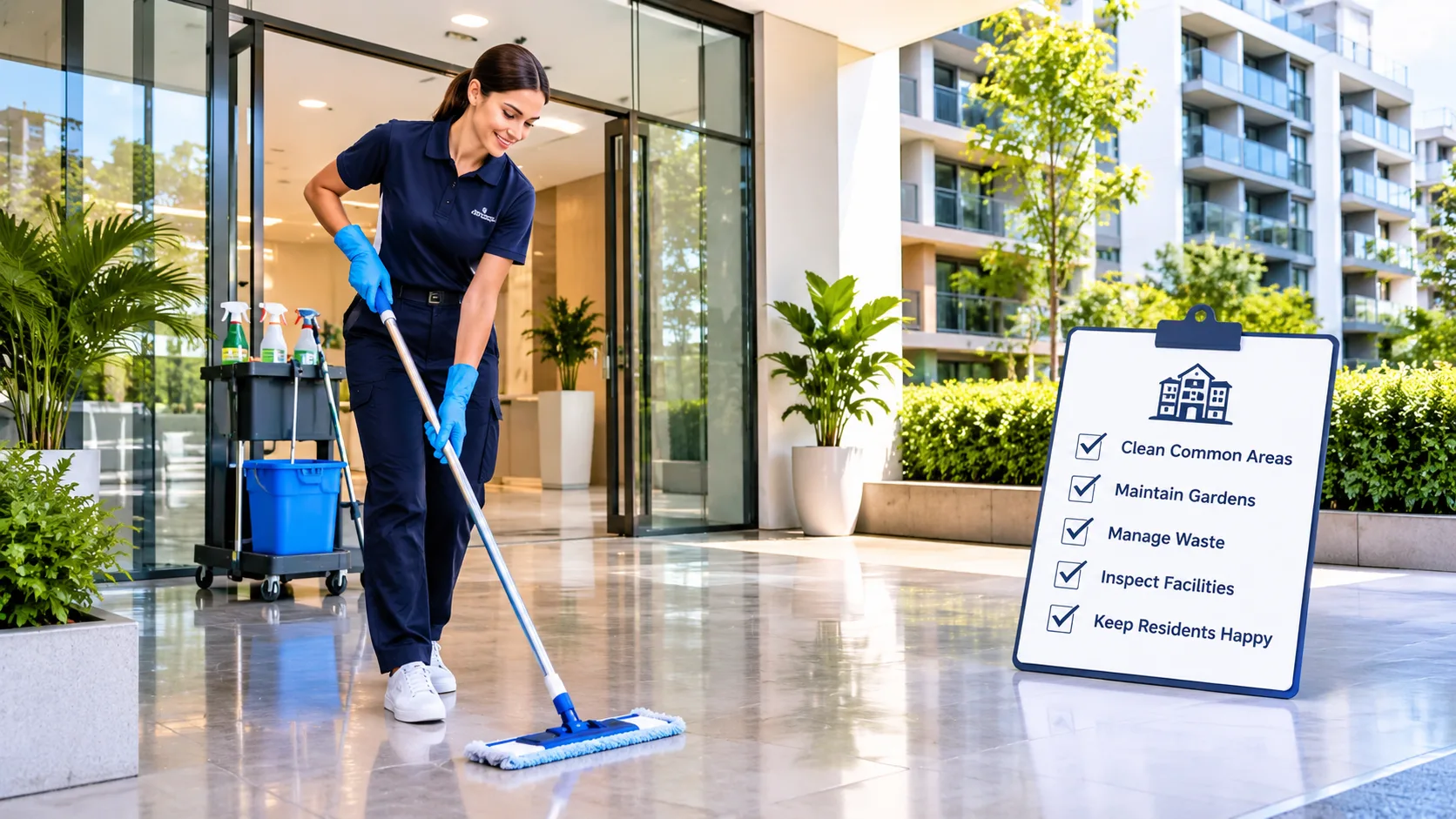
Apartment buildings are shared environments where residents, visitors and service providers use common facilities every day. From entrance foyers and hallways to lifts, gardens, car parks and bin rooms, these areas require regular attention to remain clean, functional and welcoming.
For strata managers and owners' corporations, maintaining common areas involves more than arranging occasional cleaning. It requires a planned approach to cleaning, waste management, landscaping, inspections and general upkeep.
When maintenance tasks are overlooked, small issues can gradually affect the appearance, hygiene and usability of a property.
So, how can strata managers maintain apartment common areas effectively without overlooking important responsibilities?
This guide explains the essential maintenance practices, common challenges and practical strategies that help keep residential properties in good condition.
What Are Common Areas in an Apartment Building?
Common areas are the shared spaces and facilities within a strata property that are used by multiple residents or visitors.
Depending on the building's design and strata arrangements, these may include:
- Entrance foyers and reception areas.
- Hallways and shared corridors.
- Lifts and staircases.
- Shared gardens and landscaped areas.
- Car parks and driveways.
- Bin rooms and waste disposal facilities.
- Recreational spaces and shared amenities.
- Shared pathways and outdoor seating areas.
These spaces contribute to the everyday residential experience and should be included in a property's regular maintenance plan.
1. Establish a Regular Cleaning Schedule
One of the most effective ways to maintain apartment common areas is to establish a consistent cleaning schedule.
Without a planned routine, some areas may receive regular attention while others are neglected.
For example, entrance foyers and lifts generally experience more foot traffic than storage areas or less frequently used shared spaces.
A practical cleaning schedule should consider:
Daily or frequent cleaning
- Sweeping and mopping entrance areas.
- Cleaning high-traffic floors.
- Removing visible rubbish.
- Checking lift interiors.
- Keeping entrances presentable.
Weekly cleaning
- Cleaning staircases and handrails.
- Dusting accessible common surfaces.
- Cleaning bin rooms.
- Removing cobwebs.
- Cleaning shared glass surfaces as required.
Periodic cleaning
- Detailed car park cleaning.
- Window cleaning.
- Pressure cleaning suitable outdoor surfaces.
- Detailed floor and carpet maintenance.
The actual frequency should be adjusted according to building size, occupancy, foot traffic and seasonal conditions.
2. Keep Entrance Foyers and Hallways Presentable
Entrance foyers and hallways create the first impression of an apartment building.
These areas are used frequently and can quickly accumulate dust, footprints, rubbish and other debris.
To maintain them properly:
- Sweep and mop hard floors regularly.
- Vacuum carpeted areas.
- Clean entrance glass and doors.
- Remove visible marks from suitable surfaces.
- Wipe accessible handrails and touchpoints.
- Keep walkways free from obstructions.
- Report damaged flooring or fixtures.
A clean and organised entrance makes the property more welcoming and supports a positive residential environment.
3. Maintain Lifts and Staircases
Lifts and staircases are essential shared facilities that require consistent attention.
Lifts experience frequent contact through buttons, doors, mirrors and handrails. Staircases may collect dust, leaves and debris, particularly when connected to outdoor areas.
A suitable maintenance routine should include:
- Cleaning lift floors and accessible surfaces.
- Removing fingerprints from lift doors.
- Cleaning mirrors and stainless-steel panels.
- Sweeping staircase steps and landings.
- Wiping handrails.
- Checking for visible spills or hazards.
- Reporting damaged equipment or fixtures.
Cleaning should always be carried out using suitable products and methods for the surfaces involved.
4. Manage Bin Rooms and Waste Disposal Properly
Waste management is one of the most important aspects of apartment building maintenance.
Bin rooms can become unhygienic when rubbish is not disposed of correctly or cleaning is overlooked.
Food residue, leaking waste bags and overflowing bins may contribute to unpleasant odours and attract unwanted pests.
Strata managers can improve bin room maintenance by:
- Establishing regular bin room cleaning.
- Checking for overflowing bins.
- Keeping floors free from loose rubbish.
- Cleaning visible waste residue.
- Maintaining clear access to bins.
- Arranging appropriate waste collection.
- Reporting damaged bins and recurring problems.
A structured waste management routine helps maintain cleaner shared spaces and improves the overall presentation of the property.
5. Look After Gardens and Outdoor Common Areas
Outdoor spaces are an important part of residential property maintenance.
Gardens, lawns and shared pathways contribute to the property's appearance and provide residents with a more pleasant environment.
However, outdoor areas require regular attention, particularly during periods of rapid plant growth.
Essential garden maintenance tasks include:
Lawn mowing: Regular mowing helps maintain an even and tidy lawn.
Garden trimming: Overgrown shrubs and plants should be trimmed when necessary to maintain appearance and access.
Leaf and debris removal: Fallen leaves and garden waste should be cleared from pathways and suitable drainage areas.
Weed management: Regular checks help prevent unwanted vegetation from spreading.
Pathway maintenance: Outdoor walkways should be kept clear and checked for visible damage.
Depending on the property's landscaping, additional gardening and specialist maintenance may be required.
6. Keep Car Parks and Driveways Clean
Car parks and driveways are often overlooked in routine cleaning plans, even though they experience regular vehicle and pedestrian movement.
Dust, leaves, loose rubbish and vehicle-related residue can accumulate over time.
Property managers should arrange:
- Regular removal of loose rubbish.
- Sweeping of accessible areas.
- Cleaning of visible surface dirt.
- Checks for blocked drainage points.
- Prompt reporting of oil or chemical spills.
- Inspection of visible cracks and damaged surfaces.
For extensive dirt accumulation or difficult stains, specialist cleaning may be appropriate.
7. Inspect Shared Facilities Regularly
Cleaning alone cannot address every property maintenance issue.
Regular visual inspections help identify problems that require repairs or specialist attention.
Strata managers should include checks for:
- Leaking taps and visible plumbing issues.
- Damaged doors and windows.
- Loose handrails.
- Cracked pathways.
- Faulty common-area lighting.
- Water stains on ceilings or walls.
- Blocked drainage points.
- Damaged outdoor fixtures.
These checks can help identify developing problems before they become more disruptive.
However, any electrical, plumbing, structural or other specialist work should be referred to appropriately qualified professionals.
8. Encourage Residents to Maintain Shared Spaces
Property maintenance is not solely dependent on cleaning contractors. Residents also play an important role in keeping shared spaces tidy.
Poor waste disposal habits, leaving personal belongings in hallways and littering outdoor areas can make maintenance more difficult.
Strata managers can encourage responsible behaviour by:
- Providing clear waste disposal instructions.
- Communicating bin room guidelines.
- Encouraging residents to report maintenance concerns.
- Reminding residents to keep shared pathways clear.
- Providing clear instructions for using communal facilities.
Simple communication can help establish better shared-space habits and reduce avoidable maintenance issues.
9. Use Maintenance Checklists and Inspection Records
A maintenance checklist helps ensure important tasks are not overlooked.
It also provides a record of completed work and makes it easier to identify recurring problems.
Here is an example of a practical apartment common-area maintenance checklist:
| Area | Maintenance activity | Frequency |
|---|---|---|
| Entrance foyer | Sweep, mop and clean glass | Daily or as required |
| Hallways | Vacuum, sweep and mop | Several times weekly |
| Lifts | Clean floors and touchpoints | Daily or as required |
| Staircases | Sweep and clean handrails | Weekly or as required |
| Bin rooms | Remove waste residue and clean floors | Weekly or as required |
| Gardens | Mow lawns and trim plants | Seasonally or as required |
| Car parks | Remove rubbish and debris | Monthly or as required |
| Shared facilities | Clean and inspect surfaces | Based on usage |
| Outdoor pathways | Remove leaves and debris | As required |
These are suggested maintenance intervals, not mandatory standards. Each property should have a customised schedule.
Keeping inspection reports, photographs and cleaning records can also help property managers monitor service delivery and follow up on outstanding issues.
10. Work With a Reliable Property Maintenance Provider
Managing cleaning, gardening and waste management independently can become complicated, particularly when overseeing multiple residential properties.
Working with an experienced property care provider can help simplify routine maintenance and improve consistency.
When choosing a provider, consider:
- Experience with residential and strata properties.
- Range of cleaning and maintenance services.
- Appropriate insurance and relevant licences.
- Flexible service schedules.
- Clear cleaning checklists.
- Communication and reporting procedures.
- Transparent pricing and service agreements.
A reliable provider should understand your property's specific requirements and help maintain the agreed service standards.
Common Apartment Maintenance Mistakes to Avoid
Even well-managed properties can experience maintenance problems when routine tasks are overlooked.
Here are some common mistakes strata managers should avoid:
Ignoring small maintenance issues: Minor leaks, damaged surfaces and drainage concerns can become more serious when left unattended.
Inconsistent cleaning schedules: Irregular cleaning can result in neglected areas and resident complaints.
Overlooking bin rooms: Poor waste management can create hygiene and odour problems.
Neglecting outdoor areas: Overgrown lawns and unmaintained gardens can affect the property's presentation.
Not documenting maintenance work: Without records, it can be difficult to monitor completed tasks and identify recurring concerns.
Choosing services based only on price: The cheapest option may not provide the service frequency or scope required by the property.
A proactive maintenance approach helps address these challenges more effectively.
How Squicky Supports Residential Property Maintenance
Maintaining apartment common areas requires a combination of regular cleaning, outdoor upkeep and responsible waste management.
At Squicky, we support strata managers, property managers and residential communities with professional cleaning and property care services.
Our services include:
- Strata cleaning and common-area maintenance.
- Lawn mowing.
- Garden maintenance and trimming.
- Bin management.
- General property care.
We understand the importance of keeping shared residential spaces clean, organised and presentable.
Whether you need regular common-area cleaning, outdoor maintenance or bin management, our services help support the ongoing upkeep of residential properties.
If you are looking for a reliable strata cleaning service in NSW, explore Squicky's cleaning and property care services to learn more.
Final Thoughts
Maintaining apartment common areas requires a consistent and organised approach. From cleaning entrance foyers and lifts to managing waste facilities and maintaining outdoor gardens, every task contributes to the overall condition of a residential property.
For strata managers and owners' corporations, the key is to establish clear maintenance responsibilities, follow suitable schedules and address issues before they become more complicated.
With regular inspections, effective cleaning routines and reliable property care support, apartment buildings can remain cleaner, more organised and more welcoming for residents.
Frequently Asked Questions
1. Who is responsible for maintaining apartment common areas?
The owners' corporation is generally responsible for maintaining common property in a strata scheme. Strata managers may coordinate cleaning and maintenance arrangements on its behalf.
2. How often should apartment common areas be cleaned?
Cleaning frequency depends on building size, occupancy and daily usage. High-traffic areas may need daily attention, while other areas can be cleaned weekly or periodically.
3. What is included in apartment common-area cleaning?
Common-area cleaning may include entrance foyers, hallways, lifts, staircases, shared floors, glass doors and bin rooms.
4. Why is regular bin room maintenance important?
Regular bin room maintenance helps remove waste residue, control unpleasant odours, improve hygiene and reduce conditions that may attract pests.
5. How can strata managers maintain outdoor common areas?
Outdoor maintenance can include lawn mowing, garden trimming, weed management, leaf removal and keeping shared pathways clear.
6. What is the difference between strata cleaning and property maintenance?
Strata cleaning focuses mainly on maintaining hygiene and cleanliness in shared spaces. Property maintenance covers a wider range of activities, including repairs, inspections, landscaping, waste management and general upkeep.