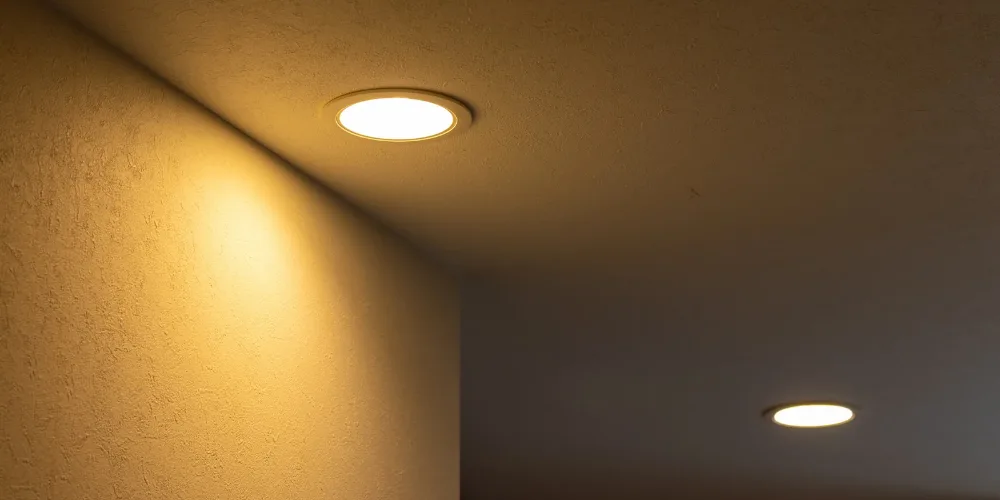
Layered interior lighting is a way of lighting a room with three separate types of light, each doing a different job. Most New Zealand homes skip it. A neat grid of downlights goes into the ceiling, every light comes on at once, and the room is bright but flat.
Those layers are ambient, task and accent lighting. Plan them together and a kitchen becomes easier to cook in, a lounge feels warmer at night, and a hallway stays safe without glaring at you at 2am. Browsing a full range of interior lighting shows how many fitting types each layer can draw on, from recessed downlights to LED strip and track.
What is layered lighting?
Layered lighting is the practice of combining three types of light in one space: ambient lighting for general illumination, task lighting for specific activities, and accent lighting to highlight features. Each layer is placed, switched and dimmed separately, so a room can shift from bright and practical to calm and atmospheric with the same fittings.
The three layers of interior lighting
Every well-lit room uses some mix of the three layers. The balance changes from room to room, but the roles stay the same.
Ambient lighting
Ambient lighting is the base layer that lets you see and move around a room comfortably. It should be even and soft, without hot spots or harsh shadows. Recessed downlights are the usual choice in New Zealand homes, but surface-mounted downlights, pendants and indirect linear light hidden in a bulkhead or ceiling recess all do the job.
The aim is enough light to fill the space, not so much that every corner looks the same. Ambient light is also the layer that benefits most from dimming.
Task lighting
Task lighting puts focused light exactly where work happens. Think kitchen benches, the island, the bathroom vanity, a home office desk or a favourite reading chair. It should be brighter than the ambient layer and positioned so your body does not cast a shadow over what you are doing.
LED strip set into an aluminium profile under kitchen cabinets is one of the most effective task lights in a modern home. Pendants over an island, wall-mounted reading lights and vanity lights at face height are others.
Accent lighting
Accent lighting draws the eye to something worth seeing. It adds depth and contrast, which is what stops a room feeling flat. Use it on artwork, textured walls, shelving, a feature joinery piece or an indoor plant.
Adjustable spots, track lighting, display and cabinet lights, and wall washers are the main tools. Step lights set low in a stair or hallway wall also count, adding a soft glow while doing a practical job after dark.
Quick reference: the layers at a glance
| Layer | Its job | Typical fittings | Suggested colour temperature |
| Ambient | Even, comfortable light to see and move around | Recessed or surface-mounted downlights, pendants, indirect linear light | 2700K to 3000K in living areas, 3000K to 4000K in work areas |
| Task | Brighter, focused light on a work surface | Under-cabinet LED strip, pendants over an island, reading and vanity lights | Match the room's ambient layer |
| Accent | Contrast and depth on a chosen feature | Adjustable spots, track, display and cabinet lights, wall washers, step lights | Usually 2700K to 3000K for warmth |
How to plan a layered lighting scheme, step by step
A layered scheme is easiest to get right on paper, before anything is installed. Work through these six steps for each room.
1. Map how the room is used, and when
List what happens in the room across the day. A kitchen might handle breakfast in daylight, cooking at 6pm and a quiet glass of wine at 9pm. Each of those moments needs a different light level, which tells you how many layers and controls the room needs.
2. Set the ambient layer first
Start with general light, but resist the dense, even grid. Place downlights to light the floor and walkways, and let walls and features be lit by the other layers. A scheme with fewer, well-placed downlights usually looks better than one with many.
3. Add task light at every work surface
Mark each bench, desk, vanity and reading spot on your plan. Give each one its own light source, positioned in front of or above the person rather than behind them, so no shadow falls on the work.
4. Choose two or three features to accent
Pick what deserves attention: a piece of art, a stone splashback, a bookshelf, a textured wall. Two or three accents per room are plenty. More than that and nothing stands out.
5. Give each layer its own control
Put ambient, task and accent lighting on separate switches or circuits, and plan which ones will be dimmable. This is what lets one room do several jobs.
6. Finalise the plan before the pre-wire
In a new build or major renovation, the electrician runs cables while walls and ceilings are still open. Changes after the linings go on are slow and costly. Have your lighting plan finished and agreed with your licensed electrician before that stage.
Layering light room by room
The same three layers apply everywhere. What changes is the balance between them.
Kitchen
The kitchen is the hardest-working room in the house, so task light leads. Use downlights for ambient light over walkways, then LED strip under the overhead cabinets to light the bench without shadows. Pendants over the island add task light and a visual anchor. For accent, light the inside of glass-fronted cabinets or the underside of open shelving.
Open-plan living and dining
Open-plan living is the norm in many Kiwi homes, with kitchen, dining and lounge in one space. Lighting is how you zone it without walls. Put each zone on its own control, so the kitchen can dim down while the lounge stays on. Hang a pendant to anchor the dining table, keep the lounge's ambient layer dimmable, and accent a feature wall or artwork to give the space depth in the evening.
Bedroom
Bedrooms need the least light and the most control. Keep ambient lighting soft and dimmable. Add a reading light on each side of the bed so one person can read while the other sleeps. A low-level glow behind a headboard or under a floating bedside table makes a gentle accent and doubles as a night light.
Bathroom
In the bathroom, good task light at the mirror matters most. Light the face from the front or both sides at roughly eye level, rather than from directly above, to avoid shadows under the eyes. Add even ambient light for the rest of the room. Every fitting in a bathroom must be rated for the zone it sits in, so check the IP rating with your electrician.
Hallways and stairs
Hallways and stairs are about safe movement. Step lights set low in the wall light each tread without shining in anyone's eyes. Wall lights work well in long hallways, and a low, dimmed setting gets everyone to the bathroom at night without waking the house.
Getting colour temperature right
Colour temperature describes how warm or cool white light looks, measured in Kelvin (K). Lower numbers look warmer and more golden. Higher numbers look cooler and crisper.
- Warm white (2700K to 3000K) suits living rooms, bedrooms and dining areas. It feels relaxed and flatters skin tones and timber.
- Neutral white (around 4000K) suits task-heavy spaces such as laundries, garages and home workshops, where clarity matters more than mood.
- Tuneable white lets one fitting shift between warm and cool, which helps in spaces that change role across the day.
In an open-plan space, keep every layer at the same colour temperature. Mixing warm and cool light in one view looks patchy. Most New Zealand kitchens that open onto living areas suit 3000K throughout.
It is also worth checking the colour rendering index (CRI) of each fitting. CRI measures how accurately a light source shows colours, on a scale up to 100. A higher CRI makes food, timber and artwork look true to life.
Control is what makes the layers work
Three layers on a single switch are really just one layer. The value of a layered scheme comes from being able to use each layer on its own.
At a minimum, give ambient, task and accent lighting separate switches. Then add dimming where it counts most: the ambient layer in living areas, dining pendants and bedroom lighting. Dimming only works smoothly when the fitting, its LED driver and the dimmer are compatible, so confirm the combination with your electrician or supplier before you buy.
Scene control takes this a step further. A single button or app setting can recall a combination such as "cooking", "dinner" or "movie night", setting each layer to the right level at once. Smart and wireless controls also make it easier to add scenes to an existing home without running new cables.
Common layering mistakes to avoid
- Relying on downlights alone. A ceiling grid gives ambient light and nothing else, which is why so many rooms feel flat.
- Glare at eye level. Bare light sources in your line of sight are tiring. Choose fittings with recessed or shielded light sources, and aim accent spots away from where people sit.
- Mixing colour temperatures. Warm pendants beside cool downlights make a space look disjointed.
- Task light from behind. A downlight over your shoulder casts your own shadow onto the bench or page.
- No dimming. Without it, the room only has one mood, usually too bright for the evening.
- Leaving it too late. Lighting decided after the pre-wire is limited to what the existing cabling allows.
Frequently asked questions
What are the three layers of lighting?
The three layers are ambient, task and accent lighting. Ambient lighting provides even, general light for the whole room. Task lighting adds brighter, focused light where you work, such as a kitchen bench. Accent lighting highlights features like artwork or textured walls to add depth.
What is the difference between ambient and accent lighting?
Ambient lighting fills a room evenly so you can see and move around. Accent lighting is focused on one chosen feature to draw the eye and create contrast. Ambient light is the foundation of a scheme, while accent light adds character on top of it.
How many downlights do I need in a room?
There is no single number. It depends on the room's size, ceiling height, and each downlight's output in lumens and its beam angle. A layered scheme usually needs fewer downlights than a plain grid, because task and accent lighting take on some of the work.
What colour temperature is best for a living room?
Warm white, between 2700K and 3000K, suits most living rooms. It creates a relaxed feel in the evening and flatters skin tones, timber and soft furnishings. Keep the same colour temperature across every layer in the room. Choose 2700K for a cosier, more golden feel.
Should kitchen lighting be warm or cool white?
Most New Zealand kitchens suit 3000K, especially when they open onto a living or dining area. It is bright enough for food preparation and still warm in the evening. Around 4000K suits kitchens that are purely work spaces. Whichever you choose, use it for every layer.
Can I add layered lighting to an existing home?
You can add layers to an existing home without major work. Floor and table lamps, plug-in LED strip track lighting and wall lights all help. Bigger changes, such as new circuits or recessed fittings, are easiest during a renovation when ceilings and walls are already open.
Do all lights need to be dimmable?
Not all of them. Dimming matters most for ambient lighting in living areas, bedrooms and over dining tables. The fitting, its driver and the dimmer must be compatible, so check this before buying to avoid flicker or buzzing. Utility spaces such as laundries rarely need dimming at all.
When should I plan lighting during a build?
Plan your lighting before the electrician's pre-wire, while walls and ceilings are still open. This is when cables for separate circuits, dimmers and recessed fittings are run. Changes after the linings go on cost more and limit your options. Bring a marked-up floor plan to that meeting.
Plan the light, not just the lights
Good light is planned, not added at the end. Sketch each room, mark where people work, relax and move, then assign ambient, task and accent lighting to each spot. Decide on colour temperature and controls before you choose individual fittings.
Take that plan to your electrician or lighting designer early, ideally well before the pre-wire. All wiring and fitting installation in New Zealand must be carried out by a licensed electrician. Get the layers right on paper and your home will have good light for every part of the day.