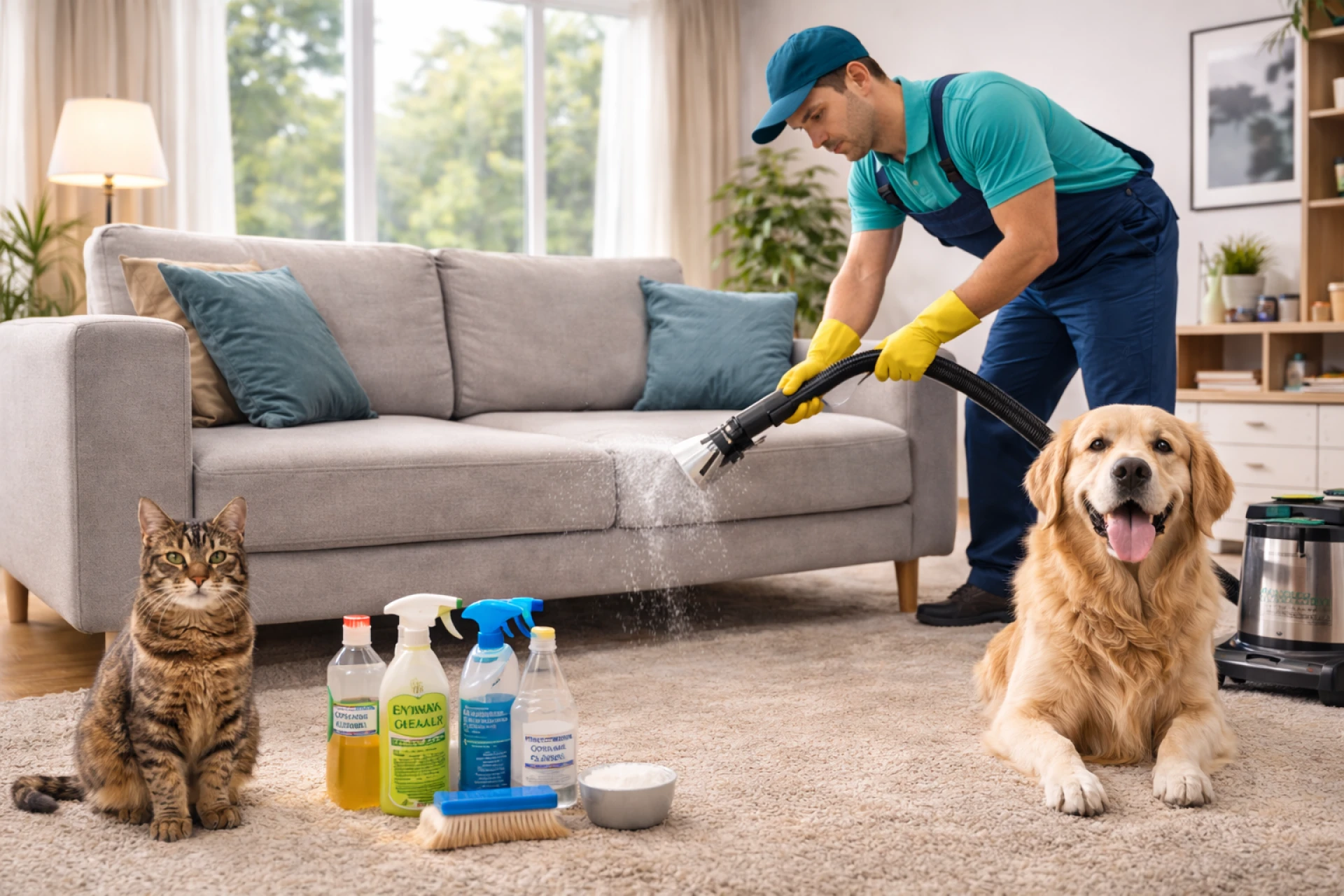
Pets bring joy, companionship, and warmth to any home, but they also add extra cleaning challenges. From shedding hair and muddy paw prints to occasional accidents, keeping your home clean requires a consistent strategy. UK homeowners can maintain hygienic, organised, and comfortable spaces by combining daily routines, preventative measures, and deep cleaning.
1. Establish a Daily Cleaning Routine
Consistency is key to managing pet mess. Even 10–15 minutes daily can make a big difference. Focus on:
- Vacuum high-traffic areas where pets spend most of their time, such as living rooms and bedrooms.
- Wipe floors and furniture with a damp cloth or pet-safe cleaner to remove dirt and hair.
- Check litter boxes, cages, or pet bedding for messes.
Tip: Using a small handheld vacuum for quick hair removal can save time daily.
2. Manage Pet Hair Effectively
Fur can quickly accumulate, especially with cats and dogs. To control hair:
- Brush your pets regularly to remove loose fur.
- Use lint rollers or vacuum attachments designed for pet hair.
- Wash pet bedding weekly to prevent the buildup of fur and allergens.
Tip: Keep a vacuum in the most used room to quickly clean up after shedding.
3. Keep Floors and Carpets Clean
Pets often track mud, dirt, and debris inside, especially during rainy UK weather. Consider:
- Placing door mats at entrances to catch dirt.
- Use hardwood, laminate, or tile flooring in high-traffic areas for easier cleaning.
- Steam cleaning carpets monthly to remove pet hair and allergens.
Tip: Keep a small towel near doors to wipe paws before entering.
4. Tackle Pet Odours
Pet smells can linger even with regular cleaning. Combat odours with these tips:
- Sprinkle baking soda on carpets before vacuuming.
- Wash pet bedding and toys regularly.
- Ventilate rooms frequently to let fresh air in.
Tip: Use pet-safe enzymatic cleaners for accidents to neutralise odours effectively.
5. Organise Pet Supplies
Clutter from toys, food bowls, and grooming tools can make your home look messy.
- Use storage baskets or shelves for pet items.
- Keep feeding areas separate from living spaces.
- Rotate toys to prevent overcrowding.
Tip: Label baskets for food, toys, and grooming supplies for easy access.
6. Deep Cleaning Tips
Even with daily care, periodic deep cleaning is essential.
- Shampoo carpets and rugs to remove dirt and hair buildup.
- Wipe walls, doors, and skirting boards where pets may rub.
- Clean upholstery and cushions using pet-safe cleaners.
- Clean pet cages, litter boxes, and bedding thoroughly.
Tip: Schedule a deep clean every 3–6 months for optimal hygiene.
7. Preventive Measures
Small steps can prevent major messes:
- Trim pets’ nails to avoid scratches on floors and furniture.
- Use washable blankets or throws on furniture.
- Train pets to use designated areas for eating and resting.
- Consider paw cleaning mats near entrances.
8. Choosing the Right Cleaning Products
Using the right products makes cleaning safer and more effective:
- Pet-safe disinfectants for floors, surfaces, and accidents.
- Enzymatic cleaners for urine or vomit.
- Lint rollers or handheld vacuums for fur removal.
- Steam cleaners for carpets and upholstery.
Tip: Avoid harsh chemicals like bleach around pets, as they can be toxic.
9. Seasonal Cleaning Tips
UK homes face seasonal challenges that affect pet cleaning:
- Winter: Muddy paws and wet fur; keep towels near doors and use mats.
- Spring: Shedding increases; extra brushing and vacuuming are required.
- Summer: More outdoor activity; wash bedding frequently.
- Autumn: Leaf debris and rain; clean floors and mats daily.
Tip: Adjust your cleaning schedule according to the season to maintain hygiene year-round.
10. Creating a Cleaning Schedule
A structured cleaning schedule helps manage pet mess efficiently:
- Daily: Vacuum, wipe floors, clean litter boxes.
- Weekly: Wash bedding, mop floors, tidy toys.
- Monthly: Steam clean carpets, deep clean high-traffic areas.
- Quarterly: Deep clean upholstery, walls, and ventilation areas.
Tip: Keep a checklist to track tasks and stay consistent with a cleaning schedule for UK homes
FAQs — Homes with Pets in the UK
Q1: How often should I deep clean my home with pets?
A: Deep cleaning every 3–6 months is ideal, but high-traffic areas like kitchens and bathrooms may need more frequent attention.
Q2: What’s the best way to remove pet hair from carpets?
A: Use a vacuum with a pet hair attachment, or sprinkle baking soda before vacuuming to loosen hair.
Q3: How can I prevent pet odours?
A: Wash bedding regularly, ventilate rooms, and clean accidents immediately using enzymatic cleaners.
Q4: Are there pet-safe cleaning products for UK homes?
A: Yes! Look for non-toxic disinfectants and enzymatic cleaners designed for pets. Avoid bleach or harsh chemicals.
Q5: How can I reduce shedding in my home?
A: Brush pets regularly, maintain a balanced diet, and vacuum floors and furniture often.
Q6: What is the best flooring for homes with pets?
A: Hardwood, laminate, or tile are easier to clean than carpet, especially in high-traffic areas.
Q7: How can I organise pet supplies efficiently?
A: Use labelled baskets or shelves for toys, food, and grooming tools to keep spaces tidy.
Q8: Should I clean pet bedding separately from household laundry?
A: Yes, washing pet bedding separately reduces the spread of hair, dirt, and odours.
Q9: Can I train my pet to reduce cleaning?
A: Yes, training pets to eat in designated areas and wipe paws at doors can reduce mess.
Q10: How do I maintain air quality with pets indoors?
A: Regular vacuuming, dusting, proper ventilation, and using air purifiers help reduce allergens.
Final Thoughts
Keeping a home clean with pets in the UK is achievable with planning, daily habits, and occasional deep cleaning. By combining pet grooming, smart storage, and routine cleaning, pet owners can enjoy a fresh, hygienic, and welcoming home without compromising on pet comfort