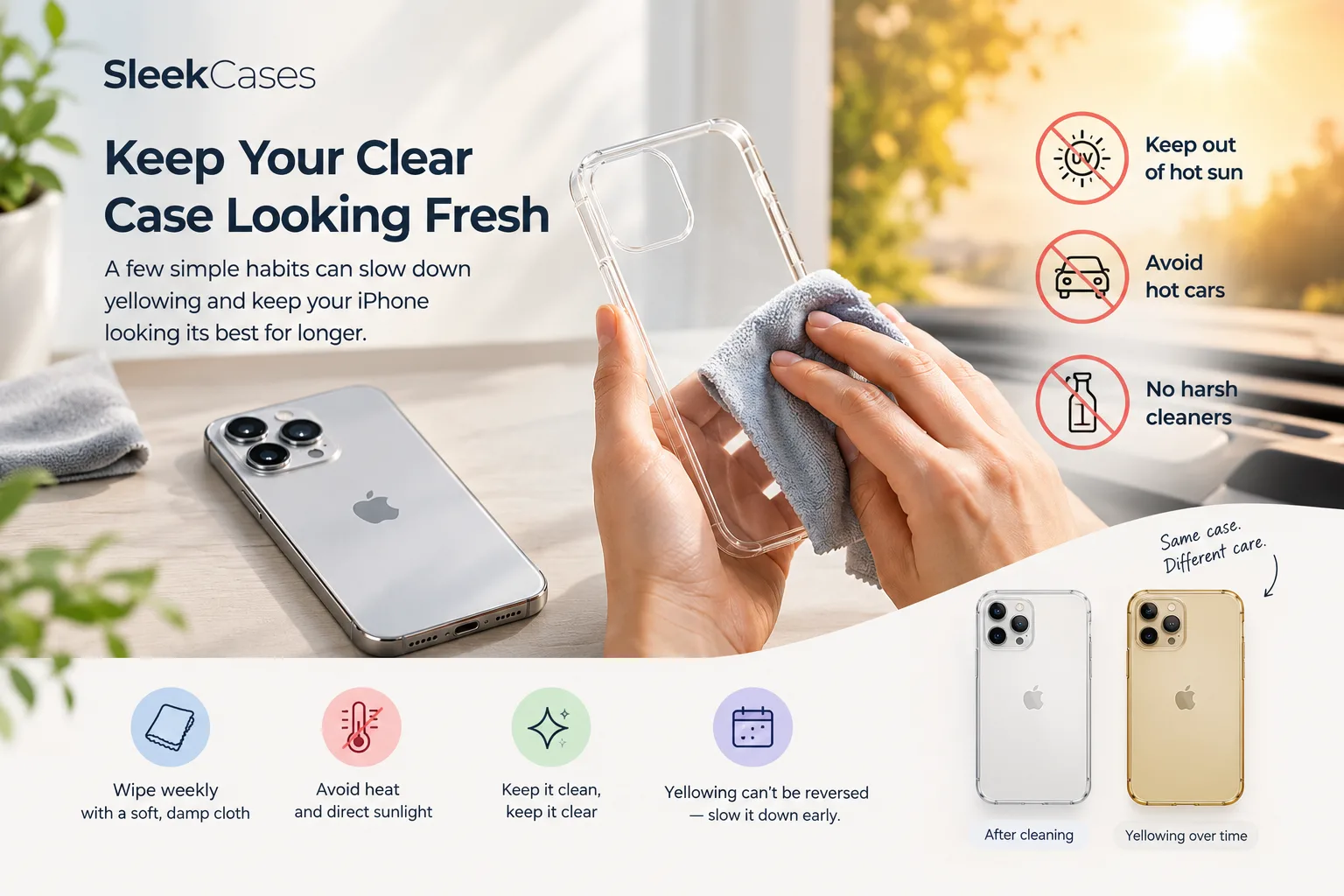
A clear case shows off your iPhone. But it also shows every smudge, speck of dust and yellow tint. In Australia, the strong sun makes this worse.
I have seen the same story many times. Someone buys a clear case. It looks great for a few weeks. Then the edges turn a little yellow, and it never looks fresh again. The good news is that a few small habits can help a lot. Here is what works, what does not, and what to expect.
Why do clear iPhone cases turn yellow?
Most clear cases are soft plastic. Many use a material called TPU. This plastic slowly changes colour when it is hit by sun, heat and air. That is why the case turns yellow, not because you did something wrong.
Four things speed it up:
- Sun (UV light). This is the biggest cause.
- Heat. Think of a phone on a dashboard.
- Skin oils and sweat. They build up on the case each day.
- Chemicals. Hand sanitiser, sunscreen and bug spray can all harm plastic.
Australia has some of the highest UV levels in the world, according to Cancer Council. Even cool, cloudy days can carry strong UV, as Cancer Council's UV Index guide explains. The same sun that harms skin also wears down plastic.
Be realistic: Cleaning removes dirt and stains. It does not fix yellowing. The colour change happens inside the plastic. Every clear case will change a little over time. Your goal is to make that take longer.
What hurts a clear case, and what to do instead
HabitWhat it doesDo this insteadLeaving the phone on the dashboardHeat and UV speed up yellowingKeep it in a bag or the gloveboxTanning on the beach with your phoneDirect sun, plus sunscreen on the caseKeep it in shade, under a towelSpraying cleaner on the caseCan cloud or damage the plasticUse a soft, slightly damp clothWiping with hand sanitiserHarsh chemicals can dull the surfaceWash your hands, then touch the phoneKeeping it in dark jeans pocketsDye can rub onto the caseUse a bag or a jacket pocketNever taking the case offGrit and moisture get trapped insideTake it off and clean it each weekHow to clean a clear iPhone case (step by step)
Apple gives simple advice for clear cases on its official cleaning page. Take the phone out. Then wipe the outside and the inside with a soft, slightly damp, lint-free cloth. Apple says not to use window cleaners, household cleaners, aerosol sprays, solvents, ammonia, abrasives or anything with hydrogen peroxide.
Here is my simple weekly routine:
- Take your iPhone out. Dust and grit hide between the phone and the case.
- Wipe the outside. Use a soft, slightly damp, lint-free cloth. A microfibre cloth works well.
- Wipe the inside. This is where oils and lint collect.
- Clean the tight spots. Use a dry cotton bud around the camera ring and buttons.
- Dry it fully. Let it air dry before the phone goes back in.
- Wipe your iPhone too. Use a dry, soft cloth on the back of the phone.
Stubborn grime? Apple only names a damp cloth for clear cases. If you need more, put one tiny drop of mild dish soap on the cloth. Wipe, then go over it again with a clean damp cloth so no soap is left. Do not soak the case or use hot water.
Using a MagSafe clear case?
Magnets attract dust and metal specks. Apple notes that MagSafe accessories can collect debris in daily use. Wipe the ring area and the back of the phone often. If grit sits under the case, it can scratch your iPhone. If you use a MagSafe charger or wallet, pick a case built for it. Select MagSafe compatible iPhone cases are available, and each product page shows compatibility.
Daily and weekly habits checklist
Every day
☐ Keep the phone out of direct sun when you can
☐ Never leave it in a parked car
☐ Wash or wipe your hands before long phone use
Every week
☐ Take the phone out and wipe the case inside and out
☐ Clean the camera ring and button gaps
☐ Check for grit before you put the phone back
Every month
☐ Look for yellow edges, cracks or a loose fit
☐ Check the camera lip still sits above the lens
Can you fix a yellow clear case?
No. You can wipe off surface stains. But true yellowing sits inside the plastic. Scrubbing hard or using polish will only scratch the case. Apple also warns against abrasives.
If your case is only dirty, cleaning may bring it back. If it is evenly yellow, it is time to replace it. A yellow case still protects your phone. But if it is cracked, loose or worn at the edges, it protects much less.
Using an older model? There are also iPhone 17 Pro cases and iPhone 17 Pro Max cases to choose from.
Before and after: a real-life example
PersonHabitsLikely resultTradie who leaves the phone on the ute dashSun, heat, dust, no cleaningYellow and cloudy much soonerOffice worker who keeps the phone in a bagLittle sun, weekly wipeStays clearer for longerThis is an example, not a lab test. How fast a case yellows also depends on the material and how well it is made.
What to look for when you buy your next clear case
Some clear cases hold their colour better than others. Here is what to check:
- A hard clear back. Polycarbonate backs often resist yellowing better than soft plastic. Nothing is fully yellow-proof, though.
- Anti-yellowing claims. Look for details about the material, not just the words "anti-yellow".
- A raised edge. A lip around the camera and screen helps prevent scratches.
- MagSafe support. If you use a magnetic charger or wallet, check the magnets are built in.
Want a case that will not show yellowing?
Yellowing is a clear-plastic problem. Solid-colour cases do not show it in the same way. If you want a slim fit that adds almost no bulk, look at ultra thin iPhone cases.
Like a sportier, textured look? Carbon fiber iPhone cases are slim, and a solid finish does not show yellowing the way clear plastic does.
Prefer a classic feel? Premium leather iPhone cases are another option. Leather needs its own care, though. Apple warns that sun, heat and water can stain it.
Cases are moulded to fit each model, so match yours first. Check the range for iPhone 18 Pro cases or iPhone 18 Pro Max cases at Sleek Cases, an Australian phone case brand based in Melbourne.
Honest note: No clear case stays perfect forever. Any brand that says otherwise is overselling. Good care and a well-made case can give you a much longer good-looking life.
Frequently asked questions
How often should I clean my clear iPhone case?
Once a week is a good rhythm. Clean it sooner if it gets sandy, sticky or wet.
Can I use alcohol wipes or hand sanitiser on it?
I would avoid them. Apple's case advice lists solvents, aerosols and other harsh products as no-go. A damp cloth is the safe choice.
Does baking soda or toothpaste fix a yellow case?
No. They are abrasive and can scratch the plastic. They will not remove yellowing that is inside the material.
Why is my clear case yellow at the edges first?
Edges get the most sun, hand contact and rubbing. So they show colour change first.
Is a polycarbonate clear case better than a TPU one?
Hard polycarbonate often resists yellowing better. Soft TPU usually absorbs shocks better. Many good cases combine both.
Does sunscreen damage a clear phone case?
It can. Sunscreen and bug spray leave oils and chemicals on the case. Wipe your hands before you use your phone, and clean the case afterwards.
When should I replace my clear case?
Replace it when it is cracked, loose, worn at the edges, or the camera lip is flat. Colour alone is a matter of looks. Damage is a matter of protection.
Want more tips? Read our other iPhone case guides on the Sleek Cases blog.