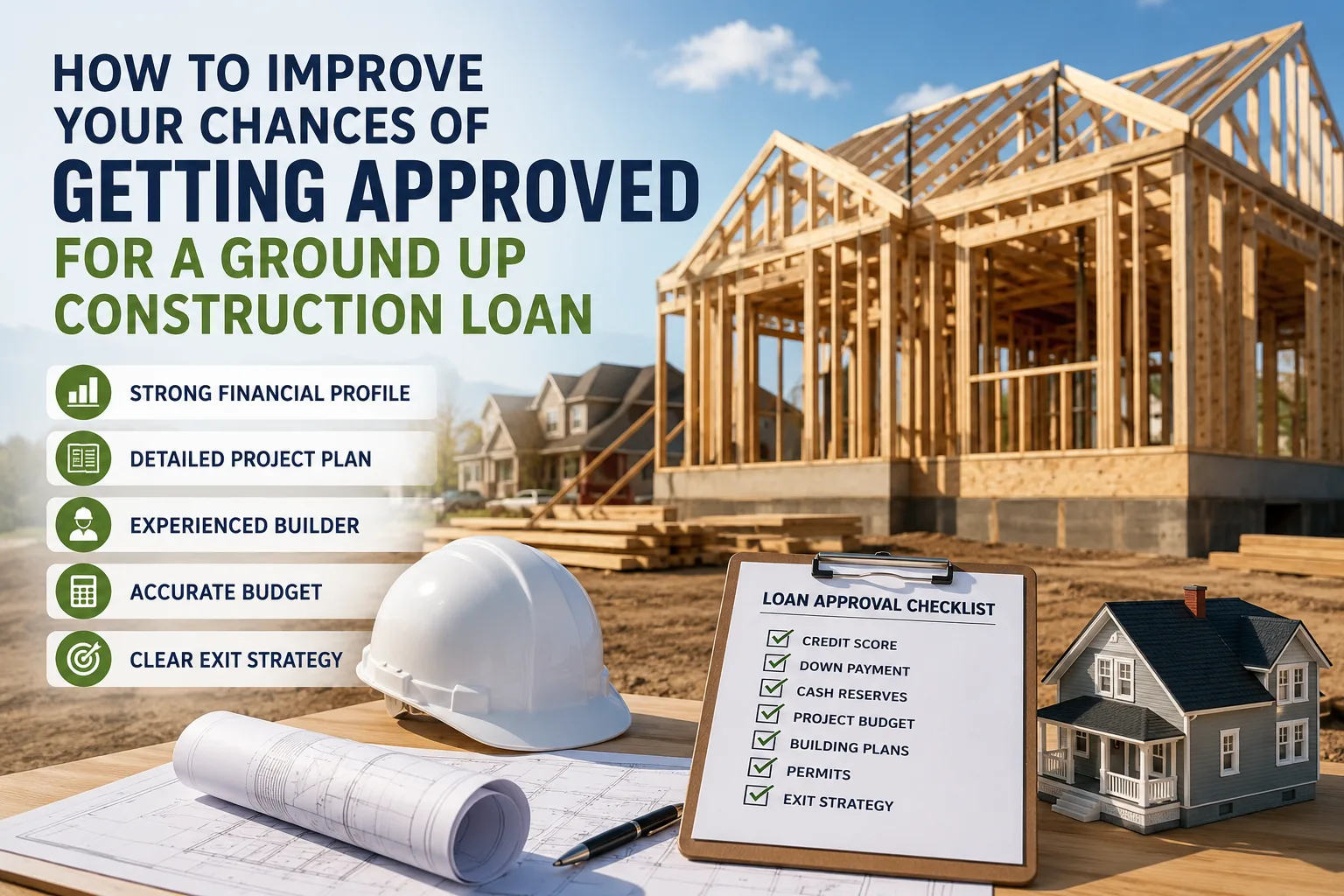
Building a property from the ground up is one of the most rewarding ways to grow a real estate investment portfolio. Whether you are planning to build a single family home, duplex, townhomes, or a small multifamily project, the right financing can help turn your vision into reality.
However, getting approved for ground up construction loans is often more challenging than getting a traditional mortgage. Since lenders are financing a project that does not yet exist, they carefully evaluate both the borrower and the construction plan before making a lending decision.
The good news is that approval is not based on just one factor. With proper planning, a strong financial profile, and complete documentation, you can significantly improve your chances of getting approved.
In this guide, you will learn what ground up construction lenders look for, the most common reasons applications are denied, and practical steps you can take to increase your approval odds.
What Are Ground Up Construction Loans?
Ground up construction loans are short term loans designed to finance the construction of a new property from an empty piece of land. Instead of receiving the full loan amount at closing, borrowers receive funds in stages as construction progresses.
These stages are commonly known as draw requests. Funds are released after inspections confirm that specific phases of construction have been completed.
Ground up construction financing is commonly used for:
Single family homes Build to rent properties Duplexes and triplexes Townhome developments Small multifamily projects Spec homes Investment properties
Because the lender assumes more risk during construction, they carefully review every aspect of the project before approving financing.
Why Approval Can Be More Challenging
Unlike a traditional home loan where the property already exists, a construction loan depends on the successful completion of a future project.
Ground up construction lenders want confidence that:
The borrower can repay the loan. The project budget is realistic. Construction can be completed on schedule. The finished property will have sufficient value. The builder has the experience to complete the project.
The stronger your application, the lower the lender's perceived risk.
1. Improve Your Credit Profile
Your credit score is one of the first things lenders review.
While many private lenders have flexible lending requirements compared to banks, a stronger credit profile still increases your approval chances.
Before applying:
Review your credit reports. Correct any reporting errors. Pay all bills on time. Reduce outstanding credit card balances. Avoid opening unnecessary credit accounts. Limit large purchases before applying.
Even a modest improvement in your credit score can strengthen your application.
2. Save for a Larger Down Payment
One of the easiest ways to improve your approval chances is by increasing your equity contribution.
A larger down payment demonstrates:
Financial stability Lower lending risk Greater commitment to the project
Borrowers who contribute more of their own capital often receive more favorable loan terms.
Every lender has different requirements, so discuss minimum equity expectations before submitting your application.
3. Prepare a Detailed Construction Budget
One of the biggest mistakes investors make is submitting an incomplete or unrealistic construction budget.
Ground up construction lenders carefully review every projected expense.
Your budget should include:
Land acquisition costs Site preparation Foundation work Framing Roofing Electrical systems Plumbing HVAC Interior finishes Landscaping Permits Utility connections Contingency funds
Detailed budgets show that you understand the project and have planned for potential costs.
4. Work With an Experienced Builder
Many lenders evaluate not only the borrower but also the contractor.
Hiring an experienced licensed builder gives lenders greater confidence that the project will be completed successfully.
Choose a contractor with:
Relevant construction experience Strong references Proper licensing Insurance coverage Completed projects Financial stability
If your builder has successfully completed similar projects, approval may become easier.
5. Purchase the Right Property
Not every piece of land is suitable for construction.
Before applying for ground up construction financing, confirm that the property has:
Proper zoning Legal access Utility availability Soil suitability Required permits No major environmental concerns
Lenders prefer projects with fewer development risks.
6. Create a Realistic Construction Timeline
Many borrowers underestimate construction timelines.
Unexpected delays can occur because of:
Weather Material shortages Labor availability Permit processing Inspections
Provide a realistic schedule that includes reasonable time for each construction phase.
An organized timeline demonstrates proper project planning.
7. Organize Your Financial Documents
Incomplete paperwork is one of the most common reasons loan approvals are delayed.
Before applying, prepare:
Personal identification Bank statements Tax returns Business financial statements if applicable Income documentation Asset statements Existing real estate holdings Debt information
Having complete documentation helps lenders process your application faster.
8. Demonstrate Stable Income
Lenders want confidence that you can manage loan payments if construction takes longer than expected.
Provide evidence of stable income from sources such as:
Employment Business ownership Rental properties Investment income
The more stable your financial situation appears, the more comfortable lenders become.
9. Lower Your Existing Debt
High debt levels can reduce your borrowing capacity.
Before applying:
Pay down high interest debt. Avoid taking on new loans. Reduce revolving credit balances. Improve your debt to income ratio whenever possible.
Lower debt often results in stronger loan qualifications.
10. Build Cash Reserves
Construction projects rarely go exactly as planned.
Unexpected expenses happen.
Ground up construction lenders like to see borrowers who maintain cash reserves beyond the required down payment.
Reserve funds help cover:
Cost overruns Delays Unexpected repairs Additional permit costs Temporary financing needs
Financial reserves show responsible planning.
11. Prepare a Strong Exit Strategy
Every lender wants to understand how the loan will be repaid.
Your exit strategy may include:
Selling the completed property Refinancing into a long term rental loan Keeping the property as an investment Selling multiple completed units
A clear repayment plan reduces lender concerns.
12. Understand the After Repair Value
Many construction loans are based partly on the future value of the completed property.
Research comparable sales in the area.
Support your projected value with:
Recent comparable properties Market trends Neighborhood growth Local demand
Accurate projections improve lender confidence.
13. Keep Your Business Finances Organized
If you invest through an LLC or business entity, maintain organized financial records.
Lenders may request:
Business tax returns Profit and loss statements Balance sheets Business bank statements
Well organized financial records speed up underwriting.
14. Obtain Permits Before Closing
Whenever possible, secure necessary permits before finalizing financing.
Projects with approved permits often move faster after closing.
This reduces uncertainty for both the borrower and lender.
15. Be Honest About Your Experience
Do not exaggerate your construction experience.
Instead, explain:
Previous investment projects Completed renovations Construction management experience Professional team members assisting with the project
Honesty builds trust during the lending process.
16. Choose the Right Ground Up Construction Lender
Not every lender specializes in construction financing.
Experienced ground up construction lenders understand:
Investor projects Construction timelines Draw schedules Market conditions Property development risks
Working with a lender that regularly finances construction projects often results in a smoother approval process.
Common Reasons Applications Are Denied
Knowing what causes denials can help you avoid costly mistakes.
Common reasons include:
Poor credit history Insufficient cash reserves Unrealistic construction budget Weak project planning Incomplete documentation Unlicensed contractor Unclear exit strategy High existing debt Low property value projections Zoning or permitting issues
Addressing these issues before applying greatly improves your chances of approval.
Tips for First Time Investors
If this is your first construction project, you can still qualify for ground up construction loans.
Increase your chances by:
Starting with a smaller project Hiring experienced professionals Working with knowledgeable contractors Building a detailed budget Maintaining strong financial records Partnering with experienced investors if needed
Lenders appreciate borrowers who prepare thoroughly.
What Ground Up Construction Lenders Typically Evaluate
Every lender has unique requirements, but most review several key factors before approving financing.
These typically include:
Credit history Income Cash reserves Down payment Construction budget Builder qualifications Property location Project timeline Future property value Exit strategy
Strength in multiple areas can often offset weaknesses in one category.
Mistakes to Avoid Before Applying
Avoid these common mistakes that can reduce approval chances.
Applying before organizing financial documents Underestimating construction costs Choosing an inexperienced builder Ignoring permit requirements Taking on additional debt before applying Overestimating the future property value Failing to maintain emergency reserves Using incomplete construction plans
Proper preparation can prevent unnecessary delays.
Why Planning Matters More Than Perfect Credit
Many investors believe excellent credit is the only factor lenders consider.
In reality, a well planned project often carries just as much importance.
Ground up construction financing focuses on the entire project.
A borrower with average credit but strong planning, experienced contractors, realistic budgets, and sufficient reserves may receive approval more easily than someone with excellent credit but poor project preparation.
Successful applications demonstrate organization, financial responsibility, and realistic expectations.
Final Thoughts
Getting approved for ground up construction loans requires preparation, organization, and a clear understanding of the construction process. Lenders want to see that both the borrower and the project have a strong chance of success.
By improving your credit profile, maintaining healthy cash reserves, creating a detailed construction budget, hiring experienced professionals, and choosing reputable ground up construction lenders, you can greatly improve your approval chances.
Whether you are building your first investment property or expanding an established portfolio, taking time to prepare before applying for ground up construction financing can lead to faster approvals, better loan terms, and a smoother construction experience.
If you are ready to finance your next construction project, Simplending Financial provides flexible lending solutions designed for real estate investors across the United States. Our experienced team understands the unique needs of construction projects and works with borrowers to help them move from planning to successful completion with confidence.
Frequently Asked Questions
How do I increase my chances of getting approved for a ground up construction loan?
Improve your credit, save for a larger down payment, prepare a detailed construction budget, maintain cash reserves, hire an experienced builder, and submit complete financial documents. A strong project plan can significantly improve approval chances.
What credit score is needed for ground up construction loans?
The required credit score varies by lender. Many private lenders offer flexible requirements, but a higher credit score generally improves your approval chances and may help you qualify for better loan terms.
What documents do ground up construction lenders usually require?
Most lenders request tax returns, bank statements, income verification, construction plans, project budgets, contractor information, property details, permits if available, and identification documents.
How much down payment is required for ground up construction financing?
The required down payment depends on the lender, the project, and the borrower's financial profile. Many lenders require borrowers to contribute a portion of the total project cost or land value.
Can first time investors qualify for ground up construction loans?
Yes. Many first time investors qualify by presenting a well planned project, hiring experienced contractors, maintaining strong financial records, and demonstrating sufficient cash reserves.
How long does it take to get approved for a ground up construction loan?
Approval times vary by lender and project complexity. Applications with complete documentation, realistic budgets, and experienced builders are often processed more quickly.
What is the biggest reason construction loan applications are denied?
The most common reasons include incomplete documentation, unrealistic budgets, poor credit history, insufficient reserves, high debt, inexperienced contractors, and weak project planning.
Can I refinance after completing construction?
Yes. Many investors refinance into a long term rental loan or conventional mortgage after construction is complete, provided the property meets lender requirements and qualifies based on its completed value.