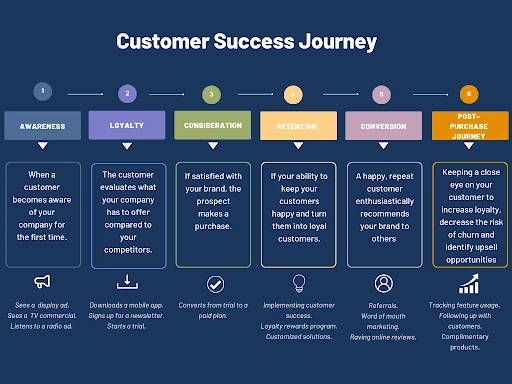
In today’s competitive business environment, focusing on customer success is more critical than ever. A customer success strategy helps businesses build strong, long-lasting relationships with customers by ensuring they achieve their desired outcomes with your product or service. Implementing an effective customer success strategy can lead to reduced churn, increased customer satisfaction, and enhanced business growth.
But how do you actually implement a customer success strategy? In this blog, we’ll walk you through the key steps to building and executing a successful customer success program that drives results.
Step 1: Define Clear Customer Success Goals
Before you can implement a customer success strategy, you need to set clear goals. Ask yourself:
- What do we want our customers to achieve with our product or service?
- What does success look like for both the customer and our business?
Customer success goals should be specific, measurable, and aligned with overall business objectives. For example, your goals might include increasing customer retention, reducing churn, improving NPS scores, or driving upsell opportunities.
Step 2: Understand Your Customers' Needs
The foundation of any customer success strategy is a deep understanding of your customers’ needs, pain points, and expectations. You should collect data about:
- Customer demographics
- Usage patterns
- Product feedback
- Support history
Tools like customer surveys, interviews, and behavior analytics can provide insights into how customers are engaging with your product. Understanding these factors will allow you to tailor your approach to meet each customer’s unique needs.
Step 3: Create Customer Success Plans
Once you have a clear understanding of your customers, you need to create customer success plans. These plans should outline specific actions to help customers reach their desired outcomes. A strong customer success plan typically includes:
- Onboarding: A seamless onboarding process that ensures customers understand how to use your product effectively.
- Engagement: Ongoing communication to ensure customers are continuously receiving value.
- Support: Offering proactive support to resolve any issues that arise.
- Upselling/Cross-selling: Identifying opportunities to expand your relationship with customers through additional features, services, or upgrades.
Having well-defined success plans for different customer segments will help you cater to their unique needs and maximize their satisfaction.
Step 4: Build a Customer Success Team
To implement a successful strategy, you need a dedicated customer success team. This team should include professionals who are well-trained in building relationships with customers and solving their problems. The key roles in a customer success team include:
- Customer Success Managers (CSMs): Responsible for managing customer relationships, ensuring the customers achieve their goals, and handling escalations.
- Onboarding Specialists: Focus on getting new customers set up and ensuring they are using your product correctly from day one.
- Support Specialists: Handle any technical issues or customer concerns.
Empower your team with the right tools and resources to effectively carry out their roles. Regular training and performance tracking are also essential to keep your team aligned with customer needs and business goals.
Step 5: Leverage Technology and Automation
Implementing a customer success strategy becomes much easier with the help of technology and automation. Here are a few tools that can help:
- Customer Relationship Management (CRM): Platforms like Salesforce or HubSpot can help you track customer interactions, identify opportunities, and maintain a holistic view of your customer’s journey.
- Customer Success Software: Tools like Gainsight or Totango are built specifically to help manage and track customer success metrics.
- Automated Workflows: Use automation tools to send personalized emails, reminders, and notifications to customers, helping you stay proactive in engaging and supporting them.
Leveraging these technologies will save time, reduce errors, and ensure that no customer is left behind.
Step 6: Measure and Optimize Your Customer Success Strategy
The work doesn’t end after you implement your strategy. To ensure continuous improvement, you need to regularly measure the effectiveness of your customer success efforts. Key metrics to track include:
- Customer Health Scores: An aggregate measure of customer satisfaction and engagement.
- Churn Rate: The percentage of customers who leave during a given period.
- Net Promoter Score (NPS): A measure of customer loyalty and satisfaction.
- Customer Lifetime Value (CLV): The total revenue a customer generates over their entire relationship with your company.
These metrics will help you identify areas where your strategy is succeeding and where improvements are needed.
Final Thoughts
A well-executed customer success strategy can significantly impact your company’s growth by improving customer retention, satisfaction, and loyalty. By setting clear goals, understanding your customers, building dedicated teams, leveraging technology, and continuously optimizing your efforts, you can implement a customer success strategy that delivers long-term results.
Remember, customer success is not a one-time effort; it’s an ongoing journey that requires continuous attention and adaptation. By prioritizing your customers’ success, you set your business up for a future of sustainable growth.