
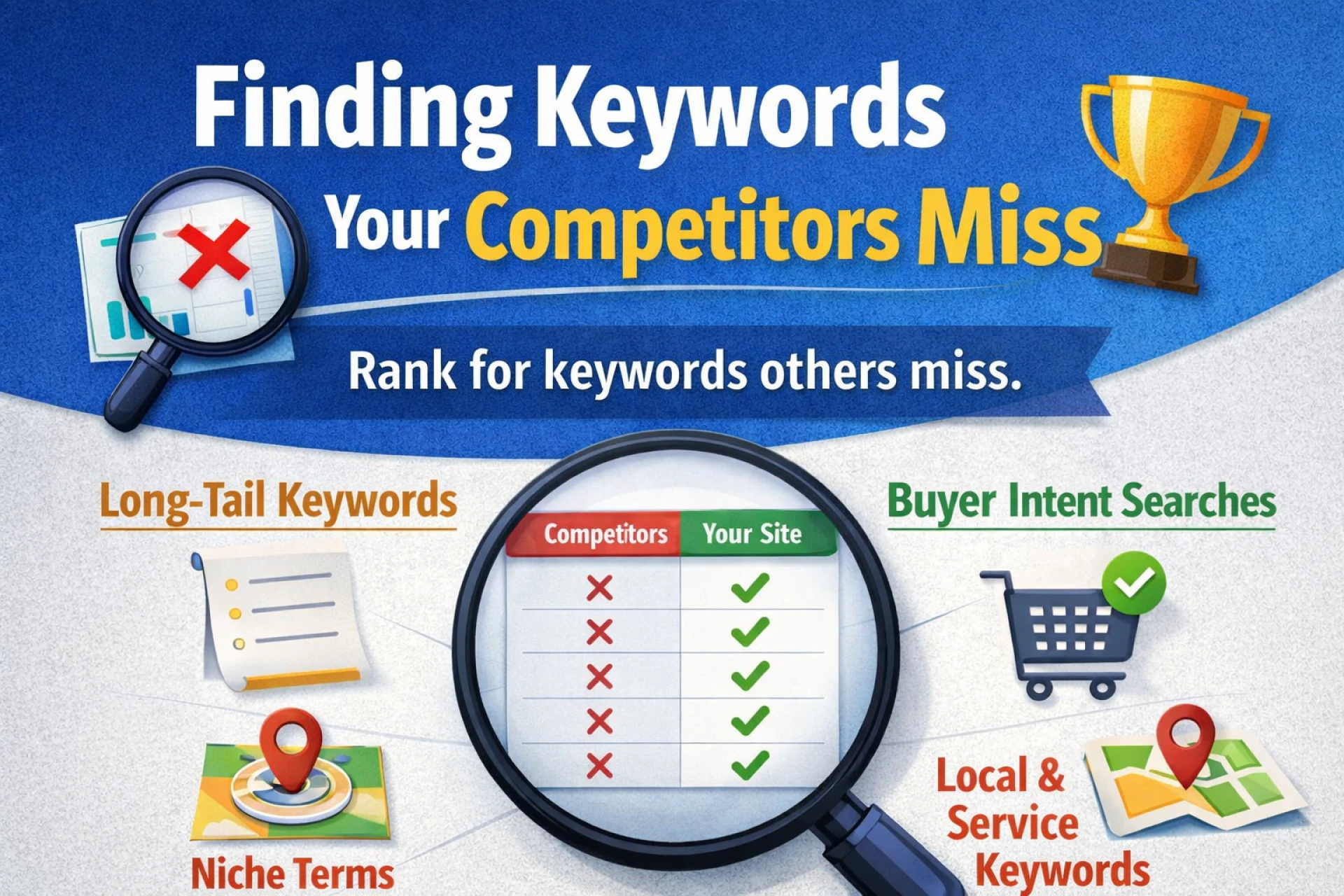
Most SEO strategies focus on copying what competitors are already ranking for. That approach works but only up to a point. If everyone is chasing the same keywords, it becomes harder and more expensive to win. The real opportunity lies in keywords your competitors miss.
This is where smart research and a strong competitor keyword gap analysis can give your business an edge, especially if you offer SEO services or run an SEO company.
Why Missed Keywords Matter
Competitors usually focus on high-volume keywords. But in doing so, they often ignore:
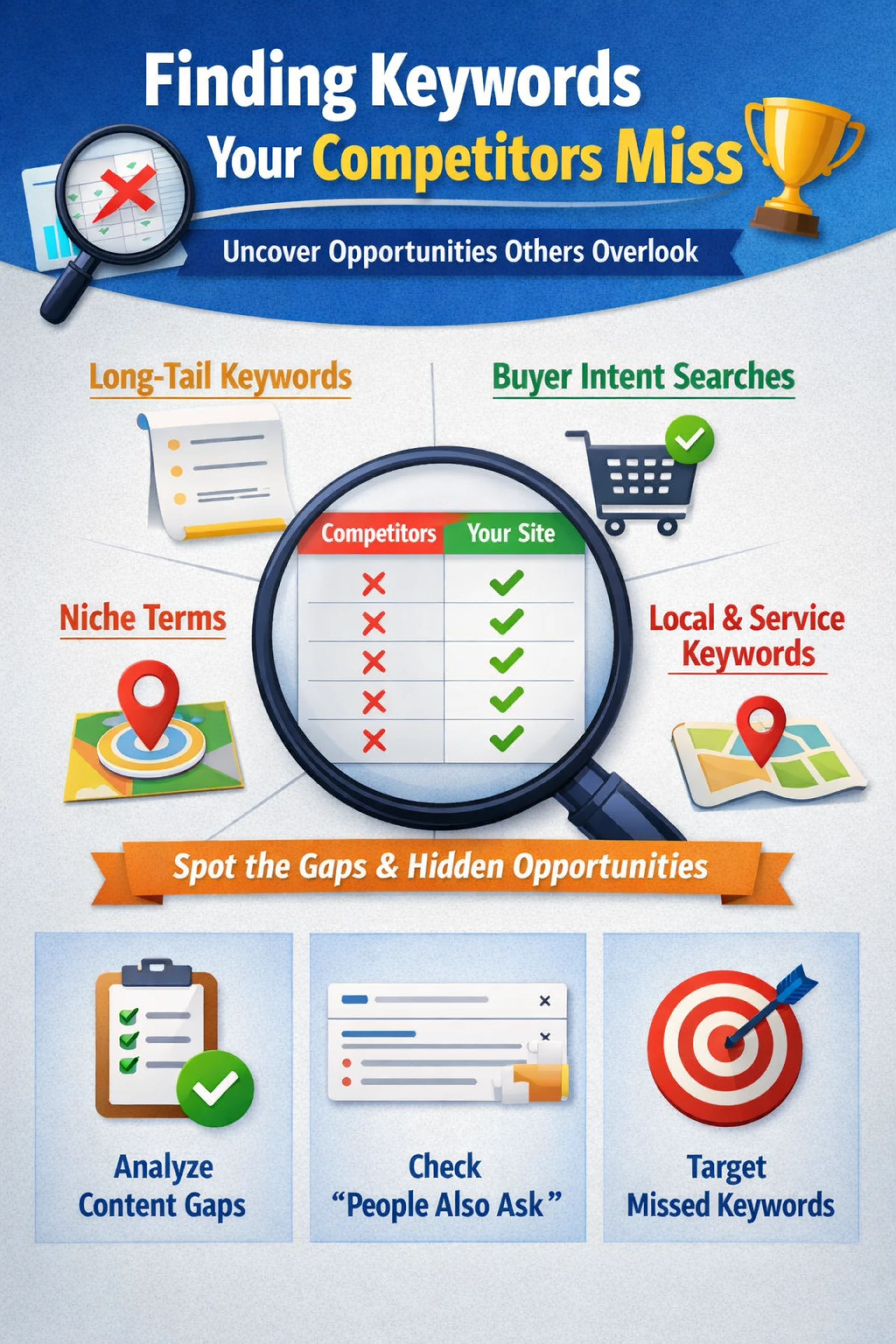
- Long-tail phrases
- Buyer-intent searches
- Niche-specific terms
- Local or service-based keywords
These missed keywords may not bring massive traffic, but they attract the right visitors people who are ready to take action.
Start With Competitor Keyword Gap Analysis
The first step is understanding what your competitors rank for and what they don’t.
Make a list of your top competitors, especially businesses offering similar SEO services. Then compare their keyword profiles with your own. Look for gaps where:
- Competitors rank on page 2 or lower
- Keywords have search intent but low competition
- Terms relate directly to services, locations, or problems
This process highlights opportunities that are easier to rank for and often convert better.
Look Beyond Obvious SEO Keywords
Many SEO companies make the mistake of targeting only broad terms like “SEO agency” or “SEO services.” These are competitive and expensive.
Instead, look for keywords that show specific intent, such as:
- Service-based questions
- Industry-specific SEO needs
- Location + service combinations
- Problem-focused searches
For example, a competitor may rank for “SEO services,” but miss keywords related to audits, technical fixes, or local SEO challenges.
Analyze Content, Not Just Keywords
Sometimes the keyword gap isn’t about missing data it’s about missing content.
Check competitor blogs, landing pages, and FAQs. Ask:
- What topics are barely covered?
- Which questions are unanswered?
- Are service pages too generic?
If competitors are not explaining their process, pricing factors, or results clearly, that’s your chance to create better, more useful content and capture those searches.
Use SEO Company Keyword Research Strategically
When doing SEO company keyword research, focus on keywords that match buyer intent, not just traffic numbers.
Good missed keywords often:
- Have lower search volume
- Show strong commercial intent
- Are easier to rank for
- Convert visitors into leads
These keywords work especially well for service pages, case studies, and comparison articles.
Check Search Results Manually
Tools are helpful, but manual searches reveal details tools miss.
Search your main keywords and scroll through:
- “People also ask” boxes
- Related searches
- Autocomplete suggestions
Often, competitors are not optimizing for these variations. Creating content around them helps you capture traffic they ignore.
Turn Missed Keywords Into SEO Wins
Once you find these opportunities:
- Create focused pages instead of broad ones
- Write naturally and answer real questions
- Optimize for clarity, not keyword stuffing
- Match content with user intent
This approach works well for SEO services competitor analysis because it targets real gaps rather than crowded keywords.
Final Thoughts
Finding keywords your competitors miss isn’t about being smarter it’s about being more observant. By focusing on intent, gaps, and real user needs, you can attract better traffic with less effort.
A solid competitor keyword gap analysis combined with thoughtful content can help your SEO company stand out, rank faster, and convert more leads without fighting everyone else for the same keywords.