
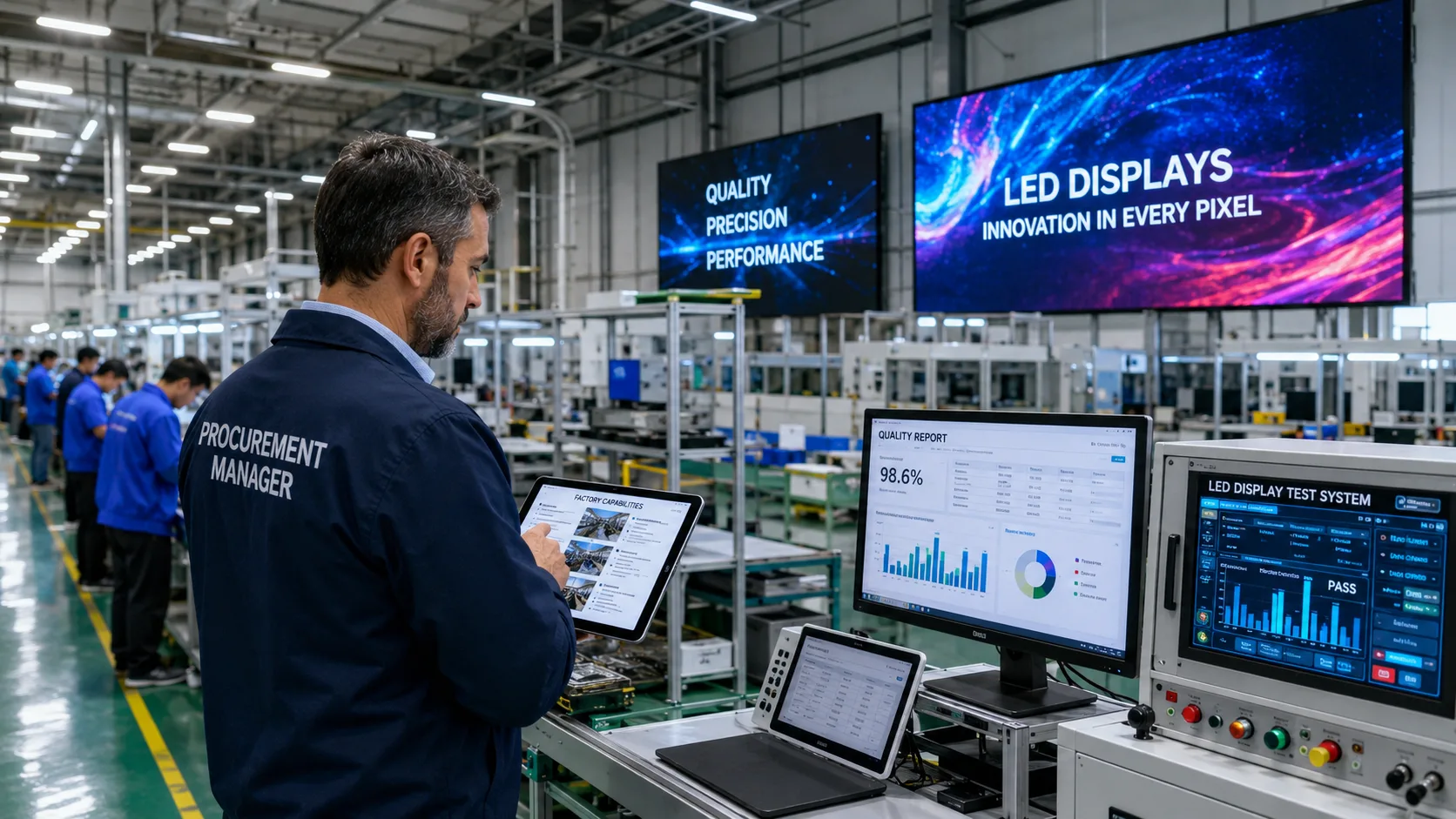
Buying an LED display is rarely a small investment. Whether you are sourcing screens for advertising, retail, events, control rooms, corporate communication, or public infrastructure, the quality of the final product depends heavily on the capabilities of the manufacturer behind it. This is why evaluating a factory should be an essential part of your purchasing process.
Many buyers compare only specifications, pricing, or product images. However, these factors reveal very little about how the display is actually manufactured. Two LED screens may appear identical on paper but perform very differently in terms of brightness consistency, color accuracy, durability, heat management, and long-term reliability.
Before placing an order, you should assess the LED screen factory itself rather than focusing solely on the finished product. Understanding how a manufacturer controls quality, manages production, and tests its products can help you avoid costly mistakes and ensure better long-term performance.
What Should You Evaluate Before Choosing an LED Display Factory?
Selecting a manufacturing partner requires more than reviewing a brochure or website. The factory's infrastructure, quality control systems, technical expertise, and production processes all play a direct role in determining product reliability. By evaluating a few critical areas, you can gain a clearer understanding of whether the manufacturer is capable of meeting your requirements.
Assess the Manufacturing Infrastructure
A modern manufacturing facility reflects the company's commitment to quality and production efficiency. You should look for automated production lines, SMT (Surface Mount Technology) capabilities, controlled assembly environments, and organized production workflows.
A well-equipped LED screen factory is generally better positioned to maintain consistency across large production volumes while minimizing manufacturing defects.
Review Quality Control Processes
Quality control should be embedded throughout the manufacturing cycle rather than being limited to final inspection. Reliable manufacturers typically conduct component verification, soldering inspections, module testing, aging tests, and final product evaluations before shipment.
Understanding these procedures helps you determine whether quality is being built into the product or simply checked at the end.
Examine Component Sourcing Standards
The performance of an LED display depends significantly on the quality of its LEDs, driver ICs, power supplies, and control systems. Reputable factories generally maintain strict sourcing standards and work with established component suppliers.
When evaluating a manufacturer, ask about component traceability and quality assurance procedures for incoming materials.
Verify Testing and Reliability Capabilities
Testing is one of the strongest indicators of manufacturing maturity. Reliable factories perform brightness calibration, color uniformity checks, environmental testing, heat dissipation assessments, and extended aging tests.
These processes help identify potential failures before products reach the customer and improve long-term operational stability.
Evaluate Technical Support and After-Sales Commitment
The relationship with a manufacturer does not end after delivery. Installation guidance, troubleshooting support, spare parts availability, and warranty services all contribute to the overall ownership experience.
A factory that provides strong technical support often demonstrates greater confidence in the quality of its products.
Bottom Line
Choosing an LED display manufacturer should never be based solely on pricing or product specifications. The manufacturing environment, quality control systems, testing procedures, and technical expertise behind the product are equally important factors. By carefully evaluating the LED screen factory before placing an order, you can reduce procurement risks, improve product reliability, and ensure that your investment delivers the performance and longevity your project requires.