
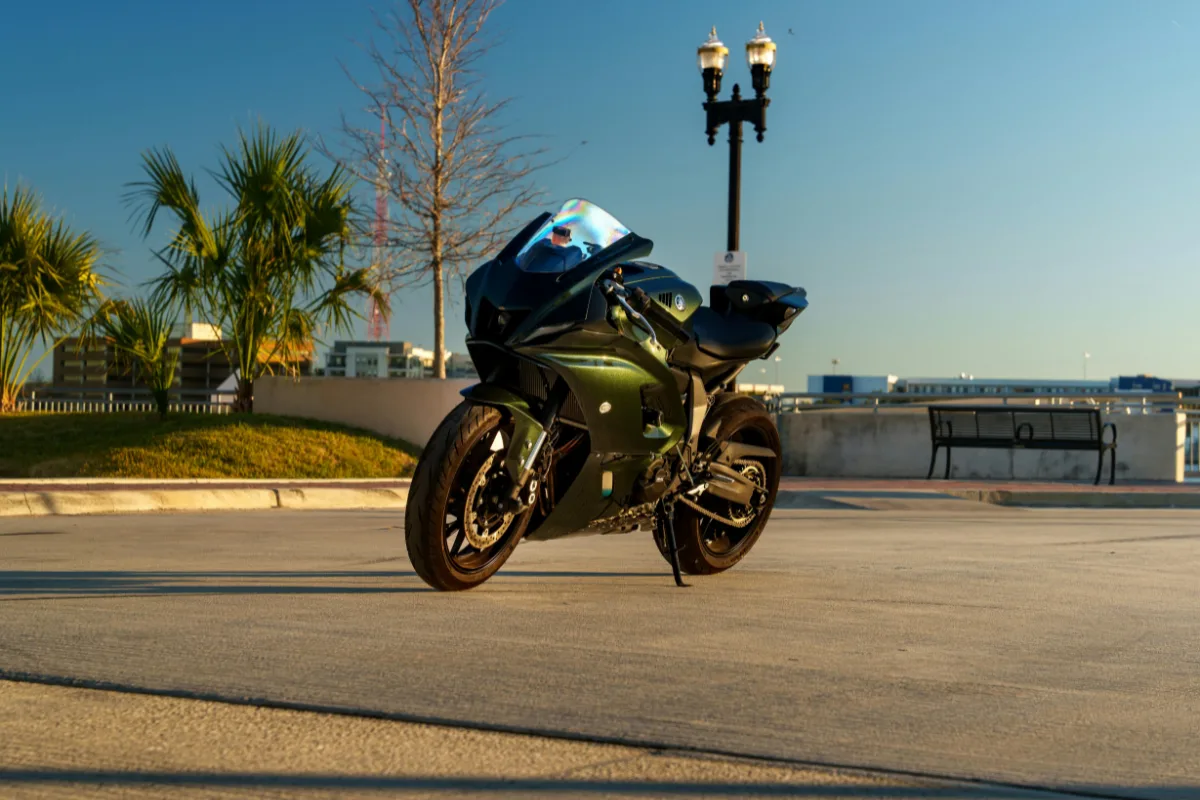
You wake up on a Saturday morning ready for a ride. You roll out to the garage, throw a leg over the saddle, and hit the starter. And nothing. Or worse, something: a rattle, a misfire, a cloud of smoke you've never seen before.
Most riders have been there. And most riders do one of two things: panic-Google for an hour, or immediately schedule an expensive shop visit that might not happen for days.
But what if you could diagnose the problem yourself , right in your driveway, on your smartphone, with real guidance, and actually understand what's wrong with your bike before spending a dime?
That's exactly what this guide is about. We're going to walk you through how to diagnose the most common motorcycle engine problems from home, using your own eyes, ears, and instincts, plus the kind of real-time expert backup that MotoSidekick was built to provide.
Why More Riders Are Choosing to Diagnose Problems at Home
The average motorcycle shop visit costs between $80 and $150 just for a diagnostic fee, before any work is done. Add labor, parts markup, and waiting time, and a problem that might have been a 20-minute fix becomes a week-long, wallet-draining ordeal.
The reality is that most common motorcycle engine problems are diagnosable by the rider. You don't need a dealership bay or a $10,000 diagnostic computer. You need to know what to look for, what to listen to, and when to ask for help.
MotoSidekick was built around exactly this idea: make motorcycle repair knowledge accessible anytime, anywhere. Whether you're in Birmingham, Los Angeles, or anywhere in between, getting expert help shouldn't require a tow truck.
And for riders who want to learn more:
• Join the MotoSidekick community forum
The 5 Most Common Motorcycle Engine Problems You Can Diagnose at Home
1. The Bike Won't Start
This is the most panic-inducing symptom , and also one of the most frequently misdiagnosed. Before assuming it's engine-related, run through this checklist:
• Is there fuel in the tank? (Sounds obvious , you'd be surprised.)
• Is the kill switch in the RUN position?
• Is the choke on or off depending on engine temperature?
• Are there any dashboard warning lights on?
• Can you hear the fuel pump prime when you turn the key? (A faint whirr for 1-2 seconds.)
If all of these check out and the bike still won't turn over, you may be looking at a battery issue, a bad starter relay, or a fuel delivery problem. These are all diagnosable at home with basic tools , and with a live MotoSidekick expert on video chat, you won't have to guess.
2. Engine Misfires or Runs Rough
A misfiring engine feels like a hiccup , a sudden loss of power, a stumble, or an uneven idle. This is almost always one of four culprits:
• Spark plugs: fouled, worn, or gapped incorrectly
• Fuel delivery: clogged jets in a carburetor, or a failing fuel injector
• Air filter: dirty or restricted airflow, choking the engine
• Ignition coil: weak spark or intermittent failure
Start by pulling your spark plugs. The condition of the plug tells a story: black and sooty means rich fuel mixture, white or chalky means lean mixture, oily residue suggests oil burning. Each of these has a specific fix , and a MotoSidekick expert can walk you through reading the plugs over a live video session.
3. Engine Overheating
If your temperature gauge is climbing or you notice heat shimmer coming off the engine, your bike is trying to tell you something. Common home-diagnosable causes include:
• Low coolant (on liquid-cooled bikes): check the reservoir and look for leaks
• Blocked radiator: bugs, debris, or bent fins restricting airflow
• Thermostat failure: not opening at the right temperature
• Lean fuel mixture: running without enough fuel causes excess heat
Air-cooled bikes are particularly susceptible to overheating in stop-and-go traffic. If you notice this pattern, it's a useful data point when connecting with an expert on MotoSidekick.
4. Oil Leaks or Burning Oil
See blue smoke coming from your exhaust? Notice the oil level dropping between changes? These are signs your engine is burning oil , and it's easier to pin down the source than most riders think.
• Blue smoke on startup that clears: valve stem seals are the likely culprit
• Blue smoke throughout your ride: piston rings may need attention
• Visible oil pooling under the bike: check gaskets, the drain plug, and valve cover bolts
None of these diagnoses require tearing the engine apart. A visual inspection, combined with noting when the smoke appears, gives you and a MotoSidekick expert everything needed to narrow it down fast.
5. Strange Noises: Knocking, Ticking, or Rattling
Your engine speaks. Learning to translate the language of knocks and ticks is one of the most valuable skills a rider can develop:
• Ticking from the top of the engine: often valves out of adjustment , a maintenance item you can address yourself
• Deep knocking from the bottom end: potentially rod or main bearing wear , this one needs attention fast
• Rattle on startup that fades: cam chain tension is a common cause on many models
• Metallic slapping sound: could be piston slap, especially in higher-mileage engines
The location and pattern of the noise matters enormously. This is where MotoSidekick's live video chat shines , you can hold your phone near the engine and let an expert mechanic listen in real time, guiding you to the source.
Your Step-by-Step Home Diagnostic Process
Here's a practical framework for tackling any motorcycle engine problem at home , the same approach MotoSidekick experts use when they connect with riders:
Step 1: Observe Before You Touch
Before turning a single bolt, spend five minutes just looking and listening. Note:
• What exactly is the symptom? (Won't start, runs rough, smokes, makes a noise)
• When does it happen? (Cold start only, at high RPM, under load, always?)
• Any recent changes? (New fuel, recent service, dropped the bike, added an accessory?)
This context is gold. It cuts diagnosis time in half , whether you're figuring it out yourself or getting help from a MotoSidekick expert.
Step 2: Check the Basics First
Always eliminate the simple stuff before assuming the worst. In order:
• Battery voltage (should read 12.4V or higher with the bike off)
• Oil level and condition
• Coolant level (liquid-cooled bikes)
• Air filter condition
• Spark plug condition
You'd be amazed how often a "major engine problem" turns out to be a fouled plug or a dying battery.
Step 3: Use Your Senses Systematically
Work through sight, sound, and smell:
• Sight: Look for leaks, corrosion, disconnected hoses, or damaged wires
• Sound: Start the bike and listen carefully , where is the noise coming from?
• Smell: Burning rubber, fuel smell, or oil burning have very different sources
Step 4: Get Real-Time Expert Help
This is where most riders get stuck , they've gathered clues but aren't sure what they mean. Rather than diving down a two-hour YouTube rabbit hole, connect with a real expert.
With MotoSidekick, you can start a free AI-powered diagnostic session instantly, or connect with a live motorcycle mechanic via video chat. Show them what you're seeing, let them hear the noise, and get a real answer , not a guess from a random forum post.
AI chat is free. Expert video sessions typically run $30-75 depending on complexity, and the price is always shown upfront. For most riders, that's a fraction of a shop diagnostic fee , with the added benefit of actually learning what's wrong with your bike.
E-E-A-T Tip: Why the Source of Your Repair Advice Matters
If you've spent any time searching for motorcycle repair help online, you've probably found a mix of forum threads from 2009, YouTube videos of questionable quality, and manufacturer service manuals written for professional technicians.
The problem isn't that information doesn't exist , it's that unverified advice on the internet carries real risk. A misdiagnosis doesn't just waste your time. It can lead you to replace parts that aren't broken, miss problems that are actually serious, or damage your bike further.
This is why MotoSidekick vets every expert in its network. These are real motorcycle mechanics and experienced riders , people who have done the work, on real bikes, in real garages. When they tell you something, it comes from hands-on experience, not a search result.
That's what Experience, Expertise, Authoritativeness, and Trustworthiness (E-E-A-T) looks like in practice. And it's exactly the standard you should hold any motorcycle repair advice to , including this article.
MotoSidekick in Action: What Real Riders Are Doing
Let's walk through a real-world scenario to show how this works.
Imagine you're a rider in Chicago whose bike starts fine in the morning but begins misfiring badly after 20 minutes of riding. You check the basics , fuel, battery, plugs , and they all look fine. You're stumped.
You open MotoSidekick on your phone and describe the symptom to the AI assistant. Based on your description , warm engine misfire that gets worse with heat , the AI narrows it to three possibilities: a failing ignition coil, a heat-soak issue with the fuel injectors, or an intermittent sensor fault.
You then book a 30-minute video session with a certified MotoSidekick expert. They walk you through checking coil resistance with a multimeter while on the call. You find the resistance is out of spec on cylinder two. You order the exact replacement coil through MotoSidekick's parts finder, get a direct purchase link for your bike's specific fitment, and install it yourself , with your expert on call to guide you through it.
Total cost: one expert session plus a coil. Zero shop fees. Zero waiting. And you now know how to check ignition coils for the rest of your life.
Practical Tips for Every Rider: Building Your Home Diagnostic Toolkit
You don't need a professional shop setup to handle most motorcycle diagnostics. Here's what every home mechanic should have:
• Digital multimeter , for checking battery voltage, coil resistance, and sensor outputs
• Spark plug socket and ratchet , for quick plug pulls and inspection
• Torque wrench , for putting things back together correctly
• Smartphone with MotoSidekick , for AI diagnostics and live expert access
• Your bike's service manual , a PDF works fine and is often available free from manufacturer sites
For more tips on maintenance, gear, and repairs, check out:
• MotoSidekick Community Forum
• Follow MotoSidekick on Instagram
• Follow MotoSidekick on TikTok
Local Motorcycle Repair Help , Available Nationwide
MotoSidekick's expert network is available wherever you are. Whether you're wrenching in your driveway in Phoenix, a garage in Atlanta, or a parking lot in Seattle, help is a tap away.
Looking for city-specific resources? MotoSidekick has dedicated service guides for riders across the country, including:
• Los Angeles motorcycle repair
And dozens more cities nationwide, all connected to the same network of verified motorcycle experts.
The Bottom Line: You Don't Need a Mechanic to Diagnose Your Bike
Motorcycle engine problems are intimidating, until you understand what you're looking at. And the gap between "I have no idea what's wrong" and "I've got this" is smaller than most riders think.
The tools exist. The knowledge exists. And now, with MotoSidekick, the expert guidance you need is always one tap away , free AI diagnostics, live video chat with real mechanics, exact-fit parts, and a community of riders who've been exactly where you are right now.
You broke it. You fix it. And MotoSidekick is right there with you.
Related Reading from MotoSidekick
- Writeup Cafe – Online Motorcycle Repair Help: How Virtual Mechanics Are Changing Riding
- The Omnibuzz – Online Motorcycle Repair Help Article Feature
- The Omnibuzz – Motorcycle Maintenance Checklist: Everything You Should Inspect Before Riding
- The Omnibuzz – How to Diagnose Motorcycle Problems Without Going to a Shop
- Writeup Cafe – How to Diagnose Motorcycle Problems Deep-Dive