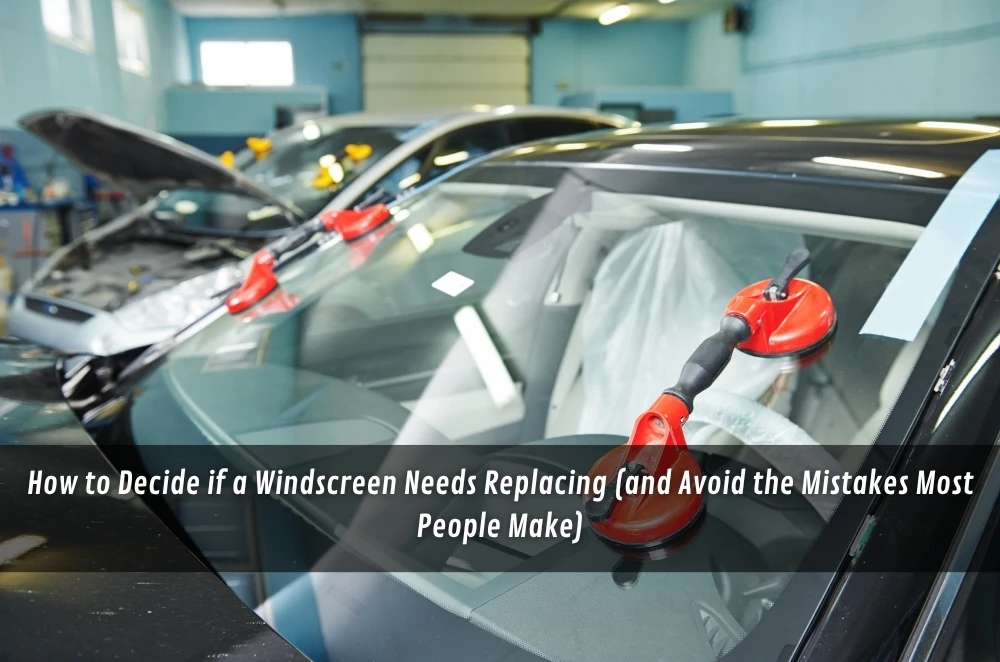
A windscreen problem rarely starts as a big, dramatic crack, it’s usually a small chip you notice at the servo, then forget about until the light hits it the wrong way.
Most drivers aren’t trying to ignore safety; they’re trying to fit a repair into a week that’s already full. The issue is that glass doesn’t care about your calendar, and the things that make Sydney driving normal, motorway vibration, stop-start traffic, sudden rain, are also the things that turn “minor” damage into “now I have to deal with this today”.
This guide is about making a clean call, quickly, without getting lost in conflicting advice or sales talk.
What “minor damage” actually means on the road
A chip can look stable while still being structurally active underneath.
Glass damage behaves a bit like a tear in fabric: the tear doesn’t have to be huge to keep running once the stress points line up. Heat, cold, bumps, door slams, and even a strong blast of demister air can be enough to push a crack along a weak path that wasn’t obvious at first glance.
Where the damage sits matters as much as the size. Edges and corners are under different stresses, and anything in the wiper sweep tends to get worse because it’s constantly being worked over by water, grit, and movement.
If the defect is catching your eye while you drive, that’s a signal in itself.
Repair vs replacement: the decision factors that matter
If you strip it back, the decision comes down to a few practical factors that are easy to assess.
For many drivers, the quickest way to get a confident answer is to speak with a professional windscreen replacement team that can weigh up location, damage type, contamination, and any camera/sensor areas without guesswork.
1) Location, location, location
Damage in the driver’s line of sight is not just a visibility annoyance; it can distort light at night and in wet conditions. Damage near the edge is often more likely to spread, and it can be harder to stabilise reliably because the glass is under more stress there.
2) The type of break
A simple chip is different from a chip with multiple fracture lines, and both are different from a long crack. If there are several “legs” running out from the impact point, that’s often a sign the glass has already started to fail beyond the surface.
3) Contamination (dirt and water)
Time matters because the longer a chip sits, the more it collects road grime and moisture, which can reduce the quality of any repair. A quick fix done early can be a very different outcome to a “repair” attempted after weeks of weather and wash cycles.
4) Vehicle tech and sensor areas
Many newer vehicles have camera or sensor zones around the top centre of the screen. Anything that affects clarity or alignment there is worth treating as a higher-stakes job, even if the crack itself doesn’t look dramatic.
5) Your real-world constraints
Sometimes the “best” option on paper isn’t the best option for your week. If you can’t give the vehicle the right conditions after the work (time parked, access, weather), that should shape how you book and who you use.
A good decision is one you can actually execute cleanly.
Common mistakes people make (and what to do instead)
The most common mistake is waiting because the damage “isn’t spreading”.
Cracks don’t always grow in a neat, predictable way; they can sit for days and then run in a single afternoon after a temperature change or a pothole hit. If you’re delaying, do it deliberately, monitor it, limit stress on it, and plan the booking rather than drifting.
The second mistake is trying a DIY kit after the chip has already been contaminated. Those kits can be tempting, and sometimes they help cosmetically, but they’re not magic; once dirt and moisture are in the break, the odds of a clean bond drop.
The third mistake is choosing purely on price without understanding inclusions. “Cheap” can become expensive if it means leaks, wind noise, poor trim fit, or unclear aftercare that causes problems later.
The fourth mistake is scheduling the job like it’s a tyre change, then rushing off immediately. Windscreen work often needs a bit of calm time afterwards so sealants can set properly, and squeezing it between errands can create avoidable stress.
A smarter approach is to ask a handful of specific questions, book a time you can realistically support, and treat it like safety maintenance rather than a cosmetic repair.
Choosing a provider: what to check before you commit
A strong provider choice usually comes from clarity, not charisma.
Start with scope: what glass is being fitted, what’s included in the job, what the technician needs from you (space, keys, access), and what the aftercare limits are. If the answers are vague, that’s useful information, even if the booking process is fast.
Then look at how they handle the “messy edges” of real life: what happens if it rains, what happens if you’re not home on time, what happens if the vehicle has cameras or sensor zones that may need extra attention.
If you’re comparing options, it helps to read a plain-English scope like the Windscreen Replacers service overview before locking in a time.
Here are decision factors that tend to protect you regardless of budget:
- Fit and sealing approach: ask how they minimise the risk of leaks and wind noise, and what checks they do before they leave.
- Trim and finishing: a tidy fit matters, especially if you’ve had past issues with rattles or loose moulding.
- Tech awareness: if the vehicle has camera/sensor zones, ask how they handle that and what they recommend if calibration is relevant.
- Realistic timing: confirm the job duration and the minimum time you should avoid washing, high-speed driving, or rough roads straight after.
- Aftercare clarity: you want simple do’s and don’ts that match how you actually use the vehicle.
- Problem resolution: ask what you should do if you notice wind noise or water ingress in the following days.
If a provider can’t explain these things calmly, they may not be set up for the job you need.
Operator Experience Moment
I’ve watched people create a stressful situation without realising it: booking a replacement right before a school run or a tight delivery window, then pushing to leave early because the day’s stacked. When time pressure enters the job, it’s harder for anyone to do careful checks and follow sensible curing guidance. The best outcomes usually come from one small decision: book a slot with a buffer, so nobody is rushing.
A simple 7–14 day first-actions plan
Day 1–2: Take clear photos from inside and outside, note where the damage sits relative to the driver’s view, and avoid sudden temperature shocks (like blasting hot air directly onto the crack).
Day 3–5: Decide whether you’re leaning repair or replacement based on location, type of break, contamination, and whether it’s spreading; if you’re unsure, act as if it will worsen and plan the next step.
Day 5–10: Book a time when the vehicle can stay parked afterwards, and make sure access is sorted (driveway space, safe area, keys, and a plan if weather changes).
Day 10–14: Follow aftercare guidance, avoid high-pressure washing for the recommended period, and pay attention to wind noise or water ingress so you can raise it early while it’s easy to assess.
Small planning beats emergency scheduling every time.
Local SMB mini-walkthrough (Sydney, NSW)
A mobile trades business notices a chip has turned into a short crack after a week of motorway driving.
The team checks whether it sits in the driver’s view and decides it’s now a safety and downtime issue, not a “later” job.
They book a late-afternoon slot so the vehicle can stay parked overnight at the yard.
They confirm there’s space for the technician to work safely and that keys and contact details are sorted.
After the job, the driver avoids the automatic wash for the recommended period and keeps an ear out for wind noise on the next run.
If anything feels off, they report it straight away rather than waiting for it to become “normal”.
Practical Opinions
If the damage is distracting you while driving, treat that as a real signal and act sooner.
If you’re juggling work and family, pay for clarity, scope, timing, and aftercare matter more than a quick booking page.
If the vehicle has cameras or sensor zones, choose the option that’s comfortable discussing the technical considerations.
Key Takeaways
- Small chips often become bigger problems when heat, vibration, and time compound the damage.
- Repair vs replacement usually hinges on location, break type, contamination, and tech/sensor areas.
- The best provider choice is the one with clear scope, realistic timing, and straightforward aftercare.
- A little scheduling buffer reduces stress and improves outcomes.
Common questions we hear from businesses in Sydney, NSW, Australia
Q1) How can we tell if a chip is repairable or if it needs replacement?
Usually, the quickest way is to consider where it sits (especially the driver’s view and edges), the type of break (single chip vs multiple fracture lines), and how long it’s been exposed to weather and grime; the practical next step is to take a couple of photos and get a clear recommendation before another week of Sydney traffic and motorway vibration turns it into a longer crack.
Q2) Can we keep driving for a few days while we sort a booking?
It depends on the location and whether it’s spreading, but the next step is to monitor it daily and avoid sudden temperature swings (for example, don’t blast the demister straight onto it); in most cases around Sydney, the mix of potholes, heat changes, and stop-start driving can make “a few days” turn into “it ran across the screen”.
Q3) What should fleet or trade operators ask before committing to a provider?
In most cases, you’ll get the best result by asking what’s included in the scope, what the realistic time-on-site is, what aftercare restrictions apply, and how they handle vehicles with camera/sensor zones; the next step is to book a slot that allows the vehicle to sit afterwards, which is especially important if you’re coordinating jobs across Sydney suburbs and depot access windows.
Q4) What should we do after replacement to reduce the chance of issues?
Usually, you follow the aftercare instructions closely, avoid high-pressure washing for the recommended period, and check for wind noise or water ingress on the next few drives; the next step is to report anything unusual early, because it’s easier to troubleshoot right after the work than after a week of Sydney rain and motorway runs.