
Fillet steak has a reputation as the cut you order in a restaurant because you do not trust yourself to cook it at home. That is a shame. Fillet is lean, tender, and mild, so it needs very little beyond high heat, good seasoning, and careful timing. It is also unforgiving in one way: with almost no marbling to protect it, an extra minute in the pan can turn silky into dry. This guide covers how to cook fillet steak from start to finish, including times, temperatures, rest, and the mistakes I see most often.
What Is Fillet Steak?
Fillet steak comes from the tenderloin, a long muscle that runs along the back of the animal beneath the ribs. Because it does very little work, it is the most tender cut on the carcass. The trade-off is flavour. With little intramuscular fat, fillet tastes delicate and mild instead of robustly beefy, which is why it so often arrives with butter, a sauce or a good crust. .
Fillet Steak vs Filet Mignon vs Chateaubriand
The names cause plenty of confusion. In the UK, “fillet steak” is the everyday term. In the US, the same muscle is called tenderloin, and filet mignon usually refers to the smaller, tapered end cut into neat steaks. Chateaubriand is a thick centre-cut portion from the widest part of the tenderloin, traditionally roasted and carved for two. The cooking principles below apply to all three, although the thicker the cut, the more important the oven finish becomes.
What You Need Before You Start
Choosing the Right Fillet Steak
Thickness matters more than weight. Look for a centre-cut steak around 4cm (about 1.5 inches) thick, usually 150g to 200g. Thin fillets overcook before they develop a crust. Ask your butcher for steaks of equal thickness, and choose meat that looks deep red with a fine, even grain. Any visible silver skin should be trimmed off.
EquipmentA heavy-based frying pan or cast iron skillet holds heat far better than a thin non-stick pan, and that heat is what builds the crust. You will also want tongs and a digital thermometer. Fillet is expensive, and a thermometer costs less than one ruined steak.
IngredientsKeep it simple. Flaky sea salt, black pepper, a neutral oil with a high smoke point such as rapeseed or groundnut, unsalted butter, a couple of garlic cloves and a few sprigs of thyme. That is all the pan needs.
How to Prepare Fillet Steak
Bring It to Room Temperature
Take the steaks out of the fridge 30 to 45 minutes before cooking. A fridge-cold steak cooks unevenly, leaving a grey outer band and a cool centre. Leave them on a plate, loosely covered.
Pat Dry and Season
Moisture is the enemy of a good crust, so pat the steak thoroughly dry with kitchen paper. Salt can go on up to an hour before cooking, or just before it hits the pan. Anywhere in between tends to draw out surface moisture you then have to cook off. Hold back the pepper until the steak is nearly done or already resting. Cracked pepper scorches in a very hot pan and turns bitter.
Should You Oil the Steak or the Pan?
Either works, but I prefer a light coating of oil on the steak itself. It stops the pan smoking as heavily and gives you more control. Use a small amount only. Too much oil shallow-fries the steak instead of searing it.
How to Cook Fillet Steak in a Pan
Pan-searing is the best all-round method for fillet, giving a burnished crust and full control over the doneness.
Step 1: Heat the Pan
Place the pan over a high heat for several minutes until it is properly hot and just beginning to smoke. Switch on the extractor fan and open a window. A pan that is not hot enough is the most common reason for a pale, disappointing steak.
Step 2: Sear Each Side
Lay the steaks in the pan away from you, and leave them alone. Resist the urge to nudge them about. Cook for around 2 to 3 minutes until a deep golden-brown crust forms, then turn and repeat on the other side. Press the crust into the pan gently if the surface is domed.
Step 3: Sear the Edges
Use the tongs to hold each steak on its side and roll it around the pan for 20 to 30 seconds. Fillet is cut thick, so the edges are a large part of the steak and deserve the same colour as the faces.
Step 4: Baste With Butter, Garlic and Thyme
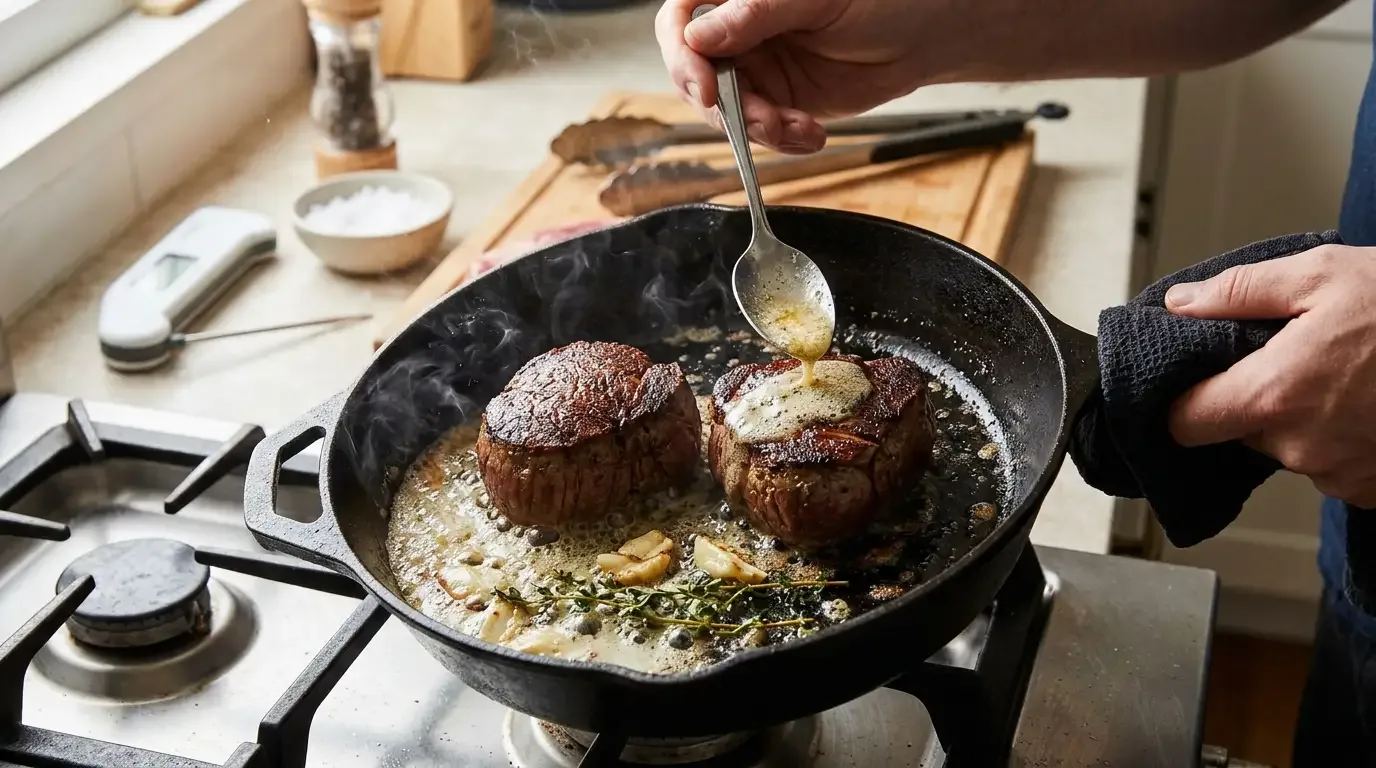
Lower the heat to medium and add a good knob of butter, the crushed garlic and the thyme. Tilt the pan and spoon the foaming butter over the steaks continuously for the last minute or two. This adds richness that lean fillet needs, and it helps the steak cook evenly. Add your pepper now.
Step 5: Rest the Steak
Move the steaks to a warm plate and rest them for 5 to 8 minutes, loosely tented with foil. During cooking, the juices are pushed towards the centre. Resting lets them settle back through the meat. Cut too soon, and they run onto the plate.
Fillet Steak Cooking Times and Temperatures
Every hob, pan and steak is slightly different, so treat times as a starting point and temperature as the final word.
Cooking Time Chart (Per Side, 4cm Thick)
DonenessTime per side (high heat)Internal temp (before resting)Rare2 to 3 minutes48 to 50°C (118 to 122°F)Medium rare3 to 4 minutes52 to 54°C (125 to 130°F)Medium4 to 5 minutes57 to 60°C (135 to 140°F)Medium well5 to 6 minutes62 to 65°C (143 to 150°F)Well done6 to 7 minutes68°C+ (155°F+)If one steak is thicker than another, add 30 seconds per side. Thinner steaks need less.
Internal Temperature Guide in °C and °F
Steak keeps cooking after it leaves the heat, a process called carryover cooking. The internal temperature will rise by roughly 3 to 5°C while it rests, which is why the figures above are pull temperatures, not final ones. Insert the thermometer through the side into the centre of the thickest part, avoiding the pan-side contact.
How to Check Doneness Without a Thermometer
If you do not own a thermometer, press the centre of the steak with your fingertip. Rare feels soft and springy, like the base of your thumb when your hand is relaxed. Medium rare has slightly more resistance, medium feels firmer, and well done is stiff. It takes practice, and it helps enormously to taste a perfectly cooked fillet first. A good Steakhouse in Singapore will show you exactly what medium rare should look and feel like, and that reference point makes home cooking much easier.
Other Ways to Cook Fillet Steak
Pan-Sear and Oven Finish
For extra-thick fillets or steaks you are cooking for a group, sear in the pan as above for about 1 to 2 minutes per side, then move the steak to an oven preheated to 200°C (180°C fan) for 3 to 6 minutes. Check the temperature and rest as normal. This is a safe route if you are nervous about the centre being undercooked.
Grilling and Barbecue
Fillet loves the charred finish of a barbecue, provided the coals are white hot so the steak cooks fast. Oil the steak, not the grate, and use the cooler side of the grill to finish if the outside darkens too soon.
Air Fryer Fillet Steak
An air fryer can cook a decent fillet at around 200°C for roughly 8 to 12 minutes, turning halfway. It will not give quite the same crust as a screaming hot pan, so I would call it a convenient option and not the best one.
Reverse Sear for Thick Fillets
For very thick cuts, cook gently in a low oven at about 120°C until the centre is 8 to 10°C below your target, then sear hard in a hot pan for a minute per side. The result is even colour from edge to edge. It takes longer, but it is very reliable.
Common Mistakes When Cooking Fillet Steak
Cooking Straight From the Fridge
A cold centre means you overcook the outside while waiting for the middle to catch up. Give it that 30 to 45 minutes.
Overcrowding or Using a Cold Pan
Too many steaks lower the pan temperature and cause them to steam. Cook one or two at a time, and wait until the pan is properly hot.
Cooking It Past Medium
Fillet has no fat to carry flavour and moisture through a long cook. Past medium, it becomes noticeably drier. If someone at your table likes well done, cook theirs last and a little thinner.
Skipping the Rest
It is tempting to cut straight in. Do not. Five minutes of patience saves the juices.
Using Cracked Pepper Too Early
As mentioned, pepper added at the start burns and turns acrid. Add it late or at the table.
What to Serve With Fillet Steak
Sauces
Fillet is mild, so a sauce adds a lot. A classic peppercorn sauce, Béarnaise, red wine jus, or simple garlic and herb butter all work. Make the sauce in the same pan after the steak comes out, scraping up the sticky brown bits for extra depth.
Side Dishes
Keep sides straightforward so the steak stays the star. Triple-cooked chips, creamy mash, wilted garlic spinach, roasted field mushrooms or tender-stem broccoli all suit it well.
Wine Pairing
A medium-bodied red such as a Pinot Noir or a softer Merlot complements fillet without overpowering it. Heavy tannic reds can steamroll the delicate flavour.
Final Thoughts
Cooking fillet steak at home is far less intimidating once you know the few things that matter: a thick centre-cut, a hot heavy pan, good seasoning, a thermometer and a proper rest. Add butter at the end, keep your sides simple, and pull the steak a few degrees before your target. Do that, and a restaurant-quality fillet is well within reach on a weeknight.
FAQs
How Long Do You Cook Fillet Steak for Medium Rare?
For a 4cm steak on high heat, about 3 to 4 minutes per side, aiming for 52 to 54°C before resting. Use a thermometer as thickness varies.
Should You Cook Fillet Steak in Butter or Oil?
Start with oil because it tolerates high heat, then add butter near the end for flavour and basting. Butter alone tends to burn at searing temperatures.
Do You Cook Fillet Steak Covered or Uncovered?
Uncovered in the pan. Covering traps steam and softens the crust. Only tent it loosely with foil once it is resting.
How Do You Keep Fillet Steak Tender?
Buy a good cut, avoid cooking beyond medium, do not skip the rest, and slice or cut gently with a sharp knife.
Can You Cook Fillet Steak From Frozen?
It is better to defrost it slowly in the fridge overnight. Cooking from frozen usually gives a burnt exterior and an undercooked middle.
Is Fillet Steak Better Cooked Rare?
Many people feel rare to medium rare suits fillet best because the tenderness and delicate flavour stay intact. It is a matter of taste, and food safety guidance for your household should always come first.