Getting three scrap car offers sounds simple.
Offer one says $600.
Offer two says $850.
Offer three says $1,000.
Your brain immediately says, “Take the $1,000 and run.”
Fair enough. But before you start mentally spending that extra $400, there is one small detail worth checking:
Are all three offers actually for the same thing?
A scrap car quote isn't always as straightforward as comparing three numbers on a screen. One company may include towing while another charges for it. One offer may be based on the information you provided, while another may change after the vehicle is inspected. Some quotes may also depend on whether the car is complete, whether it runs, and what paperwork is available.
So if you're trying to get the best deal for an unwanted vehicle, don't just compare the biggest number.
Compare what you're actually getting for that number.
Start With the Total Amount, Not the Headline Number
Let's say you receive these offers:
- Buyer A: $900
- Buyer B: $1,000
- Buyer C: $1,100
At first glance, Buyer C wins.
But then you discover Buyer C deducts $150 for towing.
Suddenly, the $1,100 offer is really $950.
Buyer B includes pickup and pays $1,000.
Now the supposed “highest offer” isn't actually the highest amount in your pocket.
This is why your first question should be:
“How much will I actually receive after all fees or deductions?”
Ask specifically about:
- Towing charges
- Pickup fees
- Administrative fees
- Processing fees
- Any deductions based on vehicle condition
- Additional charges for non-running vehicles
A good comparison looks at the final amount, not just the number used to get your attention.
Is Towing Included?
This is one of the biggest things people overlook.
A scrap car isn't always sitting conveniently at the end of a driveway with the engine running and a full tank of gas.
It may be:
- Sitting in a garage
- Parked on the street
- Stuck in a backyard
- Missing a battery
- Unable to start
- Missing wheels
- Completely dead
- Sitting at a mechanic's shop
If the vehicle can't drive, transportation becomes part of the deal.
So when comparing offers, ask:
“Is free pickup included in this price?”
If it is, great.
If not, find out exactly what the towing cost will be.
There's little point accepting a $900 offer if $200 disappears before the car even leaves your driveway.
Does the Offer Change When They See the Car?
This is another important question.
A quote can sometimes be based on the information you provide.
For example, you might tell a buyer:
“It's a 2012 Honda Civic. The engine doesn't run, but the car is complete.”
If the vehicle arrives and turns out to be missing the catalytic converter, engine, transmission, or other major components, the original valuation may no longer apply.
That doesn't automatically mean the buyer is doing something wrong.
The vehicle's actual condition matters.
The problem occurs when the quote is vague from the beginning and the final price becomes dramatically different without a clear reason.
Before agreeing to a pickup, ask:
“Is this offer based on the information I've provided, and under what circumstances could the final amount change?”
That one question can prevent a very awkward conversation later.
Give Every Buyer the Same Information
If you're comparing several scrap car offers, make the comparison fair.
Tell each buyer the same details.
For example:
- Year
- Make
- Model
- Approximate mileage
- Engine condition
- Whether the vehicle starts
- Whether it can move
- Major damage
- Rust
- Missing parts
- Tire condition
- Whether the catalytic converter is present
- General location
- Whether you have the ownership documents
If Buyer A thinks you're selling a complete running vehicle while Buyer B knows it's a non-running car with significant rust, their offers aren't really comparable.
You're not comparing apples and oranges.
You're comparing apples and a transmission.
Vehicle Condition Can Make a Big Difference
Two vehicles of the exact same year and model can have noticeably different scrap values.
Consider two 2010 vehicles.
Vehicle A
- Complete
- Engine present
- Transmission present
- Catalytic converter present
- Wheels included
- Moderate rust
- Non-running
Vehicle B
- Engine removed
- Catalytic converter removed
- Several parts missing
- Severe body damage
- Wheels missing
They may have started life as identical cars, but they aren't identical scrap vehicles anymore.
When getting quotes, be honest about the condition.
Trying to hide major missing parts usually doesn't help. The vehicle will eventually be inspected, and the offer may be adjusted if the condition differs substantially from what was described.
Don't Assume the Car With the Most Problems Has No Value
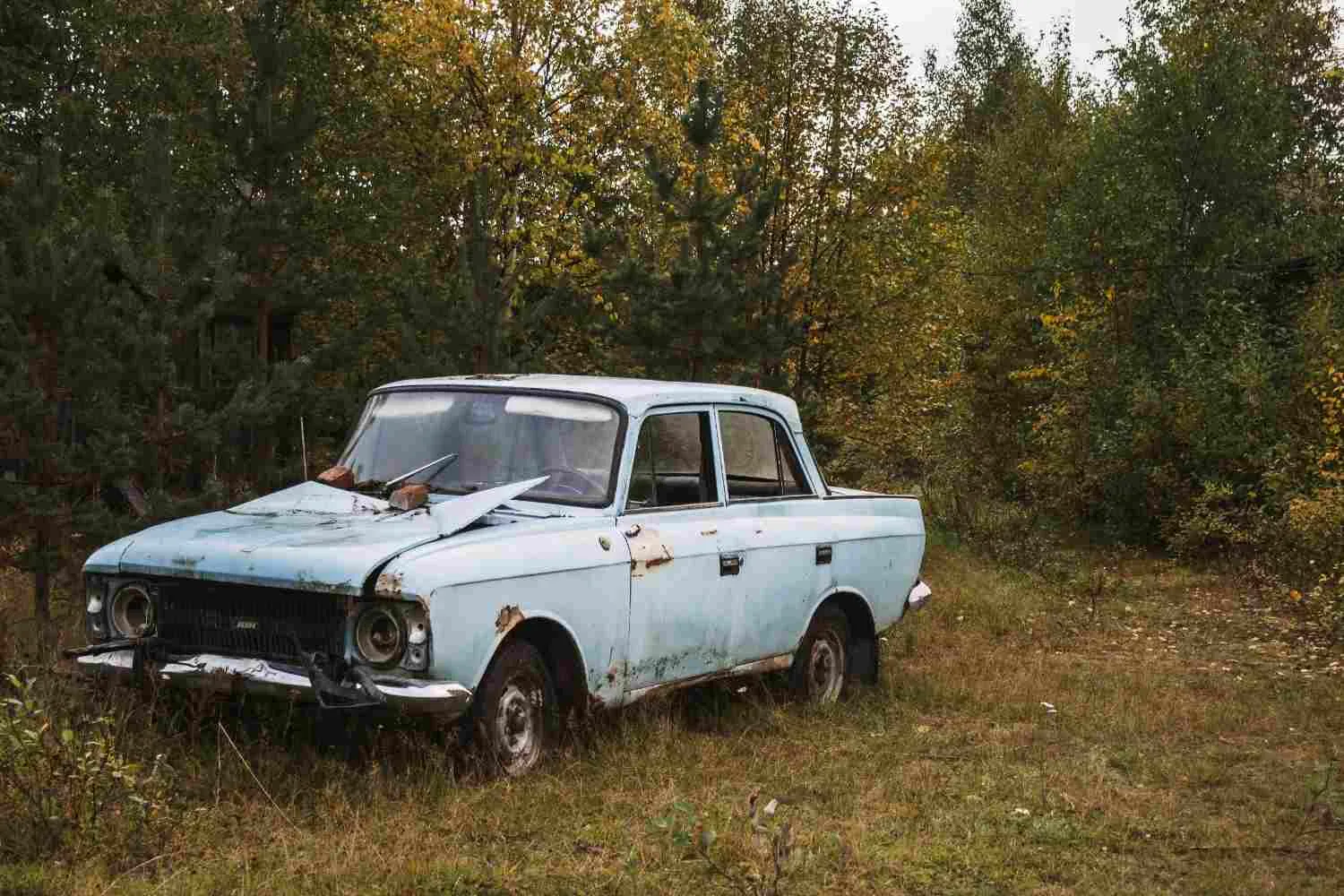
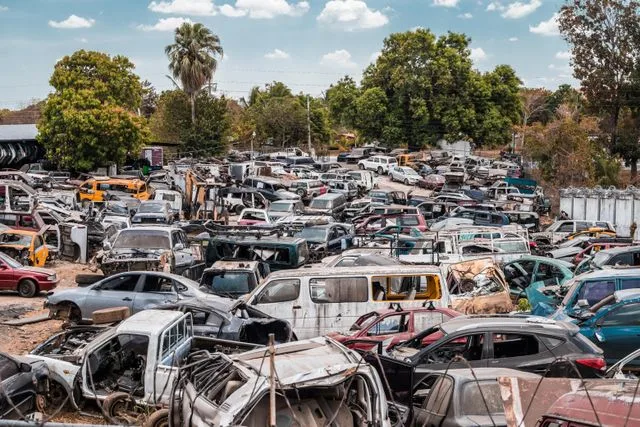
A vehicle with a dead engine, failed transmission, or serious body damage can still have scrap value.
That's because scrap vehicles aren't valued solely as functioning transportation.
They can contain:
- Steel
- Aluminum
- Copper
- Recyclable materials
- Reusable parts
- Components that may have value depending on make and model
So if your car hasn't moved in six months and the engine sounds like a bucket of bolts being thrown down a staircase, don't automatically assume it's worthless.
Get a quote.
You might be surprised.
Ask What Makes Up the Offer
A useful question is:
“What factors did you use to determine this offer?”
A buyer may consider the vehicle's:
- Weight
- Condition
- Completeness
- Make and model
- Parts
- Location
- Current scrap-metal market
- Transportation requirements
You don't necessarily need a complicated mathematical breakdown.
But understanding what affects the valuation can help you compare offers intelligently.
For example, if one buyer explains that the offer is based on the vehicle being complete and another gives you a number without asking anything about the car, you have useful information about how carefully each quote was calculated.
Don't Compare Scrap Offers to Your Car's Old Used-Car Value
This is where emotions can sneak into the calculation.
You might remember buying the car for $18,000.
Or perhaps you spent $4,000 on repairs last year.
Now someone offers you $800.
It can feel insulting.
But the amount you originally paid doesn't determine what the vehicle is worth today.
Neither does the amount you've already spent repairing it.
That money is a sunk cost.
The useful comparison is:
What is the car worth today versus what will it cost me to keep it?
If the vehicle needs a $3,000 repair and has multiple other problems, an $800 scrap offer may suddenly look considerably more reasonable.
Check Whether the Buyer Takes the Whole Vehicle
If you want a straightforward removal process, ask whether the buyer accepts the vehicle in its current condition.
This matters especially if the car has been sitting unused.
You don't necessarily want to spend your weekend removing parts, draining fluids, dismantling components, and turning your garage into an automotive archaeological site.
A buyer who can take the complete vehicle may offer a simpler solution.
If you have already removed major parts, tell the buyer before accepting the quote.
What About the Catalytic Converter?
Catalytic converters can affect how a vehicle is valued because they contain materials that may have recycling value.
If your catalytic converter is missing, don't assume that the buyer won't notice.
Tell them.
The same applies to an engine, transmission, wheels, battery, or other major components that have been removed.
Being upfront allows the buyer to give you a more accurate quote and saves you from negotiating the price again when the vehicle is collected.
Read the Fine Print Before Saying Yes
You don't need a law degree to sell a scrap car.
But you should understand what you've agreed to.
Before accepting an offer, confirm:
Is the quoted amount final?
Is towing included?
Are there any additional fees?
When will payment be made?
What documents are required?
What happens if the vehicle condition differs from the description?
These questions may seem boring.
They're also much less boring than discovering an unexpected deduction after the car has already been loaded.
Is the Highest Offer Always the Best Offer?
Not necessarily.
Imagine:
Offer A
$1,100
Free pickup
Payment on collection
No stated fees
Offer B
$1,250
Pickup fee applies
Final price determined after inspection
Offer C
$1,050
Free pickup
Clear terms
Straightforward paperwork
Which one is best?
You can't answer that from the headline numbers alone.
Offer B could still turn out to be the best deal, but you need to know what the final amount will be.
This is why clarity has value.
A slightly lower offer with straightforward terms can sometimes be preferable to a higher offer surrounded by uncertainty.
Get More Than One Quote
If you have the time, getting multiple quotes is one of the easiest ways to understand whether an offer is competitive.
You don't need to contact twenty companies.
Even two or three comparable quotes can give you a useful range.
Tell each company the same information and ask similar questions.
Then compare:
What to CompareWhy It MattersFinal cash amountShows what you actually receiveTowingMay reduce the real value of an offerVehicle conditionEnsures quotes are based on the same informationMissing partsCan affect valuationPayment methodHelps you understand when and how you'll be paidPaperworkPrevents last-minute problemsPickup arrangementsMakes the removal process easierPrice changesShows whether the quote is firm or conditionalThe goal isn't necessarily to find the company with the flashiest number.
It's to find the best overall deal.
What If You Live in Mississauga, Brampton, Etobicoke, or Oakville?
If you're located in Mississauga, Brampton, Etobicoke, Oakville, or nearby GTA communities, you have the advantage of being able to compare local scrap car removal options rather than accepting the first offer that appears.
For example, ScrapCarBuyerMississauga serves these areas and can be one of the local services worth contacting when you're comparing options for an unwanted vehicle.
The important part is to approach the process the same way you would with any other sale: understand the vehicle's condition, ask what is included, and compare the final amount rather than relying on the first headline price you see.
Local removal can also be useful when the vehicle doesn't run and you need the car collected from your property.
A Few Things That Can Help You Get a More Accurate Quote
You don't need to make your car look showroom-ready before requesting a scrap offer.
Nobody expects a scrap vehicle to arrive looking like it just left a dealership.
But accurate information helps.
If possible, have these details ready:
- Vehicle year
- Make and model
- Approximate mileage
- VIN, if requested
- Whether it starts
- Whether it drives
- Engine condition
- Transmission condition
- Major damage
- Rust
- Missing parts
- Tire condition
- Your general location
You can also take a few clear photos.
A picture of the exterior, interior, engine bay, and any significant damage can help a buyer understand what they're dealing with before arranging pickup.
Don't Forget About Your Personal Belongings
This isn't technically part of comparing offers, but it deserves attention.
Before the car disappears, search it thoroughly.
People routinely leave behind:
- Sunglasses
- Charging cables
- Documents
- Tools
- Coins
- Parking passes
- Garage door openers
- Children's toys
- Emergency kits
- Old CDs that somehow survived three vehicle upgrades
Check the trunk too.
Then check it again.
Your car may have accumulated more random objects than you realize.
The Smart Way to Compare Scrap Car Offers
Comparing scrap car offers isn't really about finding the biggest number.
It's about determining the real value of the deal.
Start by getting multiple quotes when practical. Give each buyer the same information. Ask whether towing is included. Find out whether the offer is firm or conditional. Mention missing parts and major damage. Confirm payment and paperwork requirements.
Then calculate what you'll actually receive.
A $1,000 offer with $200 in deductions isn't better than a $900 offer with free pickup.
Once you look at the numbers that way, the decision becomes much clearer.
And if you're in Mississauga, Brampton, Etobicoke, Oakville, or a nearby area, getting a quote from a local scrap car removal service such as ScrapCarBuyerMississauga can give you another number to add to your comparison.
Your old car may not be worth what it once was.
That's normal.
But that doesn't mean you have to accept the first number someone throws at you.
Compare the offers. Ask the awkward questions. Check the final amount. Then make the decision.
Because when it comes to scrapping an old car, the biggest offer isn't always the best offer.
Sometimes the best offer is simply the one that means exactly what it says.