Running a hospitality business in the UK means operating on tight margins, high turnover and relentless demand — especially during peak trading periods. Behind every smoothly run restaurant, hotel or café is a steady, well-managed supply of catering essentials. Yet for many operators, sourcing catering supplies remains reactive: last-minute orders, inconsistent suppliers, and a scramble whenever stock runs low.
Getting procurement right isn't just about convenience — it's a genuine cost and operations lever. This guide covers everything UK hospitality businesses need to know about buying wholesale catering supplies UK operators can depend on, from what to stock to how to choose the right supplier.
Why Wholesale Catering Supplies Matter for UK Hospitality
Buying at wholesale volume isn't just cheaper per unit — it directly supports operational stability in a sector where demand can shift overnight.
Cost savings at scale. Hospitality businesses go through consumables fast — napkins, containers, cleaning products, disposables. Buying wholesale significantly reduces per-unit costs compared to retail or small-batch purchasing.
Consistency during busy periods. Weekends, holidays, and events create sudden spikes in demand. A wholesale supply relationship ensures stock doesn't run out precisely when you need it most.
Reduced supply chain risk. Relying on a single retail store or juggling several small suppliers increases the risk of shortages. Wholesale suppliers with larger inventories and dedicated logistics reduce that exposure.
Time saved on procurement. Fewer supplier relationships to manage means less time spent on ordering, invoicing, and reordering — time that's better spent running the business.
What Counts as Catering Supplies? (Categories Breakdown)
"Catering supplies" covers a broad range of products. Most UK hospitality businesses need a combination of:
- Disposables — napkins, takeaway containers, cutlery, cups and packaging for front-of-house and delivery
- Kitchenware and equipment — pots, pans, utensils, prep tools and smallware for commercial kitchens
- Hygiene and cleaning-for-catering products — food-safe sanitisers, dishwashing detergents and surface cleaners designed for kitchen environments
- Food prep essentials — chopping boards, storage containers, labelling systems and portioning tools
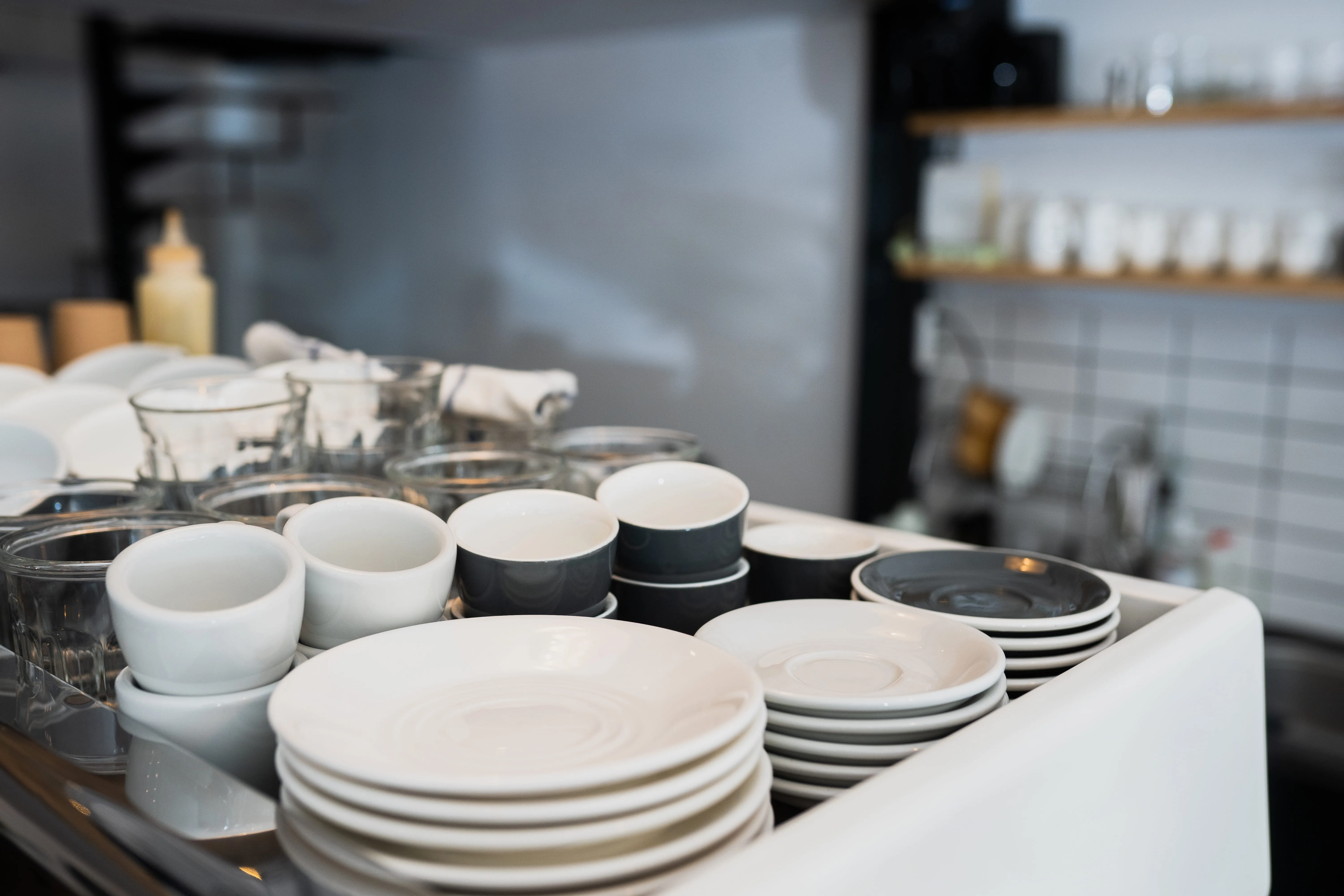
- Front-of-house consumables — tableware, glassware, condiment dispensers and service essentials
Understanding this range helps operators consolidate orders with a single supplier, rather than piecing together purchases from multiple retailers.
How to Choose a Wholesale Catering Supplies Provider in the UK
Not every supplier will fit every business. Here's what to look for when evaluating options:
Product range. A strong supplier should stock the full spread of commercial kitchen supplies and hospitality kitchen essentials, allowing you to order most of what you need in one place.
Pricing tiers. Genuine wholesale pricing should scale meaningfully with volume — look for tiered discounts rather than flat retail-adjacent rates.
Delivery reliability. In hospitality, timing matters. A supplier needs a track record of on-time delivery, particularly around weekends, holidays, and events when stock depletes fastest.
Food safety compliance. Confirm that catering consumables and hygiene products meet UK food safety standards, and that documentation is readily available if needed for audits or inspections.
Account support. A dedicated account manager or responsive customer service team makes it far easier to handle urgent orders, adjust quantities, or troubleshoot issues quickly.
Minimum order quantities. Smaller cafés and independent venues should check MOQs carefully — some wholesalers are only cost-effective at very high volumes.
Catering Supplies for Hospitality: Sector-Specific Needs
Catering supplies for hospitality UK businesses vary depending on the type of operation:
- Restaurants tend to prioritise kitchen consumables, food prep tools and front-of-house tableware, with high turnover on disposables during busy service.
- Hotels need a broader mix — from housekeeping-adjacent catering items to large-scale kitchenware for banqueting and room service.
- Cafés typically focus on disposables (cups, packaging) and smaller-scale kitchenware, often with a strong takeaway/delivery component.
- Event caterers require flexible, scalable ordering — bulk disposables and equipment that can flex up or down depending on event size.
Recognising these differences helps operators avoid over- or under-ordering categories that don't match their actual service model.
Common Mistakes UK Hospitality Businesses Make When Buying Catering Supplies
Even experienced operators can fall into avoidable procurement traps:
Underestimating peak-season demand. Christmas, summer events and bank holidays often catch businesses off guard, leading to stockouts at the worst possible time.
Ignoring hygiene compliance. Cutting corners on food-safe cleaning products or unverified suppliers can create serious compliance and liability risks.
Relying on too many small suppliers. This increases admin, weakens negotiating leverage, and makes it harder to track spend across the business.
Poor storage planning. Bulk orders require adequate space — without proper planning, businesses either overstock unnecessarily or under-order to compensate for limited storage.
Tips for Smart Bulk Buying in Hospitality
A few practical habits make wholesale buying far more effective:
- Forecast based on covers or occupancy. Use historical data on footfall, bookings or covers served to estimate realistic order quantities.
- Plan for seasonality. Build ordering schedules around known peak periods — Christmas, summer, bank holidays, and local events.
- Negotiate supplier terms. Ask about flexible payment terms, scheduled recurring deliveries, or better pricing for consistent, long-term orders.
- Balance storage against order size. Don't over-order simply to hit a discount threshold if storage space can't accommodate it — factor in shelf life and stock rotation.
- Review supplier performance regularly. Periodically reassess delivery reliability, pricing and service quality to ensure the relationship is still working for your business.
Conclusion
Sourcing catering supplies doesn't need to be a constant source of stress for UK hospitality businesses. With a clear understanding of what to stock, how to evaluate suppliers, and the common pitfalls to avoid, operators can build a procurement process that supports — rather than disrupts — day-to-day service.
For businesses looking to simplify this process, Prime Cleaning Supplies offers a dedicated catering supplies range built for UK hospitality operators. As a trusted wholesale catering supplies UK partner, they help businesses of any size stay stocked, compliant and ready for whatever the next service — or season — brings.