Hot water systems rarely get attention until they stop working.
Then it’s a scramble: cold showers, an after-hours call, or a tenant who understandably wants it fixed yesterday.
That’s when people start looking for professional hot water system solutions, and the fastest path is often “replace it with the same thing.”
But that can be how people end up paying twice: once for the quick fix, and again when it turns out the new unit doesn’t suit the household or the site.
A better approach is boring (in a good way): work out demand, check what the home can actually accommodate, then choose the simplest option that reliably covers peak use.
If the single link in this article was removed, the decision process below would still hold.
What “good” hot water actually looks like
“Good” isn’t the most advanced unit or the biggest tank.
It’s hot water when it’s needed, stable temperature, and a setup that doesn’t create new problems (noise, awkward placement, constant maintenance headaches).
Sydney homes vary a lot, older terraces, unit blocks with strata rules, narrow side access, and renovations that leave you with a hot water location that’s more “historical accident” than “ideal design.”
That’s why there’s no single best system type; there’s only what fits.
The three main options, with the trade-offs people feel day-to-day
Storage tanks: dependable, but easy to get wrong
Storage systems heat a tank and keep it ready.
When they’re sized properly, they’re uncomplicated and predictable.
Where they go wrong is recovery time and sizing.
If multiple showers hit one after the other, a too-small tank will tap out and you’re waiting for it to catch up, usually at the exact moment everyone’s in a hurry.
Continuous flow: strong peak performance, but not magic
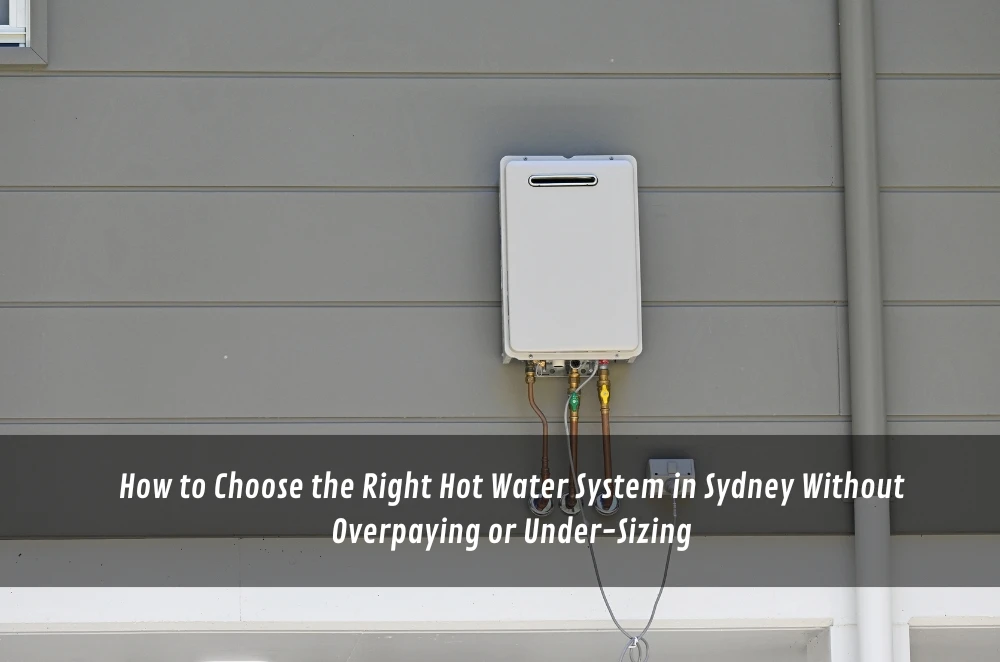
Continuous flow heats as you use it, which is why people describe it as “endless.”
What it isn’t is instant at the tap, especially if the unit sits far from the bathroom.
Gas supply (for gas units), correct sizing, and the plumbing layout make or break the experience.
If those aren’t right, you can still end up with frustrating delays and inconsistent performance.
Heat pumps: efficient, but placement and habits matter
Heat pumps can be very efficient because they’re moving heat rather than generating it directly.
They tend to suit households with steady routines and a sensible installation spot, good airflow, workable noise impact, and enough space.
The catch is that the “best” system on paper can be the wrong call if it has nowhere sensible to go, or if the household’s usage is spiky and unpredictable.
A heat pump placed poorly or chosen without thinking about when it runs can become an ongoing annoyance.
Sizing and site reality: the checks that prevent regret
Sizing is mostly about your busiest hour, not your number of bedrooms.
Two adults with staggered schedules can get away with less than a household that stacks showers, laundry, and dishes into the same window.
Before comparing quotes, collect a quick set of basics:
- What type of system you have now (storage / continuous flow / heat pump) and roughly how old it is
- Where it’s installed and what access looks like (tight side path, balcony, roof space, garage)
- What services you’ve got available (gas, electrical capacity, off-peak arrangements)
- When demand peaks (weekday mornings, evenings, weekends)
- What you’re seeing (temperature swings, leaks, rumbling, rusty water, pressure issues)
It’s not glamorous, but this is the stuff that stops the quoting process turning into guesswork.
Common mistakes people make (and why they hurt)
Buying on headline price.
The unit might be cheaper because it’s smaller, lower spec, or the quote quietly excludes work that will appear later.
Undersizing because the old system “sort of worked.”
People adapt without realising it: shorter showers, staggering use, avoiding running the dishwasher when someone’s showering.
Ignoring access and constraints until installation day.
Clearances, drainage, delivery logistics, and compliance requirements can change what’s feasible.
Over-upgrading because efficiency sounds good.
Sometimes the simplest, correctly sized option beats a “premium” choice that doesn’t suit the site or lifestyle.
Not asking what ongoing care looks like.
Warranties and performance often depend on the right installation and basic maintenance, so it’s worth understanding what’s expected.
Decision factors: what to compare before you commit
If you want to choose well (and not just choose fast), weigh these:
Peak demand
Who’s using hot water at the same time, and how often does that happen?
Distance to outlets
If the unit is a long way from the bathroom, waiting and water waste can become a daily irritation.
Tariffs and running costs
Off-peak setups, boosting behaviour, and usage timing matter more than people think.
Installation constraints
Access, strata approvals, service limitations, and clearances can narrow the field quickly.
Noise and placement (especially for heat pumps)
If the only spot is near bedrooms or close to neighbours, this becomes a practical issue, not a theoretical one.
Future changes
If a bathroom renovation is planned or the household is likely to grow, don’t lock in a setup that’s already borderline.
A simple 7–14 day plan that avoids panic-buying
Days 1–2: Get your facts straight
Take a few photos of the unit and its location.
Write down the symptoms and when they happen (only mornings, only after long use, only when two taps run).
Days 3–5: Map peak use
List the busiest hour in a typical weekday and a typical weekend day.
Note anything that could affect feasibility: tight access, strata rules, awkward placement, long pipe runs.
Days 6–9: Get quotes you can actually compare
Ask providers to quote on the same category of solution (like-for-like replacement vs alternative options).
Push for clarity on inclusions, removal, disposal, and any extra work tied to the site.
Days 10–14: Decide based on fit
Pick the option that covers peak demand, works for the home’s constraints, and won’t be painful to maintain.
If you want a professional to sanity-check your shortlist rather than guessing, the Sydney Hot Water Systems service guide is a practical next step for matching options to your home and usage.
Operator Experience Moment
A common “mystery problem” is hot water that seems fine most of the time, then collapses during one predictable window.
When households change, new housemates, kids getting older, someone starts gym showers at home, the old assumptions stop being true.
Once you line up usage with capacity and recovery, the solution usually becomes obvious, even if it’s not the most exciting one.
Local SMB Mini-Walkthrough: a Sydney path that stays realistic
A landlord gets a call: hot water runs out on weekday mornings.
They confirm it’s mostly back-to-back showers, not an all-day problem.
Access is tight down the side path, so delivery and install logistics matter.
They shortlist two correctly sized storage replacements and one continuous flow option that suits the available services.
They ask what’s included (removal, disposal, and any site-related extras) so there are no surprises.
They choose the option that meets peak demand and is simplest to maintain across the next lease cycle.
Practical Opinions
Correct sizing beats clever features.
A clear scope beats a “cheap” quote.
Solve constraints first, then pick technology.
Key Takeaways
- Start with peak demand and site constraints; they eliminate bad options fast.
- Storage, continuous flow, and heat pumps can all be right, depending on the home and habits.
- Most hot water regret comes from undersizing and vague quotes.
- A short 7–14 day plan prevents rushed replacements you’ll pay for twice.
Common questions we hear from businesses in Sydney, NSW, Australia
Q1: Should you replace like-for-like or change system type?
Usually, like-for-like works if the old unit met demand and it’s simply reached end of life.
Next step: write down your busiest hour’s usage and confirm whether the old setup ever truly covered it.
In Sydney, access and strata constraints can make “upgrade” choices more limited than they appear at first.
Q2: How can you tell if a system is under-sized?
In most cases, you’ll see a repeatable pattern: hot water drops out during the same daily peak window, especially with stacked showers.
Next step: track a week of peak use and note the exact moment temperature or pressure changes.
Sydney households often have different weekend routines, so include at least one weekend day.
Q3: Are heat pumps always the cheapest option to run?
It depends on placement, how the unit is set up to run, and how consistent the household’s demand is.
Next step: confirm where it could realistically go (airflow, drainage, noise impact) before comparing efficiency claims.
In Sydney, “no good place to put it” is sometimes the real deciding factor.
Q4: What should be in a quote so it’s comparable?
Usually, the best quotes spell out inclusions and assumptions in plain language, especially anything driven by site constraints.
Next step: ask each provider to list what’s included (removal, disposal, and any likely extras) so you can compare properly.
In Sydney’s older homes and unit blocks, assumptions matter as much as the unit itself.