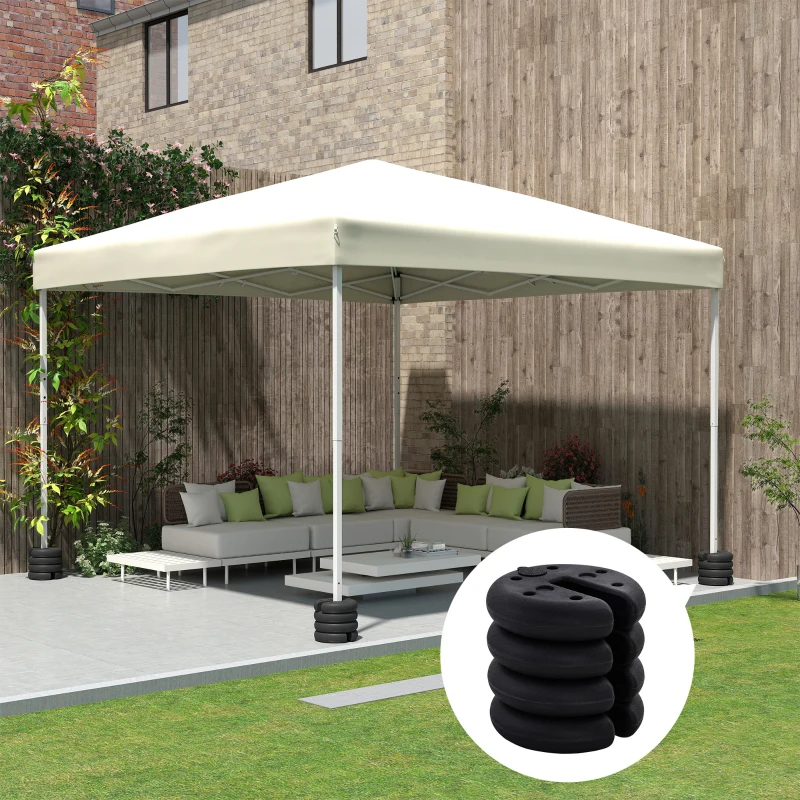
A gazebo adds structure, shade and comfort to a garden space, but wind can quickly turn it into a safety risk if it is not secured properly. Choosing the correct weighting system is not simply about placing something heavy on each leg. It requires understanding wind exposure, surface type, frame size and overall balance.
Start by Assessing Wind Exposure
Before selecting any solution, evaluate how exposed your gazebo is.
Consider:
- Is it positioned in an open lawn with no wind barriers?
- Are there fences or walls that funnel wind towards it?
- Does the area experience sudden gusts?
- Is the ground soft or hard?
Open spaces require heavier support than sheltered patios. Wind that travels across flat gardens gains speed, increasing uplift pressure beneath the canopy.
Match the Weight to the Gazebo Size
The larger the gazebo, the more wind it can catch. Size directly affects how much weight is required per leg.
General guidance:
- Small 3m x 3m pop-up: at least 10–15 kg per leg
- Medium frame or extended canopy: 15–25 kg per leg
- Heavy-duty steel frame: 20–30 kg per leg
If side panels are attached, increase the weight further. Solid walls trap air and create additional force against the frame.
Choose the Right Type of Weight
Different surfaces require different solutions.
Fillable Bases
These are practical for seasonal use. They can be filled with sand or water and placed around each leg. Sand provides better stability than water in windy weather.
Solid Concrete or Metal Weights
These offer consistent mass and are suitable for longer-term setups. They work well on paving, patios or decking where ground stakes cannot be used.
Ground Stakes and Anchors
For grass or soil, long steel stakes driven deep into the ground offer strong resistance against uplift. For best results, combine stakes with additional leg weights.
Selecting appropriate gazebo weights ensures stability without placing strain on the frame joints.
Consider the Surface Underneath
Surface type plays a major role in stability.
- Grass or soil: Use deep stakes and add weighted bases for extra security.
- Decking: Choose heavy plate-style weights. If allowed, secure legs with brackets.
- Concrete or paving: Use high-mass weights with non-slip padding beneath them.
Never rely on lightweight objects such as loose bricks or stones, as they shift easily during gusts.
Balance Is Just as Important as Mass
Adding weight unevenly can cause twisting and structural stress.
To maintain balance:
- Secure all four legs equally
- Tighten frame connectors before weighting
- Ensure weights sit flush against each leg
- Avoid stacking unstable materials
Even distribution prevents swaying and reduces strain on corner joints.
Adjust for Side Panels and Accessories
Sidewalls significantly increase wind resistance. Even moderate wind can build pressure inside the structure.
If using:
- Waterproof side panels
- Privacy curtains
- Fully enclosed walls
Increase weight per leg and monitor wind conditions closely. In stronger gusts, it is safer to remove side panels entirely.
Know the Limits
No weighting system can make a lightweight gazebo storm-proof. If strong winds are forecast:
- Lower the canopy if adjustable
- Remove sidewalls
- Dismantle temporary frames
- Store fabric components indoors
Prevention is always safer than repair.
Stability Starts with Smart Preparation
Plan ahead by matching the weight to your gazebo’s size and exposure, and secure each leg evenly. Proper anchoring keeps the structure steady, protects guests and prevents avoidable damage.