
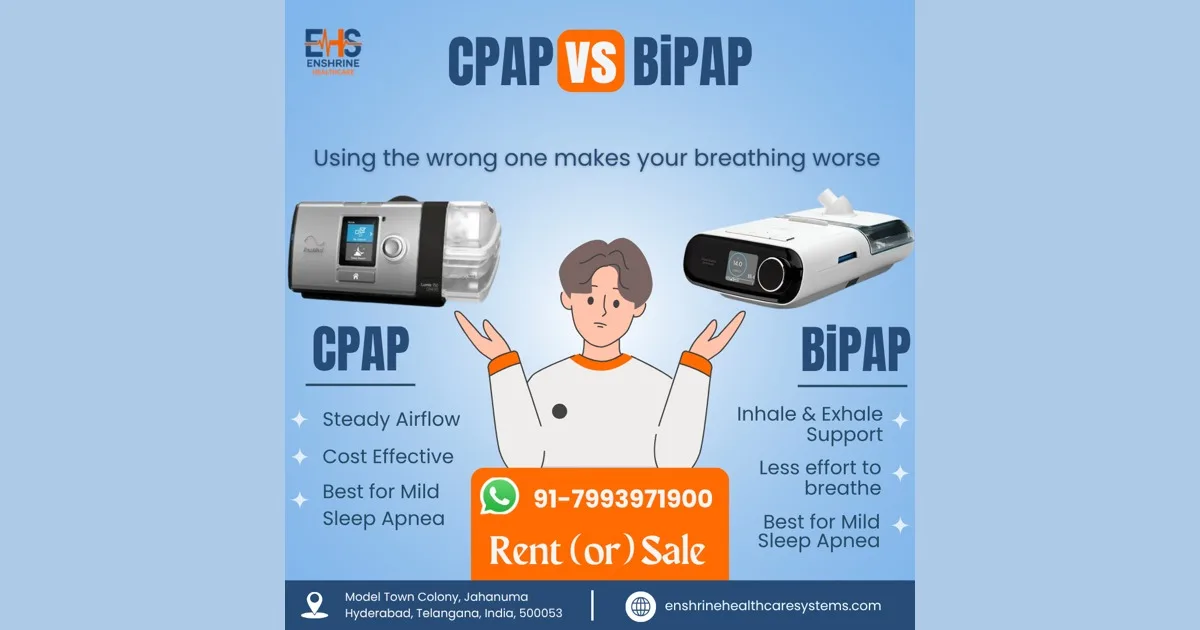
Sleep apnea is a common sleep disorder that affects millions of people worldwide. It causes repeated interruptions in breathing during sleep, leading to poor sleep quality, daytime fatigue, headaches, and other health complications. Fortunately, modern respiratory therapy devices such as CPAP and BiPAP machines can help manage sleep apnea and improve overall quality of life.
However, many patients and caregivers often struggle to determine which device is more suitable for their needs. Understanding the differences between a CPAP & BiPAP machine is essential for selecting the right sleep therapy solution.
This guide explains how CPAP and BiPAP machines work, their benefits, key differences, and important factors to consider when choosing the most appropriate device for effective sleep apnea therapy.
Understanding Sleep Apnea
Sleep apnea is a condition in which breathing repeatedly stops and starts during sleep. The most common form is Obstructive Sleep Apnea (OSA), which occurs when the muscles in the throat relax excessively, blocking the airway.
Common symptoms of sleep apnea include
- Loud snoring
- Interrupted breathing during sleep
- Morning headaches
- Excessive daytime sleepiness
- Difficulty concentrating
- Irritability and mood changes
- Poor sleep quality
If left untreated, sleep apnea may increase the risk of
- High blood pressure
- Heart disease
- Stroke
- Diabetes
- Chronic fatigue
- Reduced productivity
This is why doctors often recommend CPAP or BiPAP therapy to maintain continuous airflow and support healthy breathing throughout the night.
What Is a CPAP Machine?
CPAP stands for Continuous Positive Airway Pressure. A CPAP machine delivers a constant and steady stream of pressurized air through a mask worn during sleep.
The continuous airflow helps keep the airway open and prevents breathing interruptions caused by airway collapse.
Benefits of CPAP Therapy
CPAP therapy is widely considered the first-line treatment for obstructive sleep apnea because it is effective, reliable, and easy to use.
Key benefits include
- Helps maintain open airways during sleep
- Reduces snoring significantly
- Improves sleep quality
- Decreases daytime fatigue
- Supports better heart health
- Enhances concentration and productivity
- Suitable for most mild to moderate sleep apnea cases
CPAP machines are commonly prescribed for patients who require a consistent pressure level throughout the night.
What Is a BiPAP Machine?
BiPAP stands for Bilevel Positive Airway Pressure. Unlike a CPAP machine, a BiPAP machine provides two different pressure settings.
These include
- Higher pressure during inhalation (IPAP)
- Lower pressure during exhalation (EPAP)
This dual-pressure system makes breathing more comfortable for patients who have difficulty exhaling against continuous air pressure.
Benefits of BiPAP Therapy
BiPAP machines are often recommended for individuals who require additional respiratory support.
Major advantages include
- Easier exhalation
- Greater comfort during sleep
- Suitable for higher pressure requirements
- Helps patients with complex breathing disorders
- Supports individuals with certain neuromuscular conditions
- Effective for severe sleep apnea cases
- Can improve treatment compliance
BiPAP therapy is frequently used when CPAP therapy is not tolerated or does not provide adequate results.
CPAP vs BiPAP - Key Differences
Although both devices deliver positive airway pressure, they differ in how they provide respiratory support.
Air Pressure Delivery
CPAP Machine
- Delivers one continuous pressure level
- Maintains a constant airflow throughout the night
BiPAP Machine
- Delivers two pressure levels
- Higher pressure for inhalation
- Lower pressure for exhalation
Comfort Level
CPAP
- Effective but may feel uncomfortable at higher pressure settings
- Some users find exhalation challenging
BiPAP
- More comfortable for patients requiring high pressure
- Easier breathing experience
Medical Conditions Treated
CPAP
Primarily used for
- Obstructive Sleep Apnea (OSA)
- Mild to moderate sleep apnea
BiPAP
Often prescribed for
- Severe sleep apnea
- Central sleep apnea
- COPD patients
- Neuromuscular disorders
- Respiratory insufficiency
Cost Considerations
Generally
- CPAP machines are more affordable
- BiPAP machines are more advanced and expensive
The choice should always be based on medical needs rather than price alone.
Factors to Consider When Choosing Between CPAP and BiPAP
Selecting the right sleep therapy machine requires careful evaluation of your symptoms, diagnosis, and physician recommendations.
1. Severity of Sleep Apnea
Patients diagnosed with mild or moderate obstructive sleep apnea often respond well to CPAP therapy.
Patients with severe sleep apnea may benefit from the additional flexibility offered by BiPAP therapy.
2. Comfort During Breathing
If you experience difficulty exhaling against continuous pressure, a BiPAP machine may provide a more comfortable treatment experience.
Comfort plays a significant role in long-term treatment success and compliance.
3. Pressure Requirements
Individuals requiring higher pressure settings may find CPAP therapy difficult to tolerate.
In such cases, BiPAP machines can provide better breathing support by reducing pressure during exhalation.
4. Existing Respiratory Conditions
People with underlying respiratory disorders may require specialized therapy.
Conditions that may influence device selection include
- Chronic Obstructive Pulmonary Disease (COPD)
- Central Sleep Apnea
- Obesity Hypoventilation Syndrome
- Neuromuscular Diseases
A sleep specialist can determine whether CPAP or BiPAP therapy is appropriate.
5. Physician Recommendation
A professional sleep study remains the most reliable method for identifying the correct treatment approach.
Always follow the recommendations of
- Sleep specialists
- Pulmonologists
- Respiratory therapists
- Healthcare providers
Their assessment will help ensure effective and safe treatment.
Signs That a CPAP Machine May Be Right for You
A CPAP machine may be suitable if
- You have mild to moderate obstructive sleep apnea
- You can tolerate continuous air pressure
- Your prescribed pressure requirements are moderate
- You want a simple and cost-effective solution
- Your doctor specifically recommends CPAP therapy
Signs That a BiPAP Machine May Be Right for You
A BiPAP machine may be more appropriate if
- You have severe sleep apnea
- You struggle to exhale against CPAP pressure
- You require higher pressure settings
- You have COPD or other respiratory disorders
- You need advanced respiratory support
- CPAP therapy has not been effective
Tips for Successful Sleep Therapy
Regardless of whether you choose a CPAP or BiPAP machine, consistent usage is essential for achieving optimal results.
Follow these best practices
- Use the machine every night
- Keep masks and tubing clean
- Replace filters regularly
- Ensure proper mask fit
- Follow maintenance guidelines
- Attend follow-up appointments
- Monitor your sleep quality and symptoms
Consistent therapy can significantly improve breathing patterns, sleep quality, and overall health.
Conclusion
Choosing between a CPAP and BiPAP machine is an important decision that can directly impact the effectiveness of your sleep apnea treatment. While CPAP machines remain the standard solution for many individuals with obstructive sleep apnea, BiPAP machines offer enhanced comfort and flexibility for patients requiring higher levels of respiratory support.
Understanding your diagnosis, pressure requirements, comfort preferences, and underlying medical conditions can help determine the most suitable therapy option. Consulting with a qualified healthcare professional and undergoing a proper sleep evaluation are essential steps in selecting the right device.
With the correct sleep therapy machine and consistent use, patients can experience better sleep quality, improved energy levels, enhanced respiratory health, and a significantly improved quality of life.