Choosing mobility equipment involves more than finding a chair that accommodates a person's weight. Seating space, comfort, maneuverability, and caregiver assistance all influence whether a transport chair is appropriate for everyday use. For individuals who need additional room while sitting, a wide transport chair can provide an alternative to narrower models, making it important to evaluate its dimensions and functionality before purchasing.
A wide transport wheelchair should offer adequate seating space while remaining manageable for the person pushing it. The right choice depends on the user's physical measurements, mobility requirements, and the environments where the chair will be used. Understanding these factors can help caregivers make more informed decisions.
Why Seat Width and Overall Dimensions Matter
Seat width is one of the first specifications to examine when selecting a transport chair. However, the advertised seat width may differ from the usable space between the armrests. Checking both measurements helps determine whether the chair can accommodate the user comfortably.
Overall width is equally important. A chair may provide sufficient seating space but prove difficult to maneuver through narrow doorways, hallways or other confined areas. Measuring frequently used entrances and considering the chair's dimensions when opened can help prevent transportation difficulties.
Seat depth and height should also be evaluated. A seat that is too deep may make it difficult for the user to maintain a comfortable sitting position, while an unsuitable seat height can complicate transfers.
Understanding Weight Capacity and Comfort
Weight capacity is another essential consideration. A transport chair should have a manufacturer-specified capacity that accommodates the intended user. Selecting a chair based on seat width alone may overlook important structural requirements.
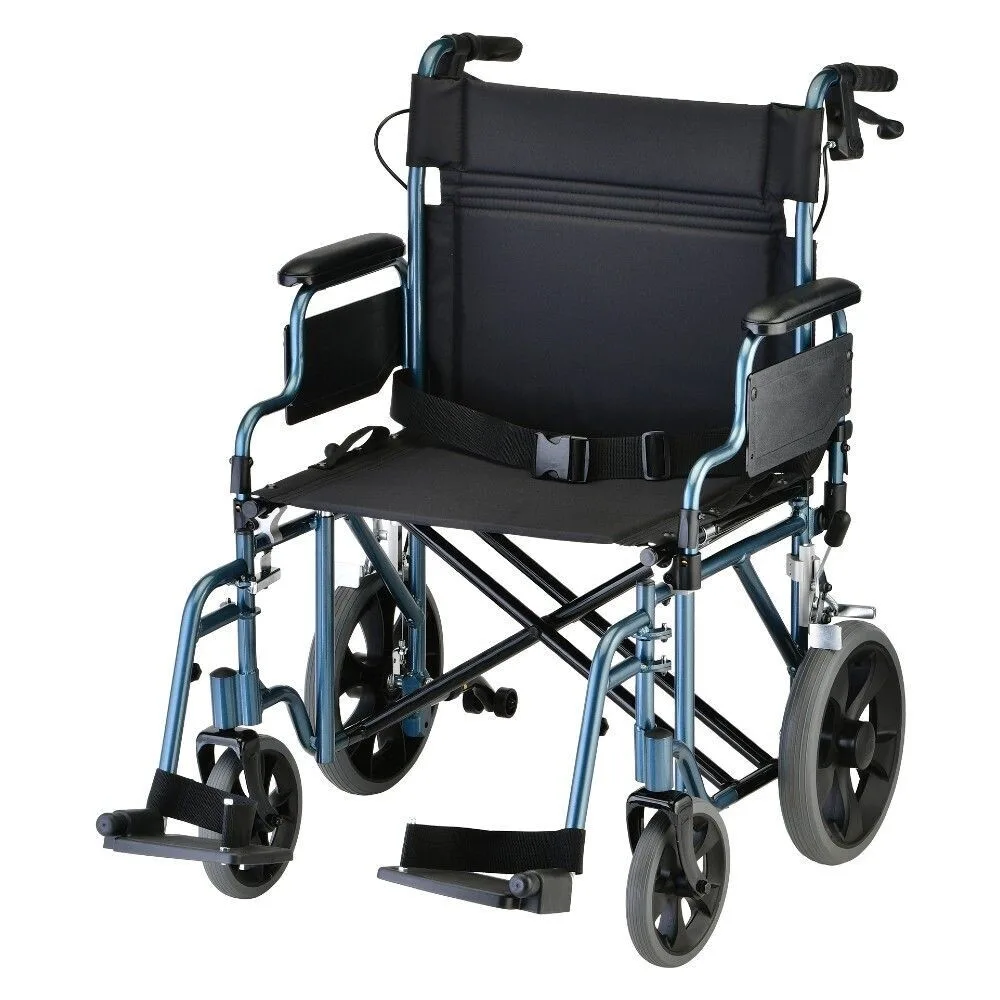
For example, the NOVA 332 Heavy Duty Transport Chair features a 22-inch extra-wide seat and a stated weight capacity of 400 pounds. Its aluminum frame, padded upholstery and removable padded arms provide additional features that customers can evaluate when comparing mobility equipment.
A wide transport chair should also accommodate the user's individual comfort requirements. Factors such as seat dimensions, armrest positioning, foot support and sitting posture can influence the overall experience.
Evaluating Brakes Wheels and Transfer Accessibility
The chair's wheel configuration can influence how it performs in different environments. Larger rear wheels may help a caregiver maneuver the chair over certain uneven surfaces, although the suitability of any chair depends on its design and intended use.
Braking features are particularly important when managing slopes or stationary transfers. The NOVA 332 includes locking hand brakes and secondary wheel locks, allowing the companion to control movement and secure the chair when appropriate.
Removable or flip-up armrests may also provide additional access during transfers. However, the user should follow the manufacturer's instructions and receive appropriate assistance when transferring into or out of the chair.
should be evaluated according to the user's transfer requirements rather thanA wide transport wheelchair assuming that removable arms make every transfer easier or safer.
Considering Folding and Transportation Requirements
Transport chairs are commonly selected for appointments, shopping trips, and family outings because they can be folded for transportation.
Before purchasing, caregivers should consider the chair's weight, folded dimensions, and the available space in the vehicle. A chair that is difficult to lift or store may create practical challenges during frequent outings.
The NOVA 332 has a folding design and a listed folded width of 11 inches. These specifications can help customers assess its storage requirements, although the complete folded dimensions and product weight should be checked before purchase.
Choosing a Chair That Supports Everyday Mobility
Selecting a suitable transport chair requires balancing seating dimensions, weight capacity, comfort, braking features, and transportation requirements. The most appropriate option is one that accommodates the user's individual needs while remaining manageable for the caregiver.
A wide transport chair may provide additional seating space, but its overall dimensions and functionality should always be considered. Comparing these factors can help individuals identify a product that fits their everyday mobility requirements.
A wide transport wheelchair, such as the NOVA 332, offers features including extra-wide seating, locking hand brakes, removable arms and adjustable footrests. Reviewing these specifications alongside the user's measurements and intended use can help support a more informed purchasing decision.