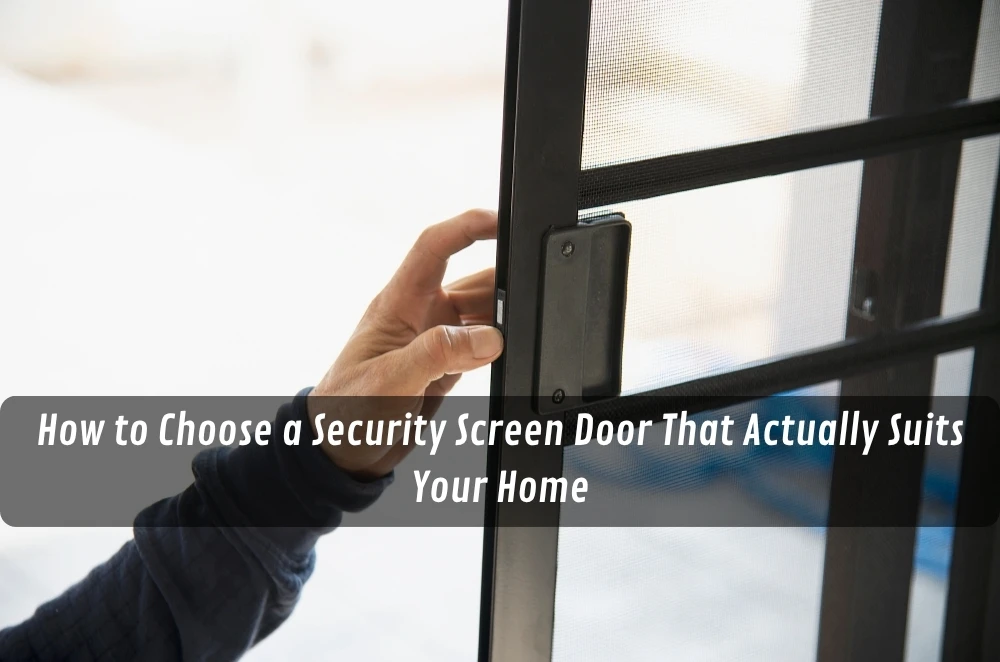
Most people start shopping for a security screen door the same way they shop for a new tapware finish: they pick what looks good, then hope the rest works out.
But a screen door gets used a lot more than a tap.
It’s the thing you grab when the dog bolts for the yard, when you’re balancing grocery bags, when you’re letting a breeze in without leaving the house wide open.
If it’s hard to open, awkward to latch, or fights the wind, you’ll notice it every day.
And if you stop using it because it’s annoying, the “security” part becomes a nice idea rather than a real habit.
That’s exactly why custom security screen door solutions can be worth considering when the opening, exposure, or daily routine doesn’t suit a one-size-fits-all option.
Start with how the door will be used
Before you compare mesh types or finishes, get clear on the job this door is meant to do.
A front entry that’s used by guests all the time needs different priorities than a back door that cops muddy shoes, kids, and wet weather.
So take ten minutes and write down what’s true for the opening:
- Is it hinged or sliding right now (and does that make sense for the space)?
- Which direction does it swing, and what might it hit?
- Is the area sheltered, or exposed to wind and rain?
- Who uses it most, kids, tenants, older family members, pets?
- What matters more here: airflow, visibility, durability, or a bit of everything?
If you do this first, you’ll cut out half the options straight away.
The decision factors that make the biggest difference
Hinged vs sliding: don’t overthink it, but don’t guess
Hinged doors tend to feel familiar and simple, open, close, latch.
They can also be unforgiving if the frame isn’t straight or the hinges aren’t set up properly.
Sliding doors are great when you’re tight on space, but they rely on tracks, rollers, and keeping the action smooth over time.
Pick hinged when:
- You’ve got plenty of clearance
- You want a straightforward feel for guests and daily use
- The door will be opened and closed constantly
Pick sliding when:
- A swing path would be annoying (stairs, narrow landings, furniture)
- You’re dealing with a wider opening
- You want easy in-and-out traffic flow
Neither is automatically “better”, it’s just about what suits the opening.
Mesh choice: the “feel” matters as much as the strength
Mesh tends to be sold like a single-number decision: stronger is better.
In real life, mesh changes the way the entry feels, how much light comes through, how clear the view is, and whether the door makes the space feel closed-in.
Think about where the door is:
- For a front entry, people often prefer something that keeps the entry bright and welcoming.
- For a back door, durability can matter more because it’s where life happens, sports gear, dogs, kids, garden tools.
- For a more exposed doorway, long-term performance starts to matter more than the initial “wow”.
If a mesh choice makes the entry gloomy or awkward, that trade-off should be deliberate, not accidental.
Frame and finish: where Sydney conditions sneak up on you
Sydney can be oddly mixed for exposure.
One house will be coping with salt air and wind, another will be baking in hard afternoon sun, another will have a sheltered porch that stays relatively gentle year-round.
Frames and finishes take a slow beating, which is why “it looked great on install day” isn’t the same as “it still feels good in three years.”
The practical check: does the frame feel rigid, and does it look like it’s built to hold alignment, not just look tidy?
Hardware: the part you’ll complain about (or appreciate)
People talk about mesh strength, then live with a latch that feels fiddly for the next decade.
Pay attention to:
- Can you open it one-handed?
- Does the latch feel consistent, or does it need “just the right angle”?
- Will kids, tenants, or visiting family actually use it properly?
A door that’s easy to operate is a door you’ll actually keep closed and latched.
Installation: the boring bit that saves you later
Even a great door can feel cheap if it’s out of square.
Older frames, repainting over the years, minor movement in the house, these things add up.
If you’re working with a slightly wonky opening, the best choice often isn’t the fanciest configuration; it’s the one that can be fitted cleanly so it closes smoothly and stays that way.
Common mistakes people make (and how to avoid them)
Buying based on looks alone is the classic one.
The next most common is ignoring clearances, especially with hinged doors.
Another is choosing a setup that’s “tough” but turns the entry into a darker, less pleasant space.
People also underestimate how often the door will be used in a normal week, and then regret hardware that feels awkward.
And measuring “close enough” is usually fine… right up until it isn’t.
If you want your shortlist to hold up, measure properly and be honest about daily habits.
Operator Experience Moment
What I’ve noticed is that regret rarely comes from the door “not being secure enough.” It’s usually because the door doesn’t suit the routine: it sticks when the wind hits, the latch is annoying, or the entry feels darker than expected. The installs that people love are the ones where the choice is shaped by the opening and the household, not by a single feature.
A simple way to shortlist without going in circles
Once you’ve got your constraints, aim for a tight shortlist rather than a sprawling comparison.
Pick:
- the correct door type (hinged or sliding)
- a mesh direction (more visibility/light, or more heavy-duty daily wear)
- a finish that suits the exposure
- hardware that feels easy and reliable
If you want a quick reference that helps match priorities to common configurations, ScreenGuard door options guide can be handy before you start collecting quotes.
The key is consistency: when you request quotes or assessments, describe the same needs to each provider so you’re comparing like with like.
Local SMB Mini-Walkthrough (Sydney, NSW)
A Sydney homeowner wants airflow through the front entry, but they also want the door to feel welcoming, not “caged.”
The porch is sheltered, but the door is used constantly during school drop-offs and evening dog walks.
They choose hinged because there’s plenty of clearance and it feels familiar for guests.
They prioritise visibility so the hallway doesn’t lose light.
They test latch comfort because the door will be used one-handed a lot.
They check swing clearance on windy days so it won’t clip a wall or step.
They flag that the jamb is older and slightly uneven, so install alignment matters.
First actions for the next 7–14 days
Day 1–2: Measure properly (top/middle/bottom), note anything that looks out of square, and take photos of the threshold and surrounding area.
Day 3–5: Decide hinged vs sliding, then pick whether you’re prioritising visibility/light or tougher daily wear.
Day 6–9: Match finish and build quality to exposure, especially if the door is in sun, wind, or closer-to-coastal conditions.
Day 10–14: Get quotes with the same brief, and ask questions about hardware feel and install prep, not just the headline product.
Practical Opinions
If it’s annoying to use, it won’t be used properly, so “smooth” is a security feature in disguise.
Don’t pay extra for toughness you don’t need at the front door if it makes the entry darker and less inviting.
Good installation and comfortable hardware usually matter more than chasing the most extreme spec.
Key Takeaways
- Start with the doorway and daily habits; specs make sense after that.
- Hinged vs sliding should be decided by clearance and traffic, not trends.
- Mesh is a trade-off between light, airflow, and durability, choose on purpose.
- Hardware feel and installation alignment are often what separates “great” from “regret.”
Common questions we get from Aussie business owners
What if this is for a rental or strata and approvals are tricky?
Usually, the fastest path is to document the opening, your reasons (ventilation, safety, usability), and the proposed style before you ask for approval. As a next step, put the request in writing with photos and basic measurements; in NSW that tends to reduce back-and-forth with property managers or strata committees.
Is the strongest mesh always the right answer?
It depends on where the door is and what you value day to day. As a next step, decide whether this entry needs maximum visibility/light (common for Sydney front entries) or tougher wear for yard access and heavy traffic, then shortlist options that match that priority.
How do I reduce the chance of measuring errors before getting quotes?
In most cases, you’ll get better advice by measuring at multiple points and noting anything uneven rather than giving a single “rough” number. As a next step, take photos of the jamb, threshold, and any obstacles; older Sydney homes often have small quirks that change what will fit cleanly.
What should I prioritise if I can’t optimise everything?
Usually, prioritise fit and operation first, if it closes smoothly and latches reliably, you’re most of the way there. As a next step, focus your questions on clearance, latch comfort, and install preparation, especially in NSW homes where frames may not be perfectly square.