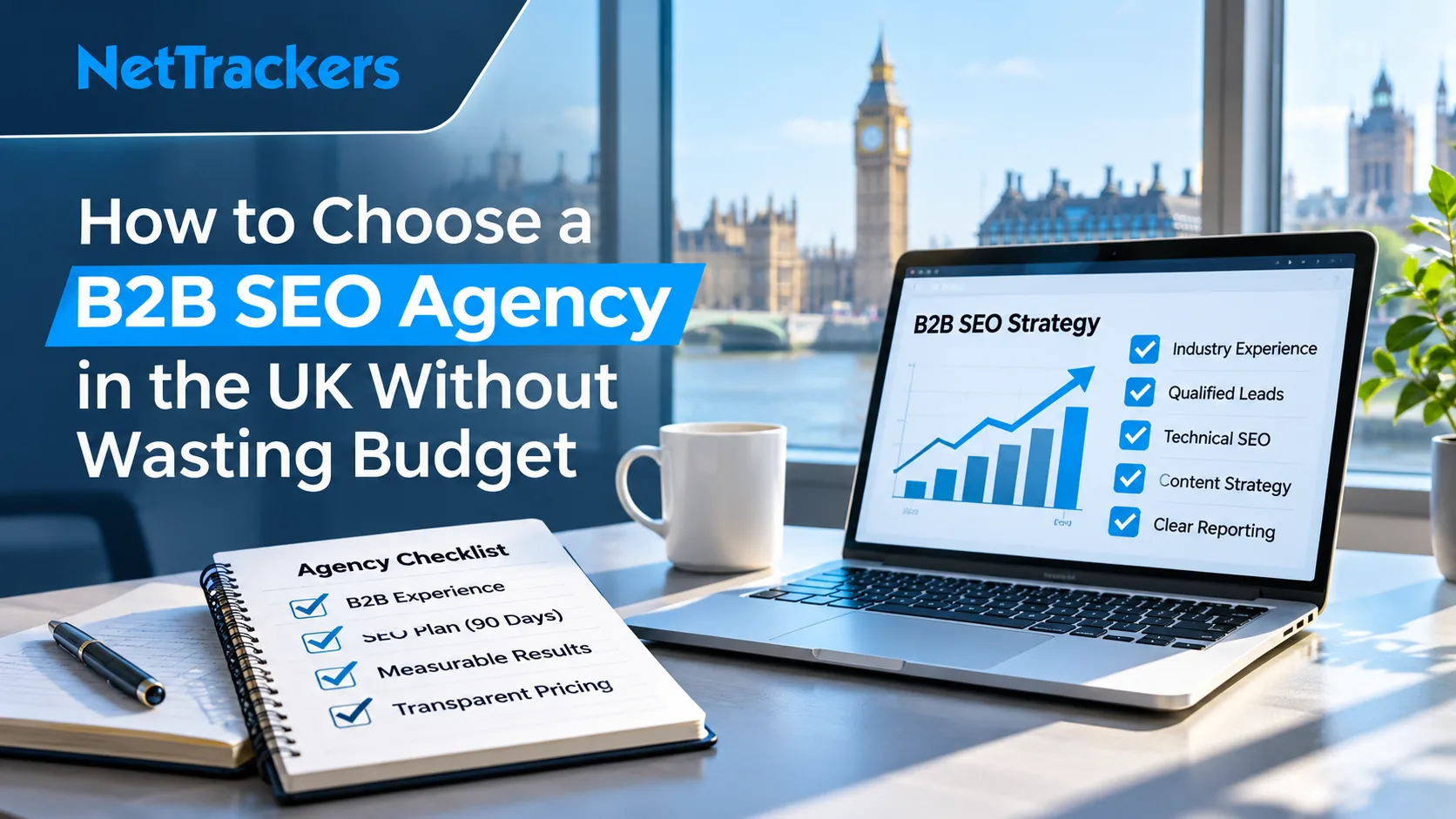
Choosing the wrong B2B SEO agency can cost your business more than its monthly marketing fee. Poor keyword targeting, irrelevant traffic and campaigns disconnected from sales objectives can consume resources without generating qualified enquiries. Unlike consumer-focused SEO, business-to-business search optimisation must account for longer buying cycles, multiple decision-makers and complex purchasing requirements. Understanding how to evaluate an agency's strategy, reporting and commercial experience can help UK businesses invest in search visibility without wasting their marketing budget.
Why Choosing the Right B2B SEO Agency Matters
B2B companies often sell products or services that require considerable research before a customer makes a purchasing decision. Potential buyers may compare suppliers, review technical specifications, consult colleagues and request demonstrations before contacting a sales team. A successful SEO strategy must therefore address different stages of the buying journey rather than focusing exclusively on search rankings. Choosing an agency that understands these commercial requirements can help businesses attract visitors who are more likely to become qualified leads.
How B2B SEO Differs From Traditional SEO
Consumer-focused SEO often targets relatively short purchasing journeys and broad product-related searches. B2B SEO frequently involves specialised terminology, smaller search audiences and enquiries that require additional qualification. Content may need to address technical users, procurement managers, financial decision-makers and senior executives within the same organisation. A suitable agency should understand these differences and develop a strategy reflecting how your ideal customers research potential suppliers.
1. Check Whether the Agency Understands Your Industry
Industry understanding is one of the first factors to evaluate when comparing SEO providers. An agency does not necessarily need extensive experience with your exact product, but it should demonstrate an ability to understand your market and customer requirements. Ask how the team researches specialist terminology, buyer challenges and competitive positioning before recommending keywords. A provider that begins with generic search terms may overlook opportunities to attract decision-makers looking for specific solutions.
Questions to Ask About Industry Experience
Request examples of previous work involving businesses with similar sales cycles or customer profiles. Ask how the agency distinguishes between informational searches and queries indicating genuine purchasing interest. It should also explain how technical accuracy will be maintained when producing content for specialised industries. Clear answers demonstrate a research-led approach rather than reliance on a standard campaign template.
2. Prioritise Qualified Leads Over Organic Traffic
Organic traffic is useful, but visitor numbers alone do not determine whether an SEO campaign is commercially successful. A website attracting thousands of irrelevant visitors may generate fewer opportunities than one receiving a smaller number of highly qualified enquiries. Ask how the agency identifies valuable search terms and connects them to lead generation objectives. The strategy should prioritise relevant audiences, appropriate landing pages and measurable commercial outcomes.
How Should B2B SEO Leads Be Measured?
Businesses should establish what qualifies as a marketing-qualified lead before evaluating SEO performance. Depending on the organisation, meaningful conversions may include consultation requests, demonstration bookings, quotation enquiries or completed contact forms. Where appropriate tracking is available, CRM data can help connect organic enquiries with sales opportunities and eventual revenue. An agency should explain the limitations of attribution rather than claiming every closed deal resulted directly from SEO.
3. Evaluate the Agency's Keyword Research Strategy
Effective B2B keyword research requires more than identifying popular search queries. An agency should examine commercial intent, competitor visibility, industry terminology and the problems customers want to solve. Lower-volume keywords can sometimes be valuable when they reflect specific purchasing needs or product requirements. The goal is to match relevant searches with useful pages that support the buyer's next decision.
Look Beyond High Search Volume
Consider a company selling specialist industrial equipment to procurement teams. A broad search for industrial equipment may attract students, researchers and customers looking for unrelated products. More specific searches involving equipment types, technical requirements or supplier comparisons may attract a smaller but more relevant audience. An effective keyword strategy should account for these differences instead of treating search volume as the main measure of opportunity.
4. Ask for a Clear First 90-Day SEO Plan
A credible SEO proposal should explain what will happen during the initial months of the engagement. Early activities may include technical auditing, competitor research, keyword mapping, content assessment and analytics configuration. The agency should distinguish between tasks it can complete independently and changes requiring access to developers or internal stakeholders. A documented plan helps businesses understand how their money will be spent before committing to an ongoing campaign.
What Should the First Three Months Include?
| Period | Main activities | Expected deliverables |
|---|---|---|
| Days 1–30 | Discovery, technical audit and buyer research | Baseline report and prioritised recommendations |
| Days 31–60 | Keyword mapping, content planning and technical fixes | Optimisation roadmap and initial implementation |
| Days 61–90 | Landing page improvements, content production and tracking | Completed deliverables and performance review |
These stages provide an illustrative framework rather than a guaranteed implementation schedule. Larger websites may require additional time to investigate technical problems or approve necessary changes. Businesses should ask which tasks are included in the monthly fee and how completion will be documented. Transparent planning makes it easier to identify delays before they become expensive.
5. Review the Agency's Content Strategy
B2B content should help potential customers understand problems, compare solutions and evaluate suppliers. A strategy built entirely around generic blog articles may fail to address the questions buyers ask before purchasing. Ask whether the agency plans to optimise service pages, develop comparison resources, publish case studies and create relevant technical content. Every proposed page should have a clear purpose within the buying journey.
Content Should Support Different Buying Stages
Awareness-stage content introduces business problems and explains relevant concepts to potential customers. Consideration-stage resources help buyers compare approaches, understand technical differences and assess possible solutions. Decision-stage pages should explain services, capabilities, processes and the information needed to contact a provider. Connecting these stages through relevant internal links can help visitors navigate towards the resources most useful to them.
6. Understand How Technical SEO Will Be Managed
Technical SEO provides the foundation that allows search engines to access and understand important website pages. Problems involving indexing, redirects, internal links, mobile usability and website architecture can limit the effectiveness of content investments. Ask whether technical auditing and implementation support are included in the proposed service. An agency should explain which issues need immediate attention and which improvements can be scheduled later.
Who Will Implement Technical Recommendations?
Some agencies provide recommendations while the client's development team completes the changes. Others handle implementation directly through agreed website permissions and internal resources. Neither arrangement is automatically better, but responsibilities should be documented before the engagement begins. Businesses should also confirm how technical changes will be tested and reviewed after implementation.
7. Examine the Link-Building Approach
Backlinks can contribute to a website's search visibility, but acquiring links solely to increase numerical metrics can waste budget. A suitable agency should explain how it evaluates website relevance, editorial quality and opportunities for legitimate industry exposure. Digital PR, useful research, relevant publications and industry relationships may provide more meaningful opportunities than bulk link packages. Avoid providers promising guaranteed rankings through undisclosed paid links or large volumes of low-quality placements.
Why Link Relevance Matters
A relevant mention from an established industry publication may reach potential customers as well as provide search visibility benefits. Conversely, links from unrelated websites may offer little meaningful audience value and can introduce unnecessary risk when acquired through manipulative schemes. Third-party metrics such as Domain Rating can assist with prospect comparisons, but they are not Google ranking factors themselves. Agencies should explain their quality checks rather than relying exclusively on arbitrary authority thresholds.
8. Make Sure Reporting Connects SEO to Revenue
Monthly reports should provide more than charts showing impressions, rankings and website visits. Businesses need to understand whether organic search is helping attract relevant enquiries and support sales opportunities. Ask how the agency tracks conversions, distinguishes qualified leads from unqualified submissions and reports on commercial performance. Where sales-cycle data is available, reporting should reflect the difference between generating an enquiry and closing a customer.
Which Metrics Should Appear in Reports?
Useful metrics may include organic clicks, search visibility for commercially relevant keywords and performance across important landing pages. Reports should also include conversion activity, qualified enquiries and completed optimisation work. Businesses with appropriate CRM integration may monitor opportunities influenced by organic search alongside other marketing channels. Clear reporting should acknowledge tracking limitations, seasonal demand and factors beyond the agency's control.
9. Compare Pricing Against Actual Deliverables
The cheapest proposal is not necessarily the most cost-effective option for a B2B business. A low monthly fee may cover limited activities, while a higher fee could include technical implementation, specialist content and more extensive reporting. However, expensive services do not automatically produce stronger results or justify their cost. Compare proposals using the actual work promised, the expertise involved and the resources your business needs.
What Should Be Included in an SEO Proposal?
A detailed proposal should identify the scope of auditing, keyword research, content optimisation, reporting and ongoing technical support. It should also clarify whether content writing, development work and external outreach involve additional charges. Ask how frequently deliverables will be completed and whether the scope can change as campaign priorities evolve. Understanding these details helps prevent unexpected costs and makes proposals easier to compare fairly.
10. Check Contract Terms and Account Ownership
Long-term SEO campaigns require consistency, but businesses should understand their contractual commitments before signing an agreement. Review notice periods, payment terms, cancellation conditions and any additional charges for work outside the agreed scope. Your company should retain appropriate ownership and administrative control over its website, analytics accounts and business information. Any proposed changes to access permissions or account ownership should be explained clearly before work begins.
Avoid Unclear Deliverables and Reporting Arrangements
A vague promise to provide ongoing optimisation does not explain how an agency will use its monthly fee. Businesses should request an agreed list of deliverables, responsibilities and reporting expectations. The agency should communicate when a planned activity cannot be completed and explain the effect on other priorities. Written agreements and regular reviews make it easier to maintain accountability throughout the engagement.
Common Warning Signs When Hiring a B2B SEO Provider
Certain promises should encourage businesses to examine an agency's proposal more carefully. Guaranteed first-page rankings, undisclosed link networks and large quantities of automatically generated content may indicate an unsuitable approach. A reluctance to explain methods or provide meaningful reporting can also make campaign performance difficult to evaluate. Google specifically warns businesses that irresponsible SEO practices can damage a site's presence in search results.
Why Guaranteed Rankings Are a Red Flag
No agency controls Google's ranking systems or the actions taken by competitors. Rankings can change because of algorithm updates, new content, technical changes and evolving search behaviour. An agency can explain its methods and set reasonable performance objectives, but it cannot guarantee a specific position for every keyword. Businesses should favour providers that acknowledge uncertainty while demonstrating a structured approach to improvement.
How to Compare B2B SEO Agencies Before Making a Decision
Using the same evaluation criteria across shortlisted providers can reduce the influence of persuasive sales presentations. Compare how clearly each agency understands your buyers, recommends priorities and defines commercial success. A scoring framework can help identify differences between proposals that otherwise appear similar. Consider the following categories when conducting your evaluation.
| Evaluation criterion | Suggested weighting |
|---|---|
| Understanding of B2B buyers and sales cycles | 25% |
| Keyword and content strategy | 20% |
| Technical SEO capabilities | 15% |
| Lead tracking and commercial reporting | 20% |
| Deliverables and pricing transparency | 15% |
| Communication and contractual flexibility | 5% |
These weightings are an example rather than an industry standard. Businesses with complex technical websites may choose to give technical capabilities a higher priority. Organisations with established marketing operations may place greater emphasis on CRM integration and revenue attribution. The important point is to agree on evaluation criteria before reviewing agency proposals.
How NetTrackers Approaches B2B SEO in the UK
NetTrackers provides B2B search optimisation services designed around longer sales cycles and the needs of business decision-makers. Its published approach includes buyer-focused keyword research, content strategy, technical SEO, competitor analysis and relevant link acquisition. Businesses exploring a B2B SEO agency can review these capabilities to understand how search optimisation can support different stages of their sales pipeline. The appropriate service scope should depend on a company's industry, website condition, target customers and commercial objectives.
Focusing on Search Visibility That Supports Sales
NetTrackers emphasises the importance of connecting SEO activity with qualified leads and sales pipeline reporting. This approach recognises that ranking for informational searches does not always produce immediate commercial value. Businesses should still agree on specific tracking requirements, implementation responsibilities and reporting definitions before starting a campaign. A shared understanding of these requirements helps make performance reviews more useful for marketing and sales teams.
Frequently Asked Questions About Choosing a B2B SEO Agency
How Much Should a UK Business Spend on B2B SEO?
The appropriate budget depends on website complexity, industry competition, commercial objectives and the amount of work required. A business with a technically sound website may need a different service package from one requiring extensive restructuring. Rather than choosing an arbitrary monthly figure, ask agencies to explain the resources and deliverables included in their quotations. The final decision should consider affordability, implementation capacity and the commercial value of potential opportunities.
How Long Does B2B SEO Take to Produce Results?
Some improvements may become visible within weeks, particularly after resolving important technical issues or updating established pages. More competitive keywords and new websites may require several months before meaningful performance trends emerge. Longer B2B sales cycles can also delay the appearance of measurable revenue even when lead quality improves. Businesses should evaluate technical progress, search visibility and qualified enquiries without expecting guaranteed results within a fixed timeframe.
Should B2B Companies Use SEO or Paid Search?
SEO and paid search can support different marketing requirements and do not need to be treated as competing choices. Paid search may provide faster access to relevant audiences, while organic optimisation can build visibility across multiple stages of the buying journey. The appropriate balance depends on available budget, keyword competition, sales objectives and campaign performance. Businesses should assess both channels using commercially relevant metrics rather than assuming one will always outperform the other.
Can SEO Help B2B Companies Appear in AI Search Results?
Useful website content may be discovered through AI-powered search experiences as well as traditional organic results. Clear explanations, accessible website pages and reliable business information can support broader search discoverability. However, inclusion in particular AI-generated responses cannot be guaranteed, and reporting methods may vary across platforms. An SEO strategy should account for changing search behaviour without relying on unsupported promises of AI visibility.
What Is the Most Important Question to Ask an SEO Agency?
One particularly useful question is how the agency plans to connect its work with qualified leads and commercial outcomes. The answer should explain keyword targeting, conversion tracking, content priorities and reporting methods. It should also identify assumptions and limitations that may affect measurement. This helps distinguish a commercially focused strategy from one designed primarily to improve traffic statistics.
Conclusion
Choosing the right B2B SEO agency in the UK requires careful evaluation of industry understanding, keyword strategy, technical capabilities, reporting and contractual transparency. Businesses should prioritise agencies that can explain how their proposed work supports qualified enquiries and longer sales cycles. Comparing clearly defined deliverables and realistic expectations can reduce unnecessary spending and improve accountability. NetTrackers offers B2B SEO services for organisations seeking a structured approach to organic search visibility and commercial growth.
Discuss Your B2B SEO Requirements With NetTrackers
NetTrackers works with UK businesses looking to improve search visibility and connect organic search activity with relevant customer enquiries. Its services include technical SEO, buyer-focused content development, competitor analysis and pipeline-oriented reporting. Contact the team on +44 20 4572 4940 or visit NetTrackers to explore available services. An initial discussion can help establish your business objectives, website requirements and potential priorities before committing to an SEO campaign.