Imagine a customer asks ChatGPT, Who is the best service provider near me? and your name never comes up. Scary, right? This is already happening to many businesses today.
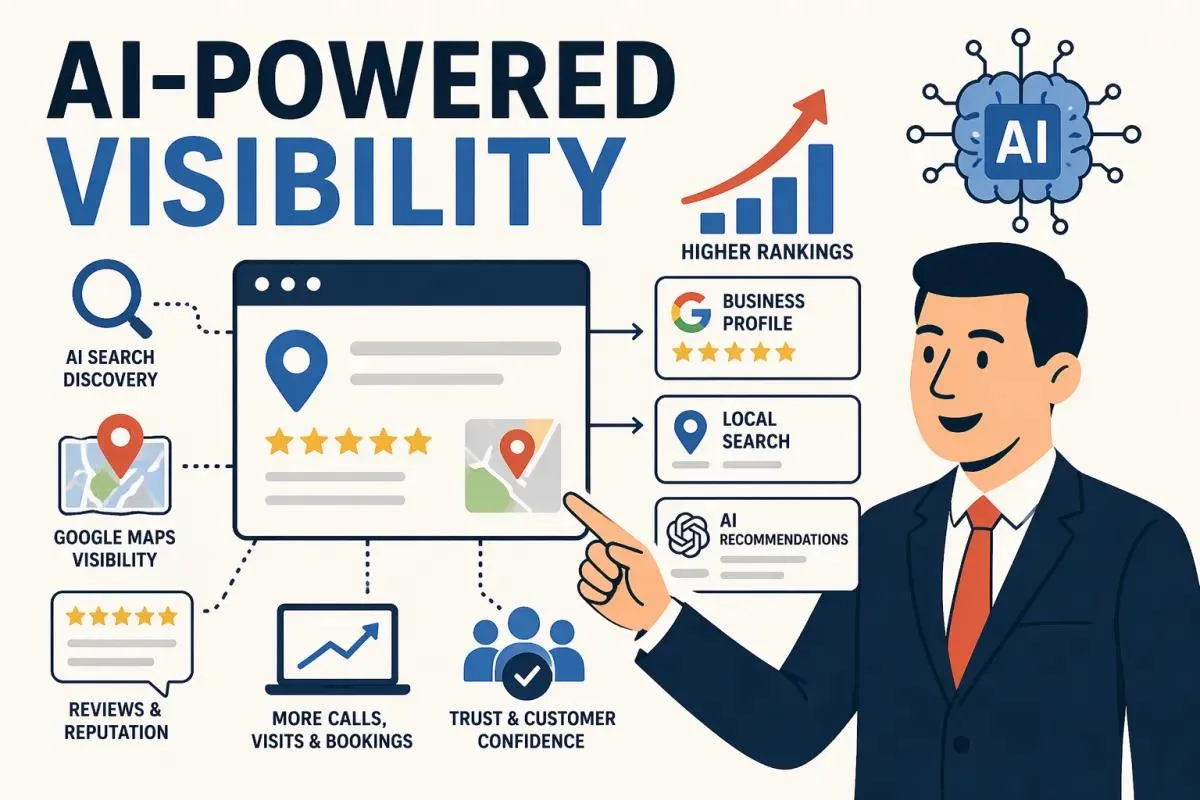
People no longer rely only on ten blue links. They ask AI tools for direct answers, and those tools often name specific brands. So, the big question is: is your business visible on ChatGPT and Google AI search?
In this guide, you will learn why AI visibility matters, how to check it, and what you can do to improve it.
What Is AI Search Visibility?
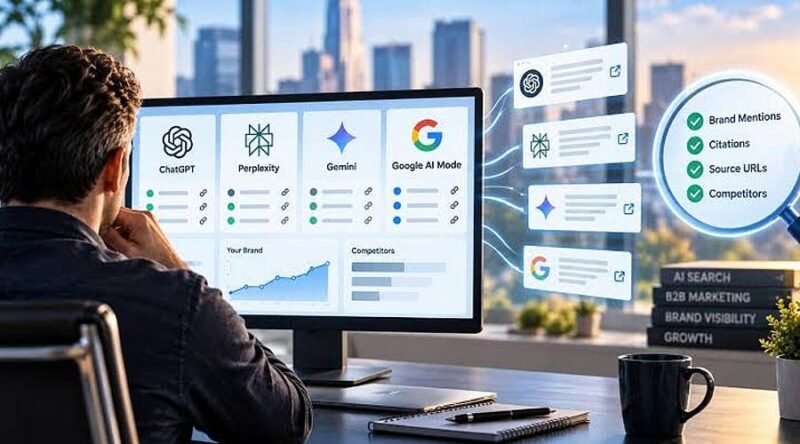
AI search visibility means how often your business appears in answers from AI tools. These tools include ChatGPT, Google AI Overviews, Gemini, and Perplexity.
In traditional SEO, you try to rank on page one. In AI search, the goal is different. You want the AI to mention, recommend, or cite your brand in its answer.

For example, if someone asks, Which CRM is best for small teams?, the AI may list three or four brands. If you are on that list, you win attention before the user even clicks a website.
Why AI Visibility Matters for Your Business
First, user behavior is changing. Many people now prefer a quick, clear answer over scrolling through many pages. Therefore, if AI tools skip your brand, you lose a chance to be seen.
Second, AI answers build trust fast. When an AI tool recommends a business, users often treat it like advice from a smart friend.
Third, your competitors are already working on this. Businesses that start early will build a strong position. Those that wait may find it hard to catch up.
How AI Tools Choose Which Businesses to Mention
Before you can improve your visibility, you need to know how AI tools pick their sources. While each tool works a little differently, they usually look at these things:
- Clear, helpful content that answers real questions
- Trust signals such as reviews, mentions, and expert authors
- Consistent business details across the web
- Structured data that helps machines understand your pages
- Strong site health, including speed and mobile-friendliness
In short, AI tools prefer sources that are clear, accurate, and trusted.
How to Check If Your Business Is Visible on Chat GPT and Google AI
Now let’s get practical. You can run a simple audit in under an hour.
Step 1: Ask Direct Questions
Open ChatGPT, Gemini, and Perplexity. Then type questions your customers might ask, such as:
- What is the best [your service] in [your city]?
- Which companies offer [your product]?
- Is [your brand name] a good choice?
Note whether your business appears, how it is described, and which competitors show up instead.
Step 2: Search in Google and Look for AI Overviews
Next, search your main keywords on Google. Check whether an AI Overview appears at the top. If it does, see which websites it cites. Is your site one of them? If not, you have found a gap to fix.
Step 3: Check Your Brand Description
AI tools sometimes get facts wrong. Therefore, read what they say about your business. Look for wrong services, old addresses, or missing details. These errors usually come from inconsistent information online.
Step 4: Track Your Results
Create a simple sheet. List your questions, the tool used, whether you appeared, and which competitors were named. Repeat this every month. Over time, you will see clear progress.
7 Simple Ways to Improve Your AI VisibilityOnce you know where you stand, use these steps to improve.
1. Answer Real Customer Questions
Write content that answers questions in plain words. Use headings that sound like real queries. Moreover, give the answer early, then add detail below.
2. Keep Your Business Information Consistent
Your name, address, phone number, and service details should match everywhere. This includes your website, Google Business Profile, and social pages. Consistency helps AI tools trust your data.
3. Build Trust With Reviews and Mentions
Positive reviews on Google and other platforms matter. Additionally, mentions on trusted blogs, news sites, and industry directories help AI tools see your brand as credible.
4. Use Structured Data
Schema markup helps machines understand your content. Add it for your business, products, FAQs, and reviews. Although it takes some effort, it makes your pages much easier to read for both Google and AI tools.
5. Show Real Expertise
Add author names, short bios, and real examples to your content. Case studies and original insights also stand out. After all, AI tools want to share information from people who know the topic.
6. Keep Your Content Fresh
Outdated pages lose value quickly. So, update your key pages often with new facts, prices, and examples.
7. Make Your Website Easy to Crawl
Fast loading speed, clean navigation, and mobile-friendly design matter. Also, make sure you are not blocking important pages from search bots by mistake.