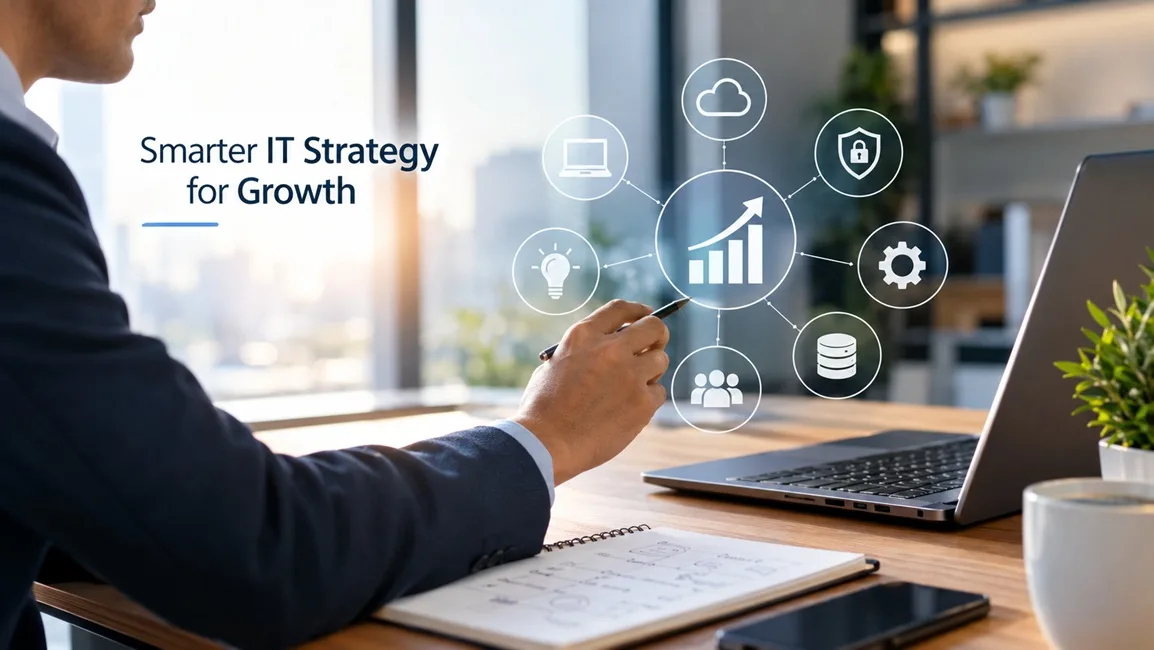
A growing business needs more than new software and modern equipment to stay competitive. It needs a clear technology plan that supports its goals, improves daily operations, and prepares the company for future challenges. With the right IT consulting services, businesses can identify technology gaps, manage costs, strengthen security, and build a practical roadmap for long-term growth.
A smart IT strategy connects technology investments with measurable business outcomes. Instead of buying tools because competitors use them or because they are trending, companies should focus on solutions that solve real problems, improve customer experiences, and help teams work more efficiently.
Why Businesses Need a Smarter IT Strategy
Technology affects almost every part of a modern business, from customer service and marketing to finance, operations, and product development. Without a clear plan, companies may invest in tools that fail to work together, spend too much on software, or struggle to protect sensitive information.
A well-planned technology strategy helps business leaders make informed decisions. It establishes priorities, assigns resources, and gives teams a clear direction for using technology to achieve company objectives.
The financial scale of technology investment makes these decisions especially important. Gartner projected in July 2026 that worldwide IT spending would reach $6.37 trillion in 2026, representing 14.2% growth from 2025. The forecast highlights the growing importance of digital infrastructure, software, and artificial intelligence in business operations.
However, higher technology spending does not automatically produce better results. Companies need to invest carefully, measure performance, and select solutions based on their actual business needs.
1. Start With Clear Business Goals
The first step in building an effective technology strategy is to define what the business wants to achieve. Technology decisions should support these goals rather than operate as separate projects.
For example, a retail company may want to increase online sales, while a manufacturing business may need to reduce equipment downtime. A professional services firm may focus on improving project delivery and client communication.
Each goal requires a different approach.
Before selecting new technology, business leaders should answer three questions:
- Which business problems need immediate attention?
- What improvements would create the greatest value?
- How will the company measure success?
Set specific targets whenever possible. A company might aim to reduce manual data entry by 30%, improve customer response times by 20%, or reduce software expenses by 15% over the next year.
These targets give technology teams a clear purpose and help leadership evaluate whether an investment delivers the expected results.
2. Assess Your Current Technology Environment
Before making new investments, review the systems, tools, and processes already in place. Many businesses discover that their existing technology can deliver better results with improved configuration, integration, or training.
Start by examining the following areas:
Software and applications: Identify duplicate subscriptions, outdated applications, and tools that employees rarely use.
IT infrastructure: Review computers, servers, cloud platforms, networks, and storage capacity to determine whether they can support future demand.
Data management: Check where business data is stored, how teams access it, and whether different systems share information accurately.
Security and compliance: Examine access permissions, backup procedures, security controls, and relevant legal or industry requirements.
Employee productivity: Identify repetitive tasks, communication problems, and manual processes that slow down daily work.
Document the findings and rank each issue by business impact, urgency, cost, and implementation effort. This assessment creates a realistic starting point for the strategy.
It also prevents businesses from spending money on new tools before addressing the problems that limit their current systems.
3. Create a Technology Roadmap
A technology roadmap turns business goals into an organized action plan. It explains which projects the company should complete, when implementation should begin, and what resources each project requires.
Avoid trying to change every system at once. Large technology projects can strain budgets, disrupt operations, and overwhelm employees. A phased approach allows teams to solve urgent problems while preparing for future improvements.
A practical roadmap can cover three stages.
Short-term priorities: Address urgent security gaps, remove unnecessary software expenses, improve backups, and fix major workflow problems.
Medium-term projects: Integrate business applications, automate repetitive tasks, migrate suitable systems to the cloud, and improve reporting.
Long-term investments: Explore advanced analytics, artificial intelligence, infrastructure modernization, and new digital products that support business expansion.
Assign an owner and target date to each project. Include estimated costs, expected benefits, dependencies, and performance measures.
Review the roadmap every quarter or whenever a major business change affects priorities. A roadmap should guide decisions without preventing the company from adapting to new opportunities.
4. Make Cybersecurity a Core Priority
Cybersecurity should be part of every technology decision, not a separate task that receives attention only after a security incident. As businesses adopt cloud platforms, remote work tools, and connected applications, they must protect their systems against unauthorized access, data loss, and service disruptions.
The National Institute of Standards and Technology introduced Cybersecurity Framework 2.0 in February 2024. The framework helps organizations of different sizes identify, assess, and manage cybersecurity risks. Its guidance provides a useful foundation for building security into a broader technology plan.
Businesses should focus on several essential practices:
- Require multifactor authentication for important business accounts.
- Apply software updates and security patches regularly.
- Restrict access to sensitive information based on job responsibilities.
- Maintain reliable backups and test data recovery procedures.
- Train employees to recognize phishing messages and other common threats.
Companies should also prepare an incident response plan. It should explain who will respond to a security problem, how affected systems will be isolated, and how operations will recover.
Regular security reviews help businesses identify weaknesses before they cause serious financial or operational damage. Security investments should reflect the company's size, industry, risk exposure, and regulatory obligations.
5. Use AI and Automation Where They Deliver Value
Artificial intelligence and automation are changing how businesses handle information, support customers, and manage routine tasks. However, companies should evaluate these technologies based on practical benefits rather than adopting them simply because they are popular.
McKinsey's Technology Trends Outlook 2025 identified artificial intelligence as a major technology category and highlighted agentic AI as an emerging area of interest. These developments point to new opportunities for businesses to improve workflows and develop more responsive digital services.
Consider starting with tasks that consume significant employee time but follow predictable steps. Examples include processing routine documents, categorizing customer inquiries, preparing internal reports, and summarizing large amounts of information.
Before implementing a solution, evaluate its expected value, accuracy, security, and integration requirements.
For example, a customer support team might use AI to classify incoming requests and suggest responses. Employees can review those suggestions before sending them to customers. This approach can reduce repetitive work while keeping people involved in important decisions.
Businesses should also establish rules for using AI tools. Employees need to understand which information they can share, when human approval is required, and how the company will check output quality.
Start with a small pilot project, compare results against existing processes, and expand the solution only when the benefits justify the cost.
6. Improve Data Management and Integration
Reliable data helps businesses make better decisions. However, many companies store information across separate systems that do not communicate effectively. Sales teams may use one platform, finance teams another, and operations teams may maintain separate spreadsheets.
These disconnected systems create duplicate records, reporting errors, and unnecessary manual work.
A smarter technology strategy should establish how business data is collected, stored, shared, and maintained. Begin by identifying the information that matters most to daily operations and long-term planning.
Next, determine which systems need to exchange data. Integrating customer relationship management software with accounting, inventory, or reporting platforms can reduce repetitive data entry and give teams a more consistent view of business performance.
Data quality also matters. Establish clear ownership for important records, standardize data formats, and remove outdated or duplicate information.
When appropriate, use centralized dashboards to monitor sales, operating costs, customer activity, and project performance. These dashboards help leaders identify problems earlier and make decisions based on current information.
Strong data management also supports future AI initiatives. Businesses need accurate, accessible, and properly governed information before advanced analytics can produce dependable results.
7. Build a Flexible Cloud and Infrastructure Plan
As businesses grow, their technology requirements change. Systems that work well for a small team may struggle when transaction volumes increase, employees work from multiple locations, or new markets require additional capacity.
Cloud platforms can help companies adjust computing resources to changing demand. They may also support remote collaboration, simplify software deployment, and reduce the need to maintain certain types of physical infrastructure.
However, moving every application to the cloud is not always the best choice. Some systems may perform better on existing infrastructure, while others may have security, regulatory, performance, or cost requirements that favor a different approach.
Evaluate each workload individually. Compare cloud hosting, on-premises infrastructure, and hybrid environments based on total cost, reliability, security, performance, and future needs.
Include ongoing expenses in the evaluation. Cloud storage, data transfers, software subscriptions, monitoring, and technical support can add up over time.
A flexible infrastructure plan should also include capacity planning, backup arrangements, disaster recovery, and clear service expectations. These measures help the business maintain operations as demand increases.
8. Prepare Employees for Technology Changes
Even a well-designed technology strategy can fail when employees do not understand how to use new systems. Training, communication, and employee involvement are essential parts of successful implementation.
Involve relevant teams before selecting tools that will change their daily work. Ask employees which tasks create delays, what problems they encounter, and which improvements would make their jobs easier.
Use their feedback to compare potential solutions and identify training requirements.
Provide practical training based on real work situations. Employees should understand how to complete common tasks, follow security procedures, and get help when problems arise.
Identify internal champions who can answer basic questions and encourage adoption. Managers should also explain why a change is necessary and how it will benefit the team.
Measure adoption after implementation. Login activity alone may not show whether a system improves productivity. Review task completion times, error rates, employee feedback, and other measures that reflect actual results.
9. Measure Results with Meaningful IT Metrics
A technology strategy needs measurable performance indicators. Without them, businesses may struggle to determine whether their investments improve operations or simply increase expenses.
Choose metrics that connect technology performance with business goals. Useful measures include:
- Technology costs: Total spending on software, infrastructure, maintenance, and support.
- System availability: The percentage of time important applications remain operational.
- Operational efficiency: Time saved through automation and process improvements.
- Security performance: Number of incidents, unresolved vulnerabilities, and recovery time.
- Project delivery: Percentage of technology projects completed within the planned budget and schedule.
- Employee adoption: How effectively employees use new tools in their daily work.
For each metric, establish a baseline before introducing a new system. Set a target and review progress at regular intervals.
For example, if a company invests in workflow automation, it should compare processing times and error rates before and after implementation. If the improvement fails to meet expectations, investigate the cause and adjust the approach.
Regular reviews also help leadership redirect funding toward projects that produce stronger results.
10. Control Technology Costs and Prioritize Investments
Technology spending can increase quickly when businesses add applications, expand infrastructure, and introduce new services. A smarter strategy balances innovation with financial discipline.
Begin by calculating the total cost of ownership for each major investment. Consider licensing, implementation, migration, employee training, maintenance, security, and future upgrades.
Compare these costs with the expected business benefits. Some investments may reduce expenses, while others may increase revenue, improve customer retention, or reduce operational risk.
Rank projects according to their expected value, urgency, implementation effort, and strategic importance. Address critical security issues first, then prioritize projects with clear business benefits and realistic delivery plans.
Avoid selecting a solution based on its purchase price alone. A lower-cost application may require expensive customization or create integration problems. A more expensive option may offer better long-term value if it reduces manual work and simplifies operations.
Review software subscriptions and vendor agreements regularly. Remove unused licenses, consolidate overlapping tools, and renegotiate contracts when appropriate.
This approach creates room in the budget for worthwhile improvements without encouraging unnecessary spending.
Common Mistakes to Avoid When Planning IT Growth
Several mistakes can weaken an otherwise strong technology strategy.
Buying technology without a clear purpose: Every major investment should address a defined business need. Popular tools are not automatically suitable for every company.
Ignoring existing systems: Replacing applications without reviewing their current performance can create unnecessary expenses and disruption.
Overlooking cybersecurity: New systems should include appropriate security controls, access policies, and recovery plans from the beginning.
Launching too many projects at once: Limited budgets and employee capacity make it difficult to manage multiple major changes simultaneously.
Failing to measure results: Without clear performance indicators, businesses cannot reliably evaluate the value of technology investments.
Treating the strategy as a one-time document: Business goals, customer expectations, security risks, and available technologies change. Regular reviews keep the plan useful.
Avoiding these mistakes helps businesses maintain focus, manage risks, and make steady progress toward their goals.
Final Thoughts
Building a smarter IT strategy requires a clear understanding of business goals, current technology, security risks, available resources, and future opportunities. The most effective approach connects every major technology investment with a measurable business outcome.
Start by assessing existing systems, identifying the most important challenges, and creating a phased roadmap. Strengthen cybersecurity, improve data management, evaluate AI and automation opportunities, and prepare employees for new ways of working.
Review performance regularly and adjust priorities as business needs change. A flexible, well-managed technology strategy helps organizations control costs, improve productivity, serve customers more effectively, and prepare for sustainable growth.